Over the weekend, thousands of Albanians took to the streets of Tirana and the protected Vjosa-Narta lagoon on the Adriatic coast to protest a luxury tourism development backed by Jared Kushner, son-in-law of US President Donald Trump, and his wife Ivanka Trump. The demonstrations, which included inflatable pink flamingos and banners reading “Albania is not for sale,” have turned the spotlight on a controversial project that critics say could irreversibly alter one of the Mediterranean’s most sensitive ecosystems.
What Is ‘Kushner Island’?
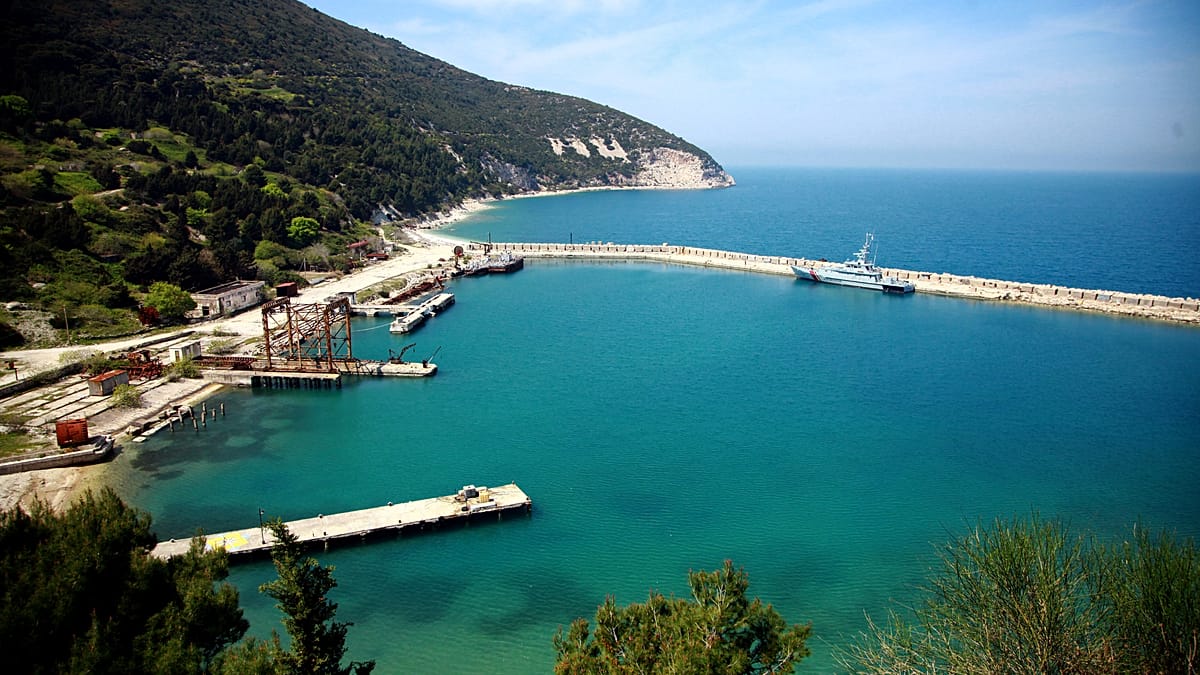
The nickname refers to Sazan Island, a largely uninhabited Albanian outpost at the junction of the Adriatic and Ionian Seas, near the city of Vlorë. Covering about 5.7 square kilometres, it is Albania’s largest island and has a long military history. During the Ottoman period it was sparsely populated, but its strategic location made it a coveted naval base. Italy occupied the island in 1914, formally annexing it after World War I and fortifying it under Benito Mussolini. After World War II, the island returned to Albania and became a secretive military site under the communist regime of Enver Hoxha, dotted with abandoned tunnels and hundreds of Cold War bunkers.
Today, Sazan is at the centre of a proposed €1.4 billion resort development by Kushner’s investment firm, Affinity Partners. The plan includes hotels, villas, apartments, a marina, and other luxury facilities, marketed as a high-end “eco-resort” for wealthy international visitors. The Albanian government supports the project, arguing it will create jobs and boost tourism along the Albanian Riviera, one of the Mediterranean’s fastest-growing destinations.
Why Are Albanians Protesting?
Environmental groups and local activists argue that the development threatens the Narta Lagoon, a protected wetland and critical habitat for migratory birds, including flamingos. The pink flamingo has become the symbol of the protest movement, with demonstrators carrying flamingo placards, costumes, and banners. The campaign, sometimes called Albania’s “Flamingo Revolution,” first emerged against resort developments in the Narta Lagoon and has since expanded to oppose the Sazan Island project.
Protesters also cite a lack of transparency in the approval process. They accuse the government of fast-tracking the project without adequate environmental impact assessments or public consultation. The demonstrations have drawn support from across the political spectrum, with some critics framing the issue as a test of Albania’s sovereignty and environmental stewardship.
Prime Minister Edi Rama has dismissed the protests, claiming they are part of a “hybrid war” against Albania’s development. In a recent statement, he accused foreign actors of stoking unrest to undermine the country’s progress. For more on this, see our report: Albanian PM Claims Hybrid War Behind Protests Over Kushner-Linked Resort.
Broader European Context
The controversy highlights tensions across Europe between economic development and environmental conservation. Similar debates have erupted in Greece, Croatia, and Italy over coastal tourism projects. The European Union has no direct jurisdiction over Albania’s internal planning decisions, but the country is a candidate for EU membership, and the bloc has funded environmental protection projects in the region. The protests also reflect a growing civic activism in the Western Balkans, where citizens increasingly demand accountability from governments and foreign investors.
For a deeper look at the protests, see our coverage: Albanian Protests Enter Third Day Over Kushner-Linked Coastal Resort and Albanian Protests Against Kushner-Linked Resort Enter Second Day.
As the demonstrations continue, the fate of Sazan Island remains uncertain. What is clear is that the “Flamingo Revolution” has tapped into a deep well of public concern about the future of Albania’s natural heritage and the influence of foreign capital in its development.