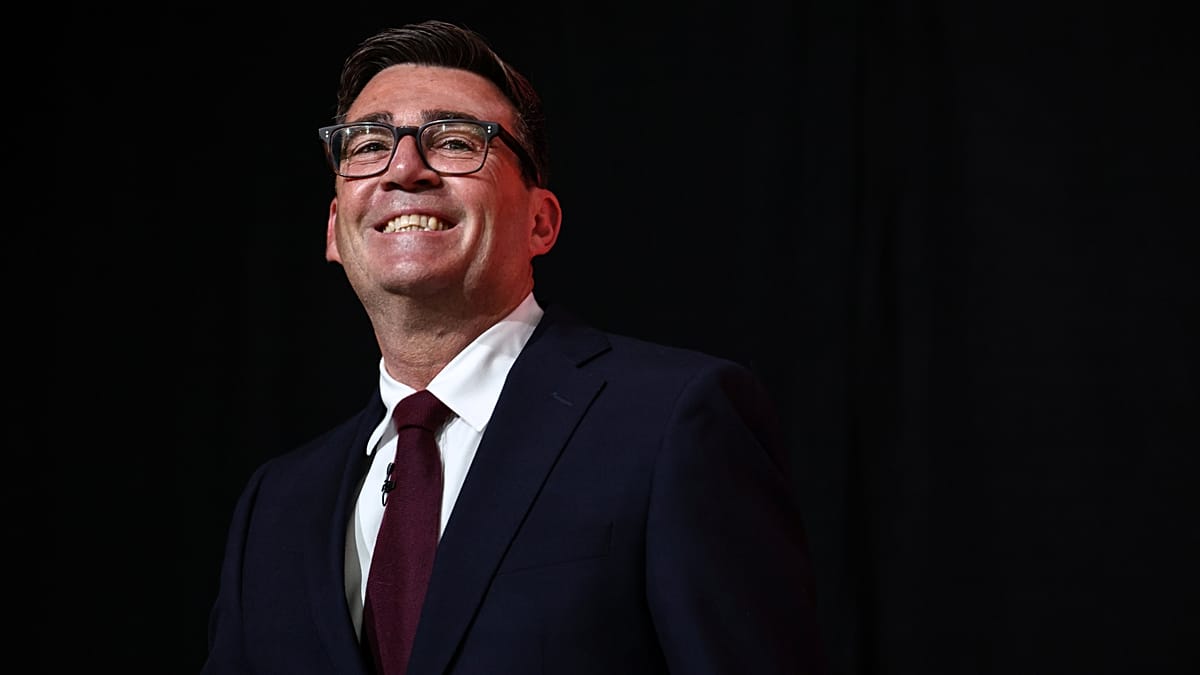
Andy Burnham will become the United Kingdom's prime minister on Monday, following an invitation from King Charles III to form a government. The handover from Keir Starmer, who resigned earlier in the day, marks the latest chapter in a period of intense political instability that has seen seven prime ministers in ten years.
Burnham, the former mayor of Greater Manchester, is expected to travel to Buckingham Palace for the formal appointment before delivering his first speech as prime minister at 1:40 pm CET from Downing Street. The transition comes after Starmer's Labour government struggled with internal divisions and a stalled economic recovery, prompting his resignation.
A New Leader for a Fractured Political Landscape
Burnham's ascent follows a rapid leadership contest within the Labour Party, where he secured the backing of MPs and party members after Starmer stepped down. The new prime minister inherits a country grappling with high inflation, strained public services, and a contentious Brexit legacy that continues to shape relations with the European Union.
Analysts expect Burnham to maintain continuity in foreign policy, particularly regarding the EU. According to a recent analysis, Burnham is expected to continue Starmer's EU policy, focusing on incremental improvements to the Trade and Cooperation Agreement rather than pursuing full re-entry. This approach may disappoint some pro-European factions within Labour but is seen as pragmatic given the political climate.
Domestically, Burnham faces immediate pressure to address the cost-of-living crisis and restore confidence in public institutions. His tenure as mayor of Greater Manchester earned him a reputation for progressive policies on housing and transport, but critics question whether he can replicate that success on a national scale. The new prime minister has yet to announce his cabinet, leaving uncertainty about key appointments in areas such as health, education, and the economy.
The transition also occurs against a backdrop of broader European political shifts. In Germany, the resignation of CDU/CSU parliamentary leader Jens Spahn over a surrogacy controversy has added to the sense of flux in major EU capitals. Meanwhile, Ukraine's parliament approved Serhii Koretskyi as prime minister amid an energy crisis, highlighting the continent's interconnected challenges.
Burnham's first weeks in office will be closely watched by European leaders, particularly as the UK seeks to redefine its role post-Brexit. The new prime minister has signalled a desire for closer cooperation on security and climate change, though concrete policy proposals remain scarce. His ability to navigate these issues will determine whether the UK can emerge from its period of political turbulence or continue to face instability.
As Burnham prepares to take the reins, the coming days will reveal the direction of his government. For now, the focus is on the ceremonial transfer of power and the speech that will set the tone for his premiership.