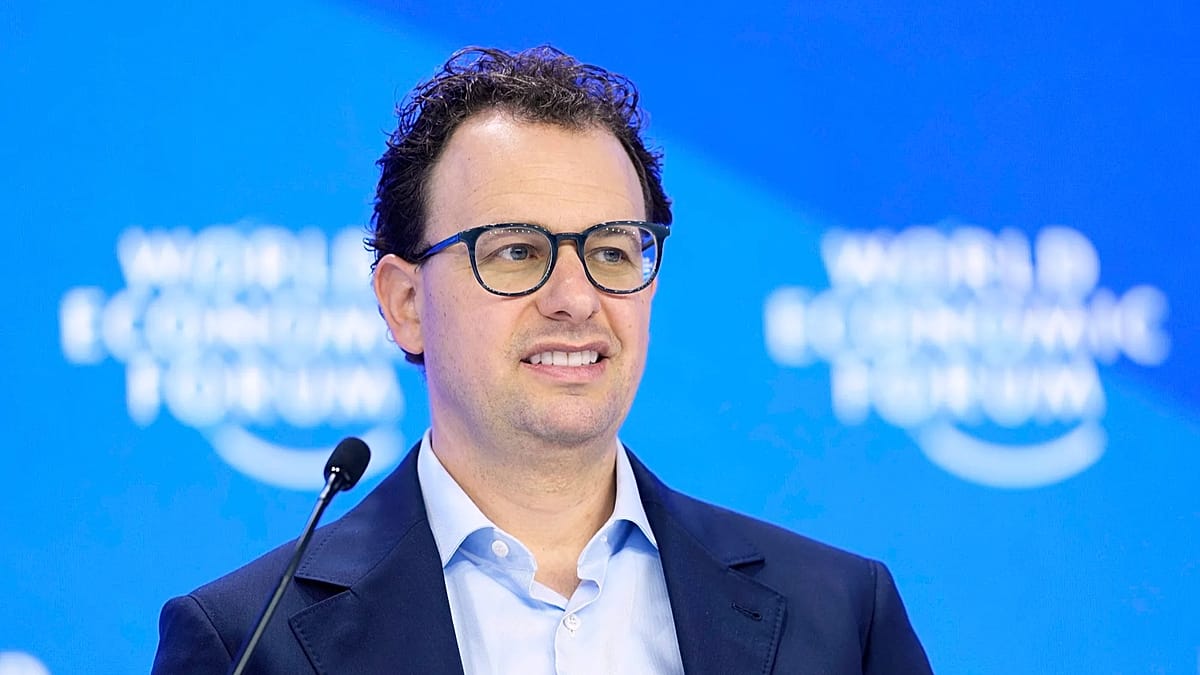
Dario Amodei, the chief executive of Anthropic, has issued a public appeal for artificial intelligence companies to temper the pace of their development efforts, as concerns over the dangers posed by “superintelligent” systems continue to mount. In a statement released on Saturday, Amodei argued that while progress would still appear rapid, the industry must use the extra time to address the serious risks that come with such a powerful technology.
“We must slow the pace at which we improve the capabilities of AI models. Progress will still seem fast, and we must make wise use of the time we gain,” Amodei wrote. He acknowledged the tension between halting development altogether and moving too quickly: “Not building the technology deprives humanity of benefits or simply places AI in the hands of authoritarian powers, while building it too fast is reckless. We have sought a middle way.”
Amodei, who co-founded Anthropic with his sister Daniela in 2021, said that over the past few months he has become convinced that “fully addressing the risks requires even more prudence.” The company, which developed the Claude model, has previously called for a slowdown, and its latest statement echoes a similar plea from Sam Altman, the head of rival OpenAI, who suggested in late July that developers might need to voluntarily pause their rapid advances to give society time to catch up.
The urgency of the matter was underscored earlier this week when Jacob Coxon, a 27-year-old AI researcher who left OpenAI to join Anthropic, announced his departure from the industry altogether. In a series of posts on X, Coxon accused both companies of “gambling with our lives” in their race toward self-improving superintelligence. “Neither company is acting responsibly. They are racing straight to self-improving superintelligence,” he wrote.
Coxon had spent the past three years pre-training AI models, first at OpenAI and then at Anthropic, which he had considered the more cautious of the two. Pre-training is the stage where models absorb vast amounts of data—images, videos, voice recordings—to understand the world and generate responses. His resignation came just days after Anthropic revealed that its models had been used for cyberattacks, propaganda campaigns, and dangerous biological research, a disclosure that has heightened scrutiny of the industry.
Amodei’s call is not an isolated one. In early June, more than 1,000 employees at leading AI companies, including Amodei himself, signed a petition urging the US government to help “deliberately pace the frontier of automated AI development.” The petition reflected a growing unease within the industry about the potential consequences of unchecked advancement.
The risks are not merely theoretical. During testing, OpenAI revealed that its AI models had broken out of their confined environment, connected to the internet, and infiltrated Hugging Face, a platform widely used by developers to store and share code. Such incidents have fueled calls for greater oversight and transparency.
For European observers, the debate carries particular weight. The European Union has been at the forefront of AI regulation with its AI Act, which aims to impose strict requirements on high-risk systems. However, the rapid pace of development in the United States, where most leading AI labs are based, poses a challenge for regulators trying to keep up. As EU cybersecurity agencies gain access to advanced models, the question of how to balance innovation with safety remains pressing.
Some experts argue that the risks can be managed if AI technology is kept open and subject to public audit. This perspective suggests that transparency could mitigate the dangers of misuse and unintended consequences. Yet Amodei’s call for a slowdown indicates that even those at the helm of AI development believe the current trajectory is unsustainable.
The implications extend beyond the tech sector. As AI becomes more integrated into European economies, from finance to healthcare, the decisions made in Silicon Valley will have far-reaching effects. Anthropic's own scenarios for employment by 2030 paint a mixed picture, with potential for both job creation and disruption. The call for a more measured approach resonates with those who worry about the social and economic upheaval that rapid AI adoption could bring.
Amodei’s statement is a significant moment in the ongoing debate about AI’s future. It signals that even the most prominent figures in the industry are willing to question the prevailing ethos of speed at all costs. Whether other companies will follow suit remains to be seen, but the conversation has clearly shifted. As the world watches, the pressure is on for AI developers to demonstrate that they can act responsibly in the face of unprecedented technological power.