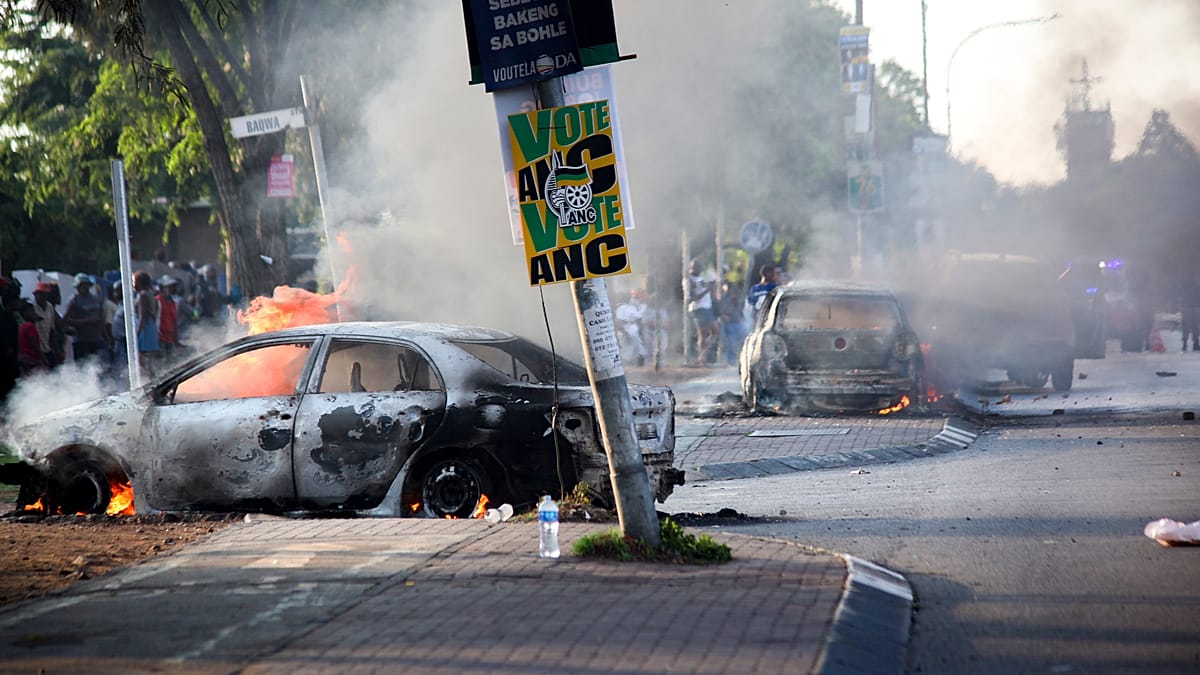
South Africa witnessed a fresh wave of anti-immigration violence on Thursday, as protests in Soweto and Durban descended into arson and looting. The unrest was triggered by a Constitutional Court ruling that relaxed restrictions on asylum applications, a decision that has inflamed tensions in communities already struggling with high unemployment and strained public services.
In Soweto, the historic township outside Johannesburg, demonstrators blocked roads and set fire to vehicles, while shops owned by foreign nationals were ransacked. Similar scenes unfolded in Durban, where police fired rubber bullets to disperse crowds. Local authorities reported several injuries, though no deaths have been confirmed.
A ruling that changed the rules
The Constitutional Court's decision struck down a regulation that required asylum seekers to apply for permits at designated refugee reception offices, a system that critics said left many applicants in legal limbo. The court ruled that asylum seekers could now apply at any Home Affairs office, a move intended to streamline the process and reduce backlogs.
However, the ruling has been met with anger by some South Africans who argue that the country's immigration system is already overstretched. "We are not against refugees, but the government must protect our people first," said one protester in Soweto, who asked not to be named. "Foreigners are taking jobs and putting pressure on hospitals and schools."
The violence echoes similar outbreaks in recent years, including the 2019 xenophobic attacks in Johannesburg and Durban that left dozens injured and prompted regional condemnation. Analysts note that anti-immigrant sentiment often spikes during periods of economic hardship, and South Africa's unemployment rate stands at over 32%, one of the highest in the world.
Regional and international reactions
The South African government has condemned the violence, with President Cyril Ramaphosa calling for calm and urging communities to resolve disputes through dialogue. "No grievance justifies the destruction of property or the targeting of fellow human beings," he said in a statement.
The unrest has also drawn attention from across the continent, where many countries have citizens living in South Africa. Nigeria, Zimbabwe, and Mozambique have previously issued travel advisories during such outbreaks. The African Union has called for the protection of foreign nationals and respect for the rule of law.
For Europe, the events in South Africa serve as a reminder of the complex dynamics surrounding migration and asylum, a debate that remains highly charged across the continent. From the student protests in France to the immigration enforcement debate in the United States, the question of how to balance security, economic pressures, and humanitarian obligations is a global one.
In the European Union, member states have struggled to agree on a common asylum policy, with countries like Greece and Italy bearing the brunt of arrivals across the Mediterranean. The bloc's new Pact on Migration and Asylum, adopted earlier this year, aims to create a more predictable system, but implementation remains uneven.
Meanwhile, in South Africa, the immediate focus is on restoring order and addressing the underlying grievances. Community leaders in Soweto and Durban have called for dialogue between locals and foreign nationals, while civil society groups have launched campaigns to counter xenophobia.
The Constitutional Court's ruling is seen as a victory for human rights advocates, who argue that asylum seekers deserve dignity and due process. But as the flames in Soweto and Durban showed, the gap between legal principles and social realities can be dangerously wide.
As South Africa grapples with this latest outbreak, the world watches closely. The country's history of struggle against apartheid gives it a moral authority on human rights, yet its own treatment of migrants often falls short of that ideal. For Europe, the lesson may be that migration policy cannot be divorced from social cohesion and economic opportunity.