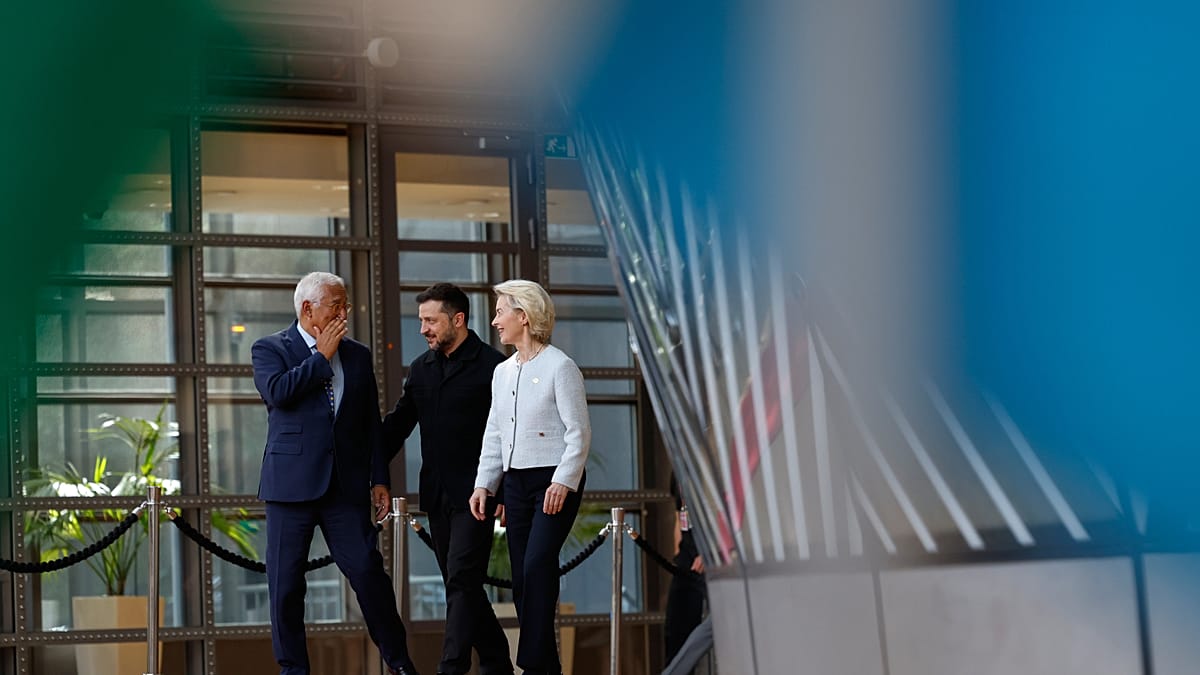
In the hallways of the Justus Lipsius building in Brussels, where EU leaders gathered for a summit this week, the news spread quickly: António Costa's head of cabinet had placed calls to Russian diplomatic channels without prior consultation of all 27 member states. The revelation, which emerged as the summit unfolded, triggered the predictable cycle of leaks, denials, and finger-pointing that defines the Brussels bubble.
Yet for those familiar with the mechanics of European diplomacy, the episode is less a scandal than a routine—if sensitive—part of the job. Costa, who took over as President of the European Council in December, has made preserving unity among member states the central pillar of his mandate. That unity, already tested by diverging views on Ukraine, energy sanctions, and China trade, requires constant maintenance. And maintenance sometimes means talking to the other side.
The calls in question—two in total, though one lasted only thirty seconds—were reportedly made at Costa's request to test diplomatic channels with Moscow. They were not about negotiating peace or lifting sanctions, but about probing whether Russia is serious about engaging in any dialogue at all. As one European official put it, "You cannot manage a crisis if you refuse to pick up the phone."
The timing, however, was awkward. The calls came just days after the G7 summit in Évian-les-Bains, where French President Emmanuel Macron orchestrated a near-perfect meeting that produced a joint declaration on Ukraine and a de-escalation of US-Iran tensions. Macron's "Évian moment" was hailed as a turning point, with Europeans feeling they had finally secured a seat at the table. The last thing anyone wanted was a story about Brussels reaching out to Moscow behind their backs.
But Costa's defenders argue that the outrage is misplaced. The European Council president is not a foreign minister; he is a facilitator of consensus. His job is to keep the 27 member states aligned, which requires knowing what Russia is thinking, even if that means informal contacts. "It's not about being soft on Putin," said a senior EU diplomat. "It's about being smart. You can't negotiate with yourself."
The controversy also highlights a deeper tension in European diplomacy: the gap between public posturing and private necessity. Every EU leader publicly condemns Russia's aggression, but several member states—including Hungary, Slovakia, and even Italy—have maintained backchannel communications with Moscow for years. Costa's calls were simply more visible because they came from the top of the EU institutional pyramid.
Meanwhile, the summit itself moved on to other pressing issues: Ukraine's air defence needs, a looming trade imbalance with China, and the challenge of financing a €2 trillion budget. Leaders also discussed the new commitments for Ukraine that emerged from the G7, including air defence systems and sanctions enforcement. Costa's phone calls were a sideshow, not the main event.
Managing Trump, Managing Moscow
The G7 in Évian was a masterclass in handling the unpredictable US President. Macron's strategy—flattery, charm, and a lavish dinner at the Palace of Versailles—paid off. Trump stayed for the entire summit, signed the joint declaration, and even helped broker a US-Iran deal that eased energy market pressures. European officials described a "real convergence" across the Atlantic on Ukraine, with both sides concluding that Russia does not want to negotiate peace.
But the episode also exposed the fragility of the transatlantic relationship. Italian Prime Minister Giorgia Meloni learned this the hard way when Trump publicly mocked her for "begging" for a photo at the G7. Meloni's defiant video response—recorded on an iPhone during the European summit—was a reminder that Europe cannot rely on any single leader to manage Trump. "There is no Trump whisperer," one diplomat noted. "You manage him, nothing more."
Costa's Russia calls, then, fit into a broader pattern: Europe must engage with difficult actors while maintaining its principles. The EU's dual-track approach—cooperating with the US where necessary, acting independently where possible—requires constant calibration. And that calibration sometimes involves uncomfortable conversations.
As the summit wrapped up, Costa's office issued a brief statement confirming the calls and stressing that they were "in line with the EU's policy of maintaining channels of communication where necessary." The drama will likely fade, but the underlying question remains: how do you keep unity while talking to the enemy? The answer, for now, is that you do both—and hope the bubble doesn't burst.