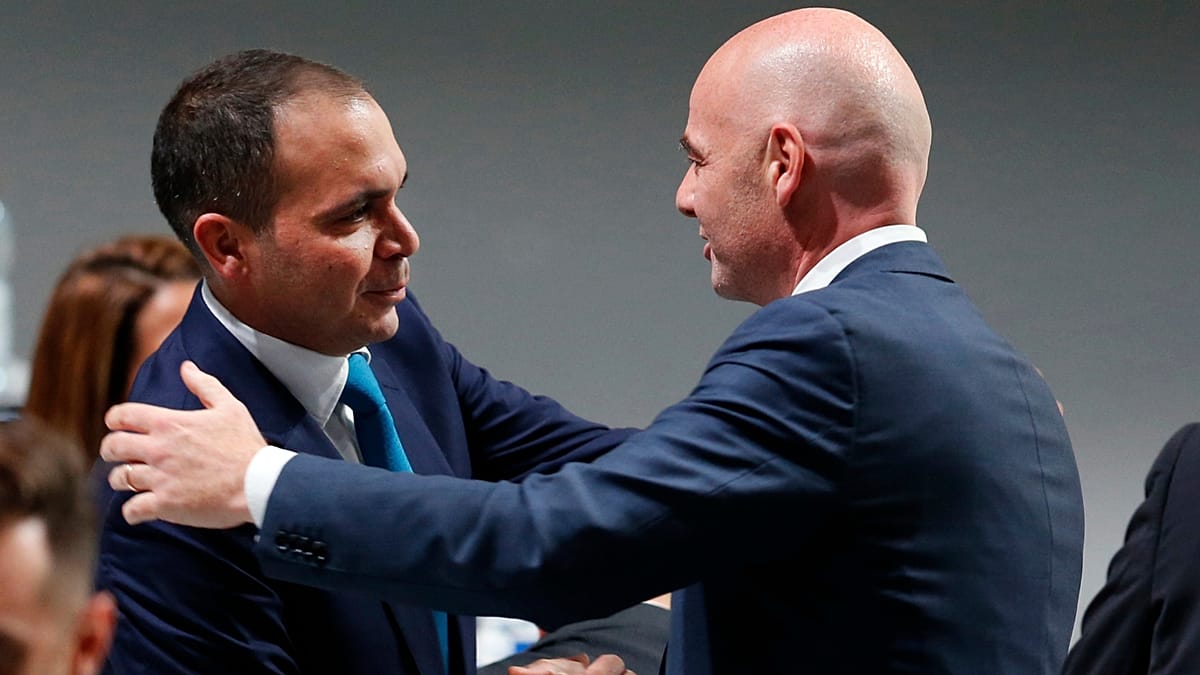
Former FIFA vice president Prince Ali bin Al Hussein has become the latest prominent figure in football to publicly challenge Gianni Infantino's leadership, as the FIFA president's re-election prospects grow increasingly uncertain. In a pointed social media post on Tuesday, the Jordanian royal accused Infantino of attempting to leverage financial support for the Jordanian Football Association in exchange for a political endorsement.
Prince Ali, a son of the late King Hussein of Jordan, revealed that during the World Cup in June—where Jordan made its tournament debut—he was approached with a proposition. He was told that if he endorsed Infantino, "it would go a long way to helping our FA out." The prince, who finished third in the five-candidate race that first elected Infantino in February 2016, said he refused to comply.
"We pride ourselves in Jordan in upholding ethical values. We did not endorse him before and certainly will not now," Prince Ali wrote. "But the whole situation amounts to blackmail and we refuse to give in to that."
The accusation comes at a delicate moment for Infantino, who is facing a fierce backlash from global soccer leaders over his now-abandoned plan to sell a stake in future World Cup profits to a group of investors led by Joshua Kushner. The fallout has already prompted UEFA and CONCACAF to turn against Infantino, and European football's governing body is reportedly searching for a rival candidate to challenge him.
Unpaid prize money and a pattern of neglect
Prince Ali's criticism extends beyond the alleged quid pro quo. He said the Jordanian federation has still not received the prize money owed for reaching the final of the FIFA Arab Cup in December 2022, a match played in Qatar that Jordan lost to Morocco. Jordanian media reported last year that the beaten finalist was due to receive $4.2 million.
"The money our team should receive for having reached the final has not been delivered yet," Prince Ali wrote, "while at the same time FIFA brags about how many billions they have in reserve." He added that FIFA has been "refusing to help us on any of these or other matters" for months, concluding that "the problem really is with leadership."
The prince's remarks echo broader discontent with Infantino's management style, which critics have long described as autocratic and opaque. His tenure has been marked by a series of controversies, from the 2015 corruption scandal that preceded his election to the recent failed investment scheme. A timeline of Infantino's decade at FIFA highlights the recurring themes of ethical lapses and governance concerns.
The pressure on Infantino has intensified in recent days. Wales has become the first nation to formally withdraw its support for his re-election, a symbolic but significant blow. Meanwhile, the collapse of the private equity plan has alienated even his former allies at UEFA, who are now exploring alternatives. The prospect of a credible challenger emerging from within European football is growing, though no candidate has yet stepped forward publicly.
For Prince Ali, the issue is not merely personal. He has positioned himself as a reformer within FIFA, having run against Infantino in 2016 on a platform of transparency and accountability. His latest intervention suggests that the grievances of smaller football nations are being ignored by a leadership focused on commercial interests and political survival.
"It is clear the problem really is with leadership," he reiterated, calling on FIFA to address the unpaid dues and to restore trust. Whether Infantino can weather this storm remains to be seen, but the chorus of criticism from figures like Prince Ali, combined with the institutional pushback from UEFA and others, indicates that his grip on power is far from secure.