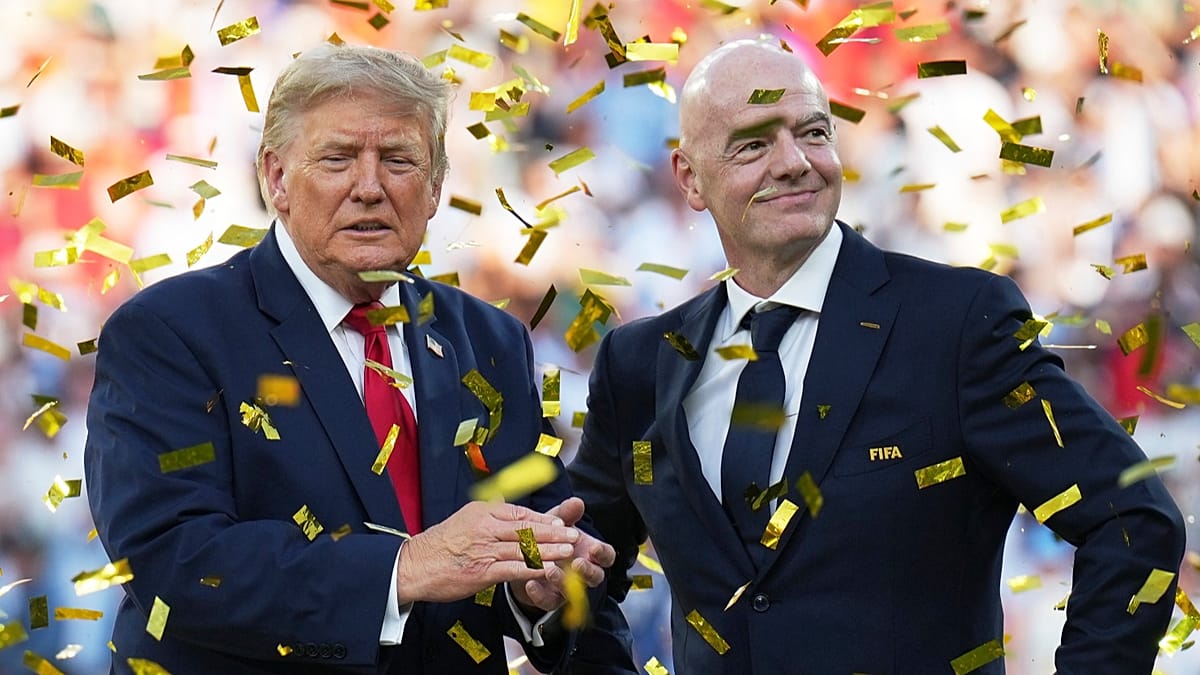
When Gianni Infantino took over from Sepp Blatter in 2016, he was meant to be the great reformer—the Swiss lawyer who would scrub the stain of corruption from FIFA and restore faith in the world's most popular sport. A decade on, the man from Visp, Valais, is instead one of the most polarizing figures in football, facing accusations that he has sold the game's soul to the highest bidder.
The latest flashpoint is Infantino's proposal to sell a stake in the FIFA World Cup to private investors—a plan that has prompted national teams across Europe to threaten a boycott of the tournament. It is a fitting culmination to a presidency that has lurched from one controversy to another. Here is a chronological look at the missteps and own goals that have defined his time in office.
2016–2017: Early ethics probes
Infantino's rise through UEFA's ranks—from legal adviser to deputy general secretary in 2007 and secretary general in 2009—positioned him as the insider who knew where the bodies were buried. His 2016 election victory was built on a promise to clean up FIFA's tarnished image. But within months, he was under investigation by FIFA's own ethics committee over his acceptance of private jet flights. He was cleared, but the reprieve was short-lived.
In 2017, his name surfaced in the Panama Papers, and the ethics committee opened a new inquiry into undisclosed meetings with Michael Lauber, Switzerland's attorney general at the time, whose office was investigating corruption in international football. Both men denied wrongdoing but offered no convincing explanation for their encounters. The case dragged on until 2020, when Infantino was finally cleared—a verdict that did little to silence his critics.
2018: Embracing Putin's Russia
The 2018 World Cup in Russia was, in Infantino's words, the "best World Cup ever"—a claim that ignored the host nation's 2014 annexation of Crimea, its treatment of LGBTQ+ people and racial minorities, and the ongoing conflict in eastern Ukraine. In 2017, he told "Western media" not to "paint with a dark paint everything that comes from the east—from Russia or the Arab world."
His courtship of Vladimir Putin was unapologetic. He described feeling like "a child in a toy shop" at the Kremlin and accepted the Order of Friendship from the Russian president in 2019. "This country, Russia, has changed," he declared. Four years later, Putin's forces invaded Ukraine, and the World Cup was being played in Qatar—another authoritarian state that Infantino would soon embrace.
2022: The Qatar World Cup and the 'I feel Qatari' speech
No moment better encapsulates Infantino's tenure than his pre-tournament press conference in Doha in November 2022. Facing questions about the deaths and abuses of migrant workers who built the stadiums, he lashed out at Western critics, accusing them of "hypocrisy" and moralizing. "I'm European. For what we Europeans have been doing around the world in the last 3,000 years, we should be apologising for the next 3,000 years before starting to give moral lessons to people," he said.
Then came the line that made headlines worldwide: "Today I have very strong feelings. Today I feel Qatari. Today I feel Arab. Today I feel African. Today I feel gay. Today I feel disabled. Today I feel a migrant worker." He explained that he knew what it was like to be bullied as a red-haired, freckled child at school. Critics were quick to point out the absurdity of comparing ginger hair to the systematic oppression of LGBTQ+ people and the exploitation of migrant labor. The speech was widely condemned as flippant, out of touch, and deeply insulting.
2024: Saudi Arabia and the 2034 World Cup
Infantino's relationship with Saudi Arabia has been even more controversial. In 2024, state-owned oil giant Aramco signed a four-year global partnership with FIFA, and the announcement that Saudi Arabia would host the 2034 World Cup was met with international uproar. Human rights organizations noted the kingdom's abysmal record on women's rights, LGBTQ+ rights, and freedom of expression.
Worse, Infantino had already congratulated Saudi Arabia on 31 October 2023—a full year before the official vote—and had reportedly pressured other Asian Football Confederation members to withdraw their bids. The process was a sham, critics said, and it confirmed that FIFA under Infantino was less a sporting body and more a vehicle for sportswashing.
The breaking point: World Cup privatization
The latest controversy is Infantino's plan to sell a stake in the World Cup itself, a move that would hand control of football's crown jewel to private investors. European national teams have responded with threats of a boycott, and the backlash has been fierce. Even Infantino's staunchest allies in the game have questioned whether he has lost sight of what football means to the millions who follow it.
As the 2026 World Cup approaches—a tournament co-hosted by the United States, Canada, and Mexico—Infantino faces the most serious challenge of his presidency. His defenders point to record revenues and the expansion of the tournament to 48 teams, but his critics see a man who has consistently sided with autocrats and corporations over the sport's integrity. The question now is whether European football's governing bodies will follow through on their boycott threat, or whether Infantino will once again find a way to bend the game to his will.
For a deeper dive into Infantino's recent defensive outburst, see his Instagram rant telling critics to meditate. And for the latest on his ambitions beyond FIFA, check the analysis of his UN bid.