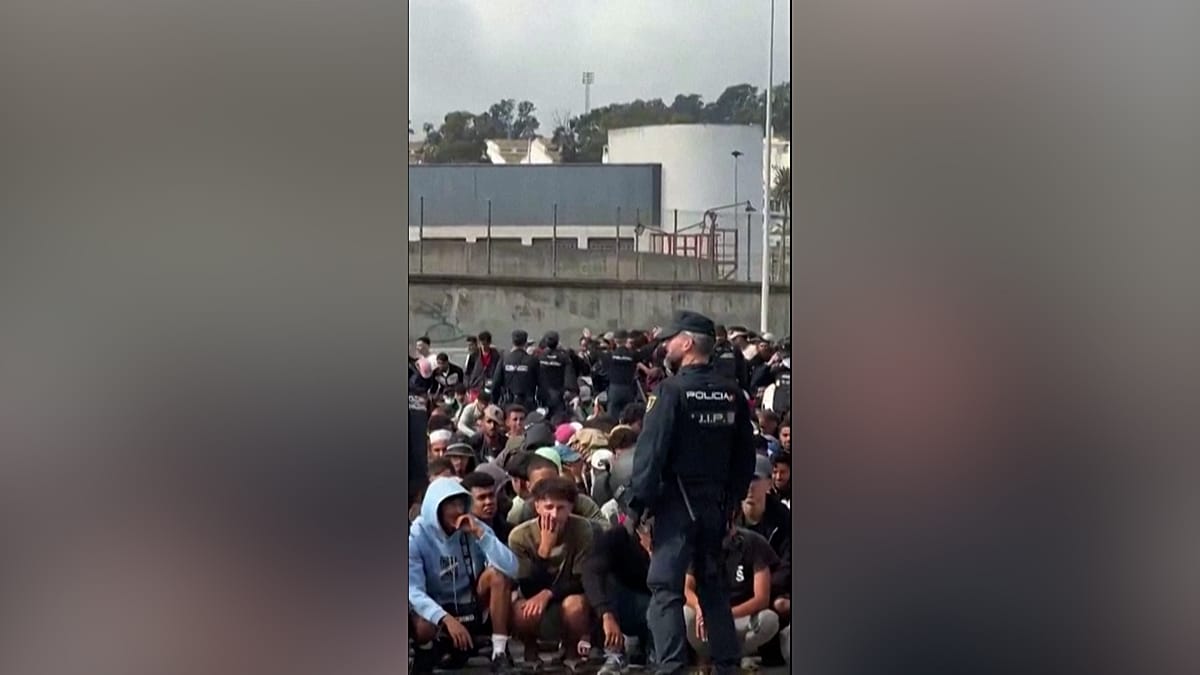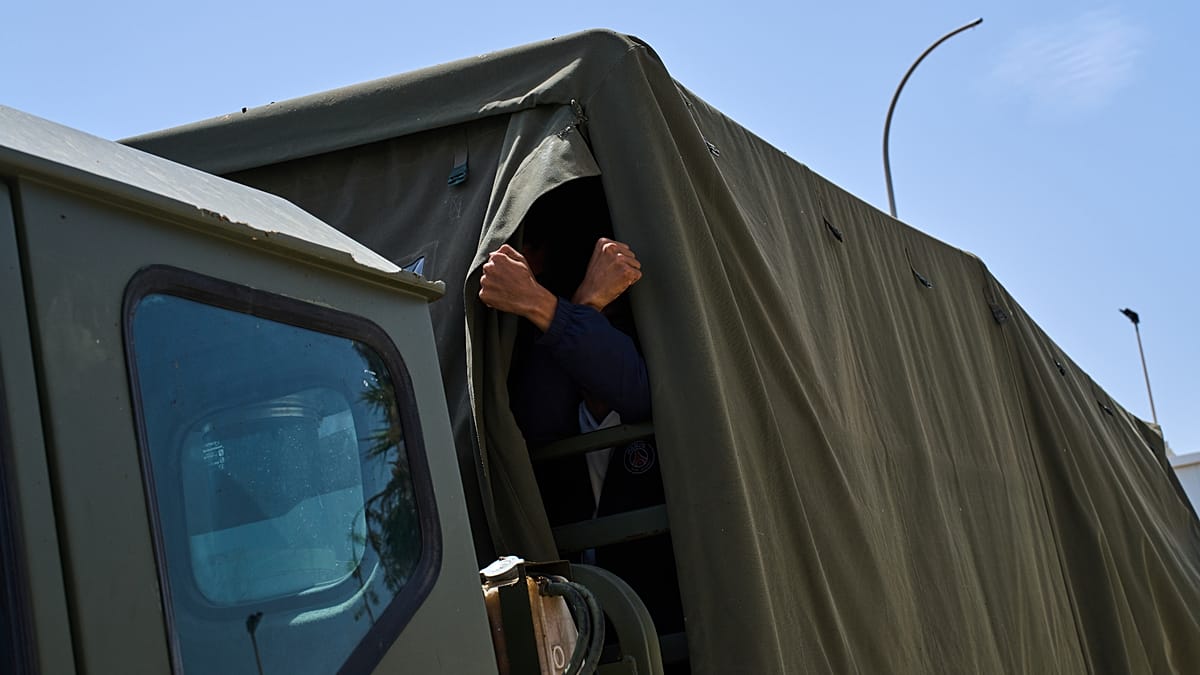
Spanish security services have reportedly identified several people with prior jihadist links among the migrants who entered the North African enclave of Ceuta during last week's mass influx, according to the Spanish news outlets El Español and The Objective. Both cited sources familiar with the investigation.
The reports, which have not been officially confirmed, say that officers from the National Police's General Information Commissariat (CGI) and the Civil Guard's Intelligence Headquarters (JIGC) reviewed surveillance footage and identified at least a dozen individuals who had previously been arrested, convicted, and later deported to Morocco for offences linked to jihadist terrorism.
Euronews has contacted Spain's Interior Ministry, National Police, and Civil Guard for comment but has not yet received a response.
Evolving threat landscape
Last week, terrorism experts interviewed by Euronews said the jihadist threat in Spain has evolved into a "fourth phase," characterised by increasingly decentralised radicalisation through social media, messaging apps, and propaganda shared in memes and short videos, rather than through traditional hierarchical organisations. This shift makes it harder for authorities to track individuals who may be inspired by extremist content online.
The experts also highlighted the close counter-terrorism cooperation between Spain and Morocco, particularly in intelligence sharing and the monitoring of radicalised individuals. They said this cooperation is crucial when screening large-scale migration flows, as it allows Spanish authorities to cross-check identities and backgrounds against Moroccan databases.
The reports come amid heightened scrutiny of the migrant influx that strained Ceuta last week, when thousands of people crossed the border in a single day. The surge was reportedly triggered by social media rumours that the border would be opened, leading to a chaotic scene that overwhelmed local authorities.
If confirmed, the presence of suspected jihadists among the arrivals would raise serious security concerns for Spain and the wider European Union. Ceuta and its sister enclave Melilla are the EU's only land borders with Africa, making them a focal point for migration and security challenges.
However, similar allegations have been made in the past. In May 2021, when thousands of migrants entered Ceuta via the El Tarajal breakwater, the Spanish government dismissed media reports alleging that jihadist militants had infiltrated the arrivals, describing them as a "malicious hoax." That incident led to a diplomatic crisis between Spain and Morocco, and the current reports are likely to be met with caution until official confirmation is provided.
Security analysts note that even a small number of individuals with terrorist backgrounds could pose a significant risk, particularly if they manage to blend into migrant flows and later move within the Schengen area. The EU has been working to strengthen external border controls and improve information sharing among member states, but the challenge remains complex.
For now, the Spanish authorities have not issued an official statement, and the reports remain unverified. The Interior Ministry is expected to address the issue in the coming days, possibly in response to parliamentary questions or media inquiries.
The situation in Ceuta has also drawn attention to the broader migration dynamics in the region, with Spain and Morocco working together to manage flows while maintaining security. The close cooperation between the two countries' security forces is seen as a key element in preventing potential threats from entering European soil.
As the investigation continues, European Pulse will monitor developments and provide updates as more information becomes available.