In the high-altitude deserts of northern Argentina, sunshine is abundant. The province of Jujuy has now found an innovative way to harness that resource: powering a railway.
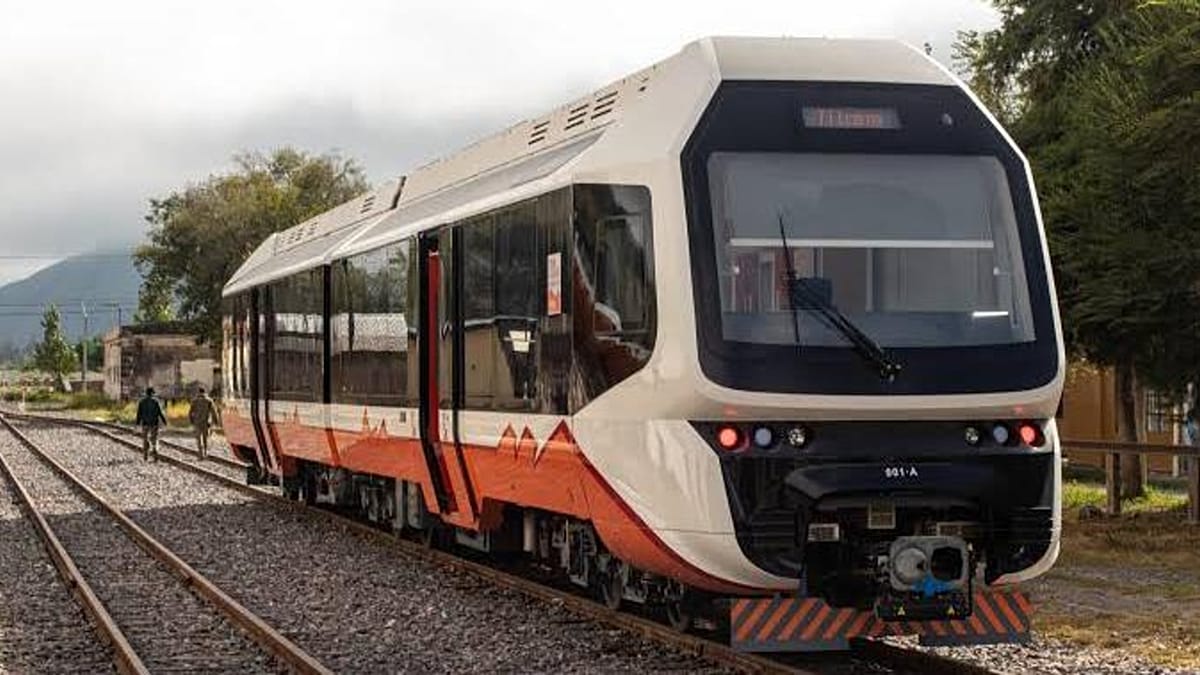
The Tren Solar de la Quebrada, Latin America's first solar-powered train, runs 42 kilometres through the Andes, connecting six towns in the Quebrada de Humahuaca valley, a UNESCO World Heritage site that has served as a passage through the mountains for millennia. Launched in June 2024, the service aims to attract tourists to the valley's communities while avoiding the emissions of a diesel locomotive.
How the solar train works
Despite its name, the train does not carry photovoltaic panels on its roof. Instead, it is powered by six lithium batteries that are charged using solar energy generated in Jujuy. The batteries give the train a range of 100 to 120 kilometres, more than double the length of its current route. Regenerative braking also converts some of the train's motion back into electricity, stored for later use.
Two fast-charging points at Volcán and Purmamarca allow operators to recharge along the way, with a third planned for the northern terminus at Tilcara. This battery-based system eliminates the need for diesel or overhead electrical lines, making it a flexible and clean option for the region.
The service has been well received. It brought passenger rail back to Quebrada de Humahuaca for the first time in three decades, and the Jujuy government reports that more than 90,000 people have ridden the train since its launch.
Europe's parallel push for greener rails
Argentina's initiative mirrors a broader trend in Europe, where railways are increasingly shifting away from fossil fuels. According to Eurostat, nearly 58 per cent of the EU's railway network was electrified in 2024. The Netherlands' national operator NS has been purchasing renewable electricity to match its trains' consumption since 2017, and since 2025 that mix has included both wind and solar power.
In Switzerland, start-up Sun-Ways has taken a different approach: it installed 48 solar panels between the rails on a 100-metre stretch of active track in Buttes in 2025. The pilot generated about 16,000 kWh in its first year, enough to power four or five European homes annually. Sun-Ways has also signed an agreement with Italian railway infrastructure company GCF to explore similar installations in Italy.
These efforts are part of a wider movement to decarbonise transport across the continent. For more on how Europe is testing solar storage, see this look at battery durability testing. And for a broader view of storing renewable energy, Europe's underground battery concept offers another avenue.
The Tren Solar de la Quebrada demonstrates that solar-powered rail is viable even in remote, challenging terrain. As Europe continues to electrify its networks and experiment with innovative solar installations, the Argentine example offers a compelling case study in how renewable energy can be integrated into public transport.