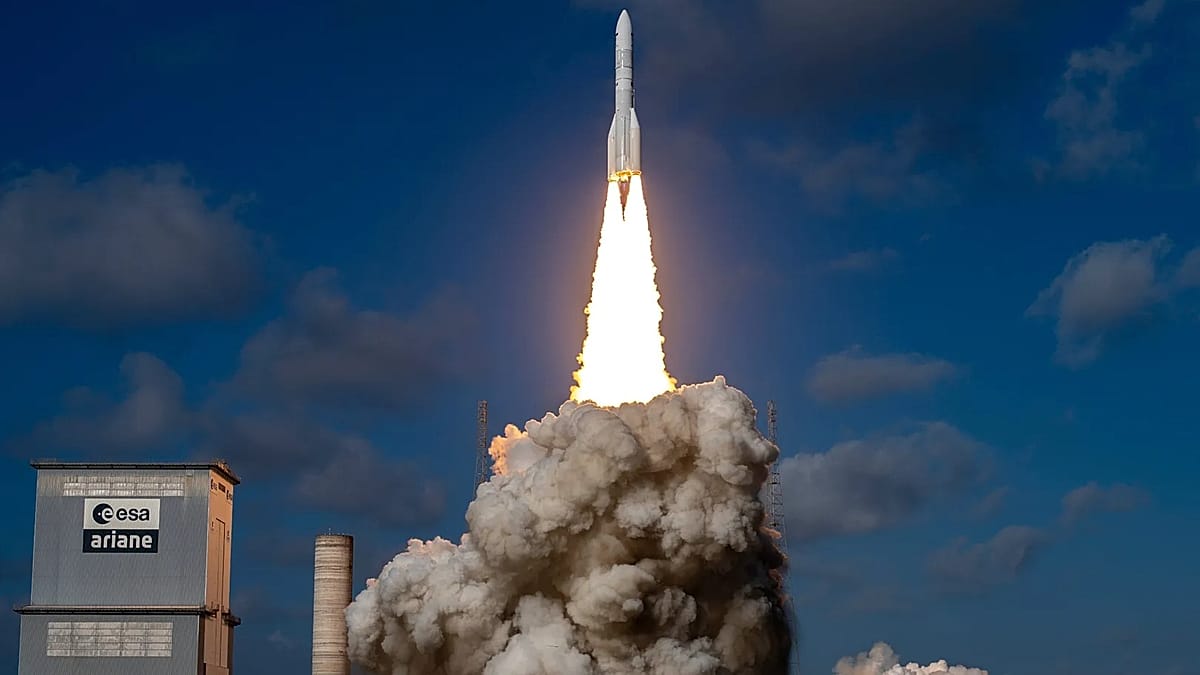
The roar of Ariane 6's engines echoed across the Kourou spaceport in French Guiana as the rocket lifted off, carrying the MTG-I2 satellite into orbit. For the lucky spectators gathered at the Tucán viewing site, it was a rare and unforgettable spectacle—a moment that underscored Europe's growing ambitions in space.
MTG-I2 is the second imaging satellite in the Meteosat Third Generation (MTG) series, a collaborative project between the European Space Agency (ESA) and EUMETSAT. Once operational, it will join its predecessor to provide high-resolution imagery of weather systems over Europe and Africa, helping meteorologists track storms, fog, and other atmospheric phenomena with unprecedented accuracy.
The launch, which took place on [date], was a significant milestone for the Ariane 6 programme. After years of delays and a somewhat rocky debut, the rocket is now proving its reliability. This mission also completed the initial constellation of MTG satellites, as noted in the completion of Europe's new weather satellite trio.
For the onlookers in French Guiana, the experience was visceral. "You feel the vibration in your chest before you even see the flame," said Marie Lefèvre, a French engineer who had travelled from Toulouse to witness the launch. "It's a reminder that space is not just about data—it's about human daring."
Others echoed that sentiment. "I've watched every Ariane launch since the 1980s," said Klaus Weber, a German retiree who made the trip with his family. "But this one feels different. It's the future."
The MTG-I2 satellite is part of a broader European effort to maintain leadership in weather monitoring. With climate change making extreme weather events more frequent, the ability to predict and track them is more critical than ever. The satellite's advanced sensors will provide more frequent and detailed images, improving short-term forecasts and early warnings.
A boost for European space autonomy
Beyond meteorology, the successful launch is a strategic win for Europe's space sector. Ariane 6 is designed to be more flexible and cost-effective than its predecessor, Ariane 5, and is central to Europe's goal of independent access to space. The rocket's ability to carry both heavy and light payloads makes it a versatile workhorse for scientific and commercial missions.
The mission also highlights the collaborative nature of European space projects. While the rocket is developed by ArianeGroup, a Franco-German venture, the satellite was built by a consortium led by Thales Alenia Space, with contributions from companies across the continent. This pan-European effort is a testament to what can be achieved when nations pool their resources.
However, the road ahead is not without challenges. The space industry is becoming increasingly competitive, with private players like SpaceX offering lower costs. To stay relevant, Europe must continue to innovate. The recent ESA's €158.9m investment in PLD Space's MIURA 5 is a sign that the continent is looking to diversify its launch capabilities.
For now, though, the mood at Kourou was one of celebration. As the rocket disappeared into the clouds, leaving a trail of white smoke, the crowd broke into applause. "This is what Europe does best," said Italian astrophysicist Giulia Romano, who was covering the event for a science blog. "We build things together, and we make them work."
The MTG-I2 satellite will now undergo a series of checks before entering service later this year. Once operational, it will join its twin to provide continuous coverage of the Earth's weather, helping to protect lives and property across the continent and beyond.
As Europe looks to the stars, this launch is a reminder that the journey is as much about the people on the ground as it is about the machines in orbit. For the spectators at Tucán, it was a day they will not soon forget.