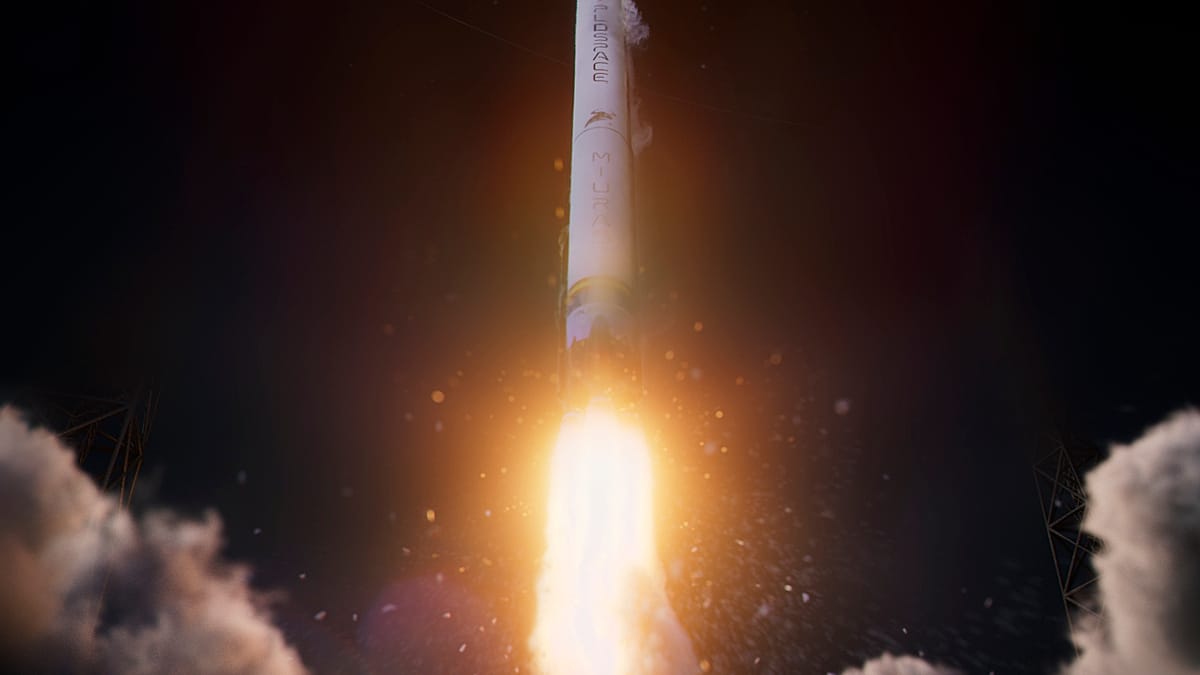
The European Space Agency (ESA) has taken a significant step toward reducing Europe's reliance on foreign launch providers by signing its first contract under the European Launcher Challenge (ELC). The agreement, announced this week, goes to PLD Space, a Spanish company based in Elche, which will receive €158.9 million to accelerate the development of its MIURA 5 rocket and prepare the groundwork for a future heavy-lift launcher.
The ELC programme, launched in 2023, aims to foster a competitive European launch industry capable of putting satellites into orbit without depending on non-European rockets. The contract with PLD Space is the first of several expected in this round, and it positions the Alicante-based firm as a key player in the continent's space ambitions.
Two-pronged investment
The funding is split into two main components. The first focuses on consolidating the commercial MIURA 5 service, with the goal of progressively increasing its launch rate through 2030. PLD Space says it is already seeing strong commercial interest from international customers, a sign that the rocket's market appeal is growing.
The second component, described by the company as “enhanced orbital capability,” will finance upgrades to MIURA 5 that allow it to carry heavier payloads and reach more distant orbits. It also includes the development of propulsive landing technology, a crucial first step toward making the rocket reusable.
According to PLD Space, many of the subsystems developed under this programme will not be exclusive to MIURA 5. They are designed to be transferred directly to MIURA Next, the company's planned family of heavy launchers. The idea is that every technical improvement certified now will shorten timelines and reduce risks when the larger rocket enters development.
“ESA's selection of PLD Space confirms the maturity of the roadmap we have been building for years,” said Ezequiel Sánchez, the company's executive chairman. He sees the contract as part of a trajectory that began with the MIURA 1 demonstrator and should culminate in the transfer of critical technology to the heavy launcher.
The MIURA 1, a suborbital demonstrator, was successfully launched in 2023, marking a milestone for the Spanish space sector. The new contract arrives in the final phase of MIURA 5's development, which is expected to succeed MIURA 1 as the company's orbital workhorse.
Part of a wider European push
PLD Space is not the only beneficiary of the ELC. Germany's Rocket Factory Augsburg has been awarded €186.9 million for its RFA One launcher, which will operate from the SaxaVord spaceport in Scotland, while Isar Aerospace has secured €197.8 million for its Spectrum rocket. These three companies were among five finalists shortlisted by ESA in July 2025, following twelve proposals from across Europe. The other two finalists, MaiaSpace and Orbex, did not receive contracts in this round.
The ELC was created with the goal of having a European successor to the Ariane 6 in place before 2030, one that does not depend on a single operator. At the ESA ministerial meeting in Bremen in November 2025, member states increased their funding commitment to €900 million, underscoring the political will to secure independent access to space.
For PLD Space, the contract adds to the €42 million it has already received from CDTI, Spain's centre for industrial technological development, through the Aerospace PERTE programme. This public support reflects Spain's growing ambition in the space sector, a trend also visible in other areas, such as the recent surge in Spanish tourism and the country's broader economic dynamism.
The development of a robust European launch industry is not just a matter of prestige; it has strategic implications. As African nations build their own space programmes to reduce dependence on Western providers, Europe must ensure it remains a competitive and reliable partner. The ELC contracts are a clear signal that the continent is serious about maintaining its place in the global space economy.
With the first contracts now signed, the focus shifts to execution. PLD Space and its German counterparts must deliver on their promises, proving that European innovation can match the pace of the commercial space race. The coming years will be critical, as the first MIURA 5 launches are expected to take place from French Guiana, and the company works toward its goal of reusability and heavier payloads.