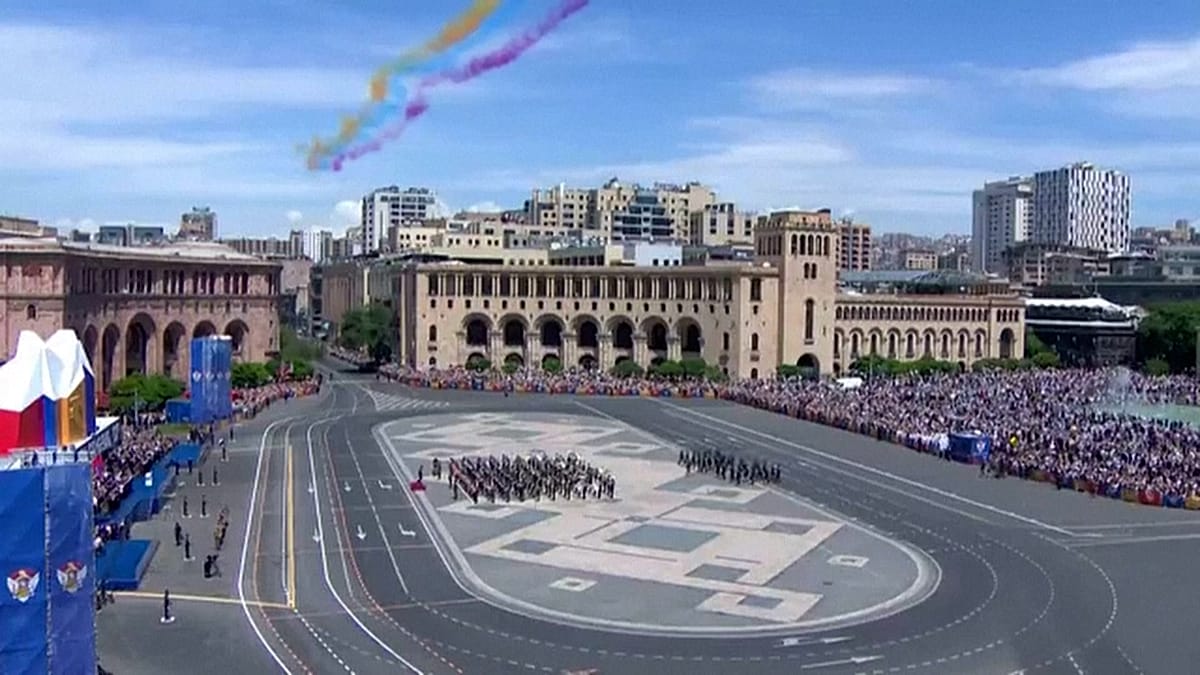
Armenia observed Republic Day on 28 May with a military parade in Yerevan, the first such display of armed forces since 2016. The parade, held in the capital's central square, featured thousands of soldiers, armored vehicles, and missile systems, underscoring Yerevan's focus on national security amid ongoing tensions with neighboring Azerbaijan.
A Show of Force in a Tense Region
The parade comes at a critical juncture for Armenia, which has been navigating a complex security landscape following the 2020 Nagorno-Karabakh war and subsequent border clashes. Prime Minister Nikol Pashinyan, who has faced domestic criticism over territorial losses, used the occasion to emphasize the importance of a modernized military. In his address, he stated that Armenia must bolster its defense capabilities to ensure sovereignty, a message resonating with a population still grappling with the aftermath of conflict.
Among the equipment on display were Russian-made Iskander missiles and drones, reflecting Armenia's continued reliance on Moscow for military hardware, even as Yerevan seeks closer ties with the West. The parade also included troops from the Russian-led Collective Security Treaty Organization (CSTO), of which Armenia is a member, though relations with the alliance have been strained over perceived inaction during border incidents.
The timing of the parade is notable, as Armenia prepares for a pivotal election in June. The political landscape is charged, with Pashinyan's government facing challenges from opposition factions that accuse him of mismanaging national security. The event served as a backdrop for the prime minister to project strength ahead of the vote, a move that aligns with recent endorsements from international figures, including former US President Donald Trump, who has backed Pashinyan's leadership. For more on this, see our report: Trump Endorses Pashinyan as Armenia Heads to Pivotal June Election.
European and Regional Implications
While Armenia is not a member of the European Union, its strategic location in the South Caucasus makes it relevant to European security interests. The country has been deepening ties with the EU through the Comprehensive and Enhanced Partnership Agreement (CEPA), which aims to foster political and economic integration. The parade, therefore, sends a signal to Brussels about Yerevan's commitment to stability in a region often seen as a corridor for energy and trade routes.
Armenia's relationship with the West has been evolving, particularly in the context of the TRIPP corridor—a proposed transport route linking the Persian Gulf to the Black Sea via Armenia and Georgia. This initiative, which has gained traction during recent diplomatic visits, could reduce dependence on traditional routes through Turkey and Iran. For insights into these developments, read our article: US and Armenia Advance TRIPP Corridor During Rubio's Brief Yerevan Visit.
The parade also occurs against a backdrop of shifting global alliances. As NATO questions US military commitments in Europe, and as Russia's influence wanes due to the war in Ukraine, Armenia is recalibrating its foreign policy. The country has sought to balance its traditional ties with Moscow with new partnerships, including with the EU and the United States. This balancing act is evident in the parade's mix of Russian hardware and nods to Western cooperation.
For European observers, the event highlights the fragility of peace in the Caucasus. The unresolved conflict with Azerbaijan over Nagorno-Karabakh remains a flashpoint, with occasional skirmishes along the border. The EU has mediated talks between the two countries, but a lasting settlement remains elusive. Armenia's military display may be seen as a deterrent, but it also risks escalating tensions if perceived as provocative by Baku.
In the broader context, the parade reflects a trend of militarization in the region, with neighboring countries also boosting defense spending. This has implications for European security, particularly for EU member states like Greece and Cyprus, which have their own concerns about regional stability. The EU's role as a mediator in the South Caucasus is thus more critical than ever.
As Armenia moves toward its June election, the parade serves as a reminder of the challenges facing the nation. The government's ability to balance internal political pressures with external security demands will be key to its future trajectory. For now, the display of military might in Yerevan is a clear statement: Armenia is ready to defend its interests, even as it seeks a path toward peace and integration with Europe.