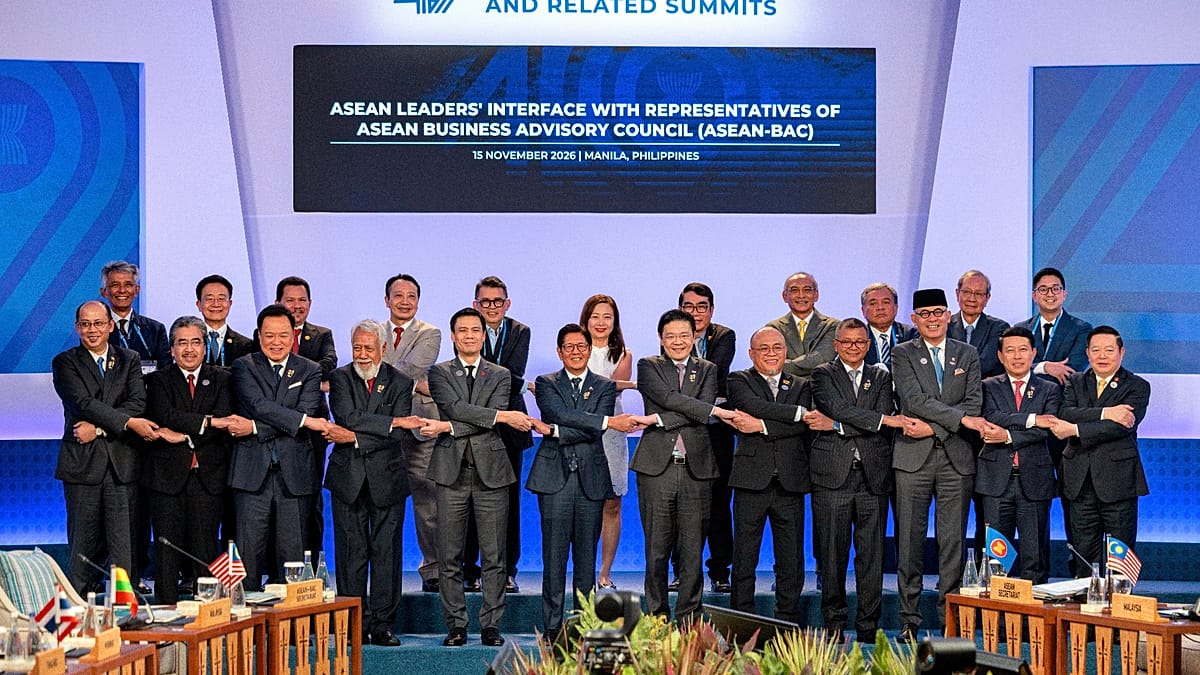
Ministers from the ten member states of the Association of Southeast Asian Nations (ASEAN) gathered in Manila on Saturday to sign a groundbreaking agreement designed to streamline digital trade across one of the world's most dynamic economic regions. The Digital Economy Framework Agreement (DEFA) is the bloc's first standalone, legally binding treaty focused exclusively on the digital economy, marking a significant step toward harmonizing rules that have long varied from country to country.
The pact, which will enter into force 180 days after signing—expected in May 2027—replaces the earlier 2019 ASEAN e-commerce agreement. Philippine President Ferdinand Marcos Jr. formally handed the signed document to ASEAN Secretary-General Kao Kim Hourn at the opening of the bloc's summit on Sunday, underscoring the political weight attached to the initiative.
What the agreement covers
At its core, DEFA aims to reduce friction for businesses selling online and managing cross-border transactions. It promotes the mutual recognition of electronic invoices, shipping documents, and digital signatures, cutting the paperwork that often slows trade. The deal also encourages interoperability among national payment systems, so that a supplier in Vietnam can receive funds from a customer in Indonesia without navigating incompatible banking rails.
Data flows are another central pillar. The agreement sets common rules for transferring commercial and financial data across borders, limiting requirements that force companies to store data locally—a practice that has proliferated in the region. Singapore's Deputy Prime Minister Gan Kim Yong, who attended the signing, stressed that exceptions remain to protect privacy, business confidentiality, and national security. He also acknowledged that countries will implement the rules at different speeds, reflecting their varying levels of digital readiness.
“Negotiations were challenging because our members are at very different stages of digital development,” Gan told reporters. “But we have found a way forward that allows each country to move at its own pace while committing to the same overall framework.”
Funding and implementation
To help turn the agreement into reality, the Asian Development Bank (ADB) announced a parallel initiative on Saturday aimed at raising up to $5 billion (€4.5 billion) by 2030 from public and private sources. The funds will support projects in digital infrastructure, cross-border payment systems, digital identity verification, and cybersecurity—areas that are essential for the pact to function effectively.
Governments are already identifying pilot projects involving payments, digital identities, and electronic trade documents that could be ready when DEFA takes effect. The goal is to demonstrate tangible benefits early, building confidence among businesses and citizens.
The deal arrives as Southeast Asia's digital economy continues to expand rapidly. According to a study by Google, Temasek, and Bain & Company, transactions across the region's main digital sectors—including online shopping, travel, and food delivery—are projected to reach $368 billion (€333 billion) this year and exceed $1 trillion (€905 billion) by 2035. That growth underscores the urgency of creating a more seamless regulatory environment.
For European observers, the ASEAN initiative offers a useful contrast to the European Union's own efforts to regulate digital markets. While the EU has focused on consumer protection and competition—such as the recent Digital Fairness Act and bans on manipulative design tricks—ASEAN's approach is more explicitly trade-oriented, aiming to remove barriers for businesses rather than impose new obligations. The two regions also differ in institutional structure: ASEAN operates by consensus, while the EU has supranational institutions that can enforce rules uniformly.
Still, there are parallels. Both regions are grappling with how to balance data flows with privacy and security, and both are investing in digital public infrastructure. The ADB's funding mechanism echoes EU programs like the Digital Europe Programme, which supports cross-border digital projects. As digital trade becomes more global, agreements like DEFA may eventually need to interoperate with frameworks in Europe and elsewhere.
The signing in Manila is a reminder that digital governance is no longer a purely Western concern. Southeast Asia, with its fast-growing internet economy and young population, is now shaping its own rules. Whether DEFA delivers on its promise will depend on implementation—but the political will appears strong.