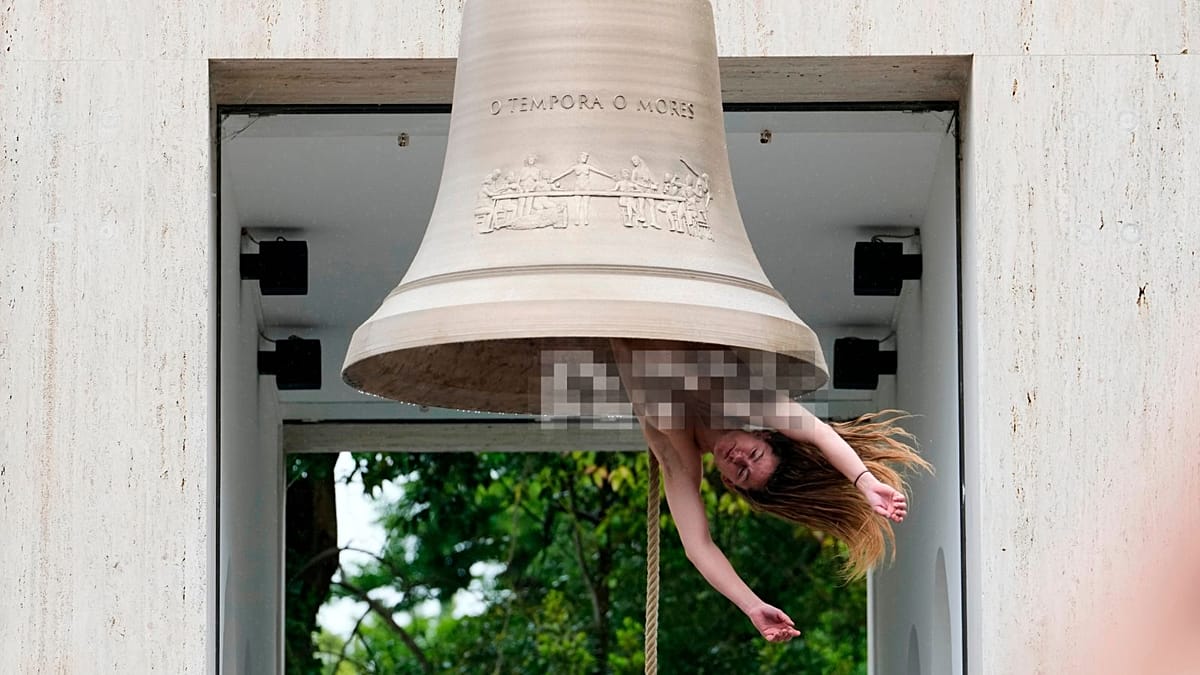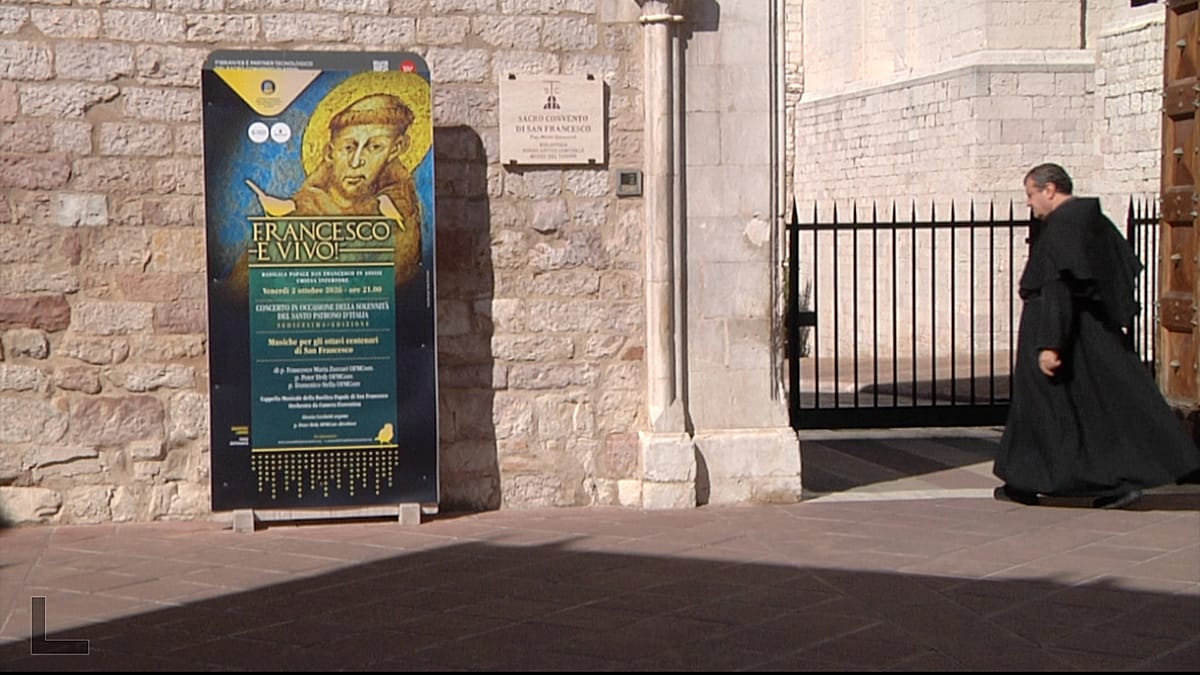
On the night of 3 October, as the clock strikes midnight, the bells of the Upper Basilica in Assisi will ring out, marking the start of a year of commemorations for the 800th anniversary of the death of St Francis. This year, Italy has reinstated 4 October as a national holiday dedicated to the saint, celebrating the universal values of peace, fraternity, solidarity and respect for the environment that he embodied.
The first official ceremony on Sunday will be attended by President Sergio Mattarella and ambassadors from around the world. As Friar Giulio Cesareo, director of the Communications Office of the Sacred Convent of Assisi, told Euronews, "Francis is not a gift only for Italy but for the world."
Who was St Francis and why does he still matter?
St Francis of Assisi, born in the late 12th century, renounced a life of wealth to embrace poverty and preach to all creatures. His appeal has endured for eight centuries, but the way he is remembered has evolved. Professor Antonio Musarra, a medieval historian at Sapienza University in Rome and a Harvard fellow, explains that "Francis has been reread over the course of history in completely different ways. Already in his own time, in the 1200s, biographies and hagiographies accumulated that portray him differently, but the Francis we have today, the one we have inherited, is the one that begins to emerge after the First World War: he is Francis of peace, Francis of diplomacy, Francis who tries to reconcile the factions."
Musarra emphasises that Francis's enduring relevance lies in his "modus operandi", his style of engaging with the world. "A style that we see clearly in his relationship with the Mediterranean, with other cultures, with what is different," he says. He points to two examples: "The different at home, for instance the leper from whom his conversion springs, but also the religious other, as when he met the sultan."
The meeting with the sultan: a model of dialogue
The encounter between Francis and Sultan al-Malik al-Kamil took place in 1219 during the Fifth Crusade in Damietta, Egypt. It was a meeting that has become a symbol of interfaith dialogue. Father Paolo Nicelli, a lecturer in theology at the Catholic University of Milan and an expert on Islam and modernity, explains the context: "Damietta is a port, a major commercial centre and therefore of interest to both Christians and Muslims, so the dispute is not spiritual but clearly of an economic and military nature."
Francis, a man of profound faith, crossed enemy lines to meet the sultan, hoping to convert him. The conversion never happened, but Francis was received with respect. According to hagiographic tradition, Francis offered to walk through fire alongside Muslim clerics to prove the truth of his faith; the sultan declined but was impressed by his courage.
This meeting, based on dialogue rather than weapons, became a model for peace and interreligious understanding. Nicelli calls it "an example of mercy and forgiveness," adding that "forgiveness that is even more necessary today, especially in a globalised society like ours. In this sense Francis's model is certainly countercultural, because it goes directly against today's dominant values: ambition, individualism, selfishness, self-centredness, self-glorification and so on."
The celebrations in Assisi are not just a remembrance but a call to action. As Europe grapples with conflicts and divisions, Francis's legacy offers a path of humility and encounter. His message resonates beyond Italy, touching on the broader European values of peace and solidarity. In a world where diplomacy is often overshadowed by rhetoric, Francis's example remains a beacon.
The new national holiday, which will be observed every year, is a testament to the enduring power of his vision. As the bells ring out over Assisi, they carry a message that is as relevant today as it was eight centuries ago: peace is possible when we choose dialogue over division.