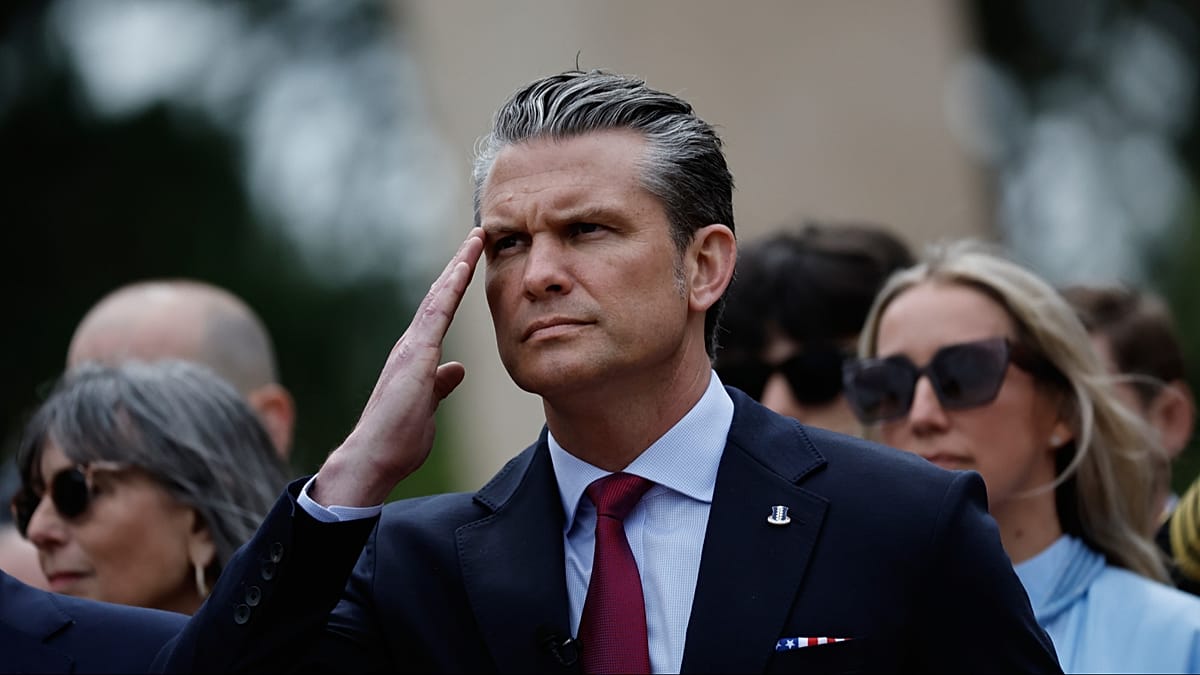
OUISTREHAM, France — Speaking at the 82nd anniversary of the D-Day landings, US Defence Secretary Pete Hegseth delivered a pointed message to European allies: the continent must assume primary responsibility for its own conventional defence. The remarks, made during a meeting with French Armed Forces Minister Catherine Vautrin, come as the United States begins to reduce its military footprint in Europe.
Hegseth's Call for European Self-Reliance
“Europe must be the first to provide for its own conventional defence,” Hegseth said upon arriving in Normandy on Saturday. He urged “allies such as France to face up seriously to this reality and to show it through concrete progress.” The US defence secretary’s tone reflected growing impatience in Washington with what it sees as insufficient European investment in military capabilities.
This is not the first time Hegseth has pressed the issue. During a trip to Singapore at the end of May, he criticised European nations for having “for too long” ignored calls to strengthen their defences. His latest intervention comes as the Pentagon announced a reduction in the number of American troops stationed in Europe, a move that underscores the shifting priorities of US defence policy.
Vautrin responded by confirming that France is engaged in a “rearmament drive,” though she did not provide specific figures or timelines. The exchange highlights the broader tension between US expectations and European realities, particularly as NATO prepares for a summit scheduled next month in Ankara, Turkey.
The timing of Hegseth’s remarks is significant. With the war in Ukraine entering its fourth year and Russia’s military posture remaining aggressive, European nations are under pressure to accelerate defence spending. The UK, for instance, has already pledged to increase its defence budget, as Prime Minister Keir Starmer warned that Russia could attack NATO by 2030. Meanwhile, smaller states like the Baltic nations face acute challenges, including radar shortages amid drone threats, which underscore the bottlenecks in European defence production.
Hegseth’s call for European self-reliance also resonates with broader debates about the continent’s dependence on US defence technology. Several European governments are actively seeking alternatives to American contractors like Palantir, aiming to build indigenous capabilities in areas such as artificial intelligence and battlefield data analysis.
Commemorations and a Changing Alliance
The official D-Day commemorations began at 1:00pm CET in Ouistreham, where French Prime Minister Sébastien Lecornu presented certificates and green berets to the families of Captain Philippe Kieffer’s 177 French commandos who landed on Sword Beach on June 6, 1944. The ceremony honoured the sacrifices of those who fought to liberate Europe from Nazi occupation, but it also served as a backdrop for the current geopolitical realignment.
The contrast between the unity of 1944 and the current strains in the transatlantic alliance was palpable. While the US remains a key NATO partner, the message from Washington is clear: Europe can no longer rely on American troops to guarantee its security indefinitely. The reduction in US forces, though not yet quantified, is part of a broader strategic recalibration that includes a greater focus on the Indo-Pacific.
For European leaders, the challenge is twofold: they must increase defence spending while also addressing the fragmentation of their defence industries. The European Union has taken steps to boost joint procurement and reduce reliance on non-European suppliers, but progress has been slow. The upcoming NATO summit in Ankara will likely be a key moment for member states to demonstrate their commitment to the alliance’s collective defence goals.
As the commemorations in Normandy drew to a close, the message from Hegseth lingered: the era of American paternalism in European defence is ending. Whether Europe can rise to the occasion remains an open question.