ATHENS — The Panathenaic Stadium, a gleaming white-marble arena that hosted the first modern Olympic Games in 1896, is undergoing its first full-scale cleaning in more than a hundred years. The project, which began in early spring, is returning the monument to its original splendor ahead of its role as the departure point for the Olympic Flame handover ceremony for the 2028 Los Angeles Games.
Known in Greek as Kallimarmaro — literally “beautiful marble” — the stadium is one of Athens’ most iconic landmarks. It has welcomed marathon runners, rock stars, and countless visitors since its reconstruction for the inaugural modern Olympics. But decades of exposure to weather, pollution, and millions of footsteps have left their mark on the white Pentelic marble, the same stone used on the Acropolis.
“The Kallimarmaro is a unique monument for the global Olympic movement, as this is where the modern Olympic Games were revived in 1896,” said Isidoros Kouvelos, president of the Hellenic Olympic Committee. “It was essential to remove everything that has built up over the years. In this way, the Panathenaic Stadium will once again reveal all its splendour.”
A delicate operation
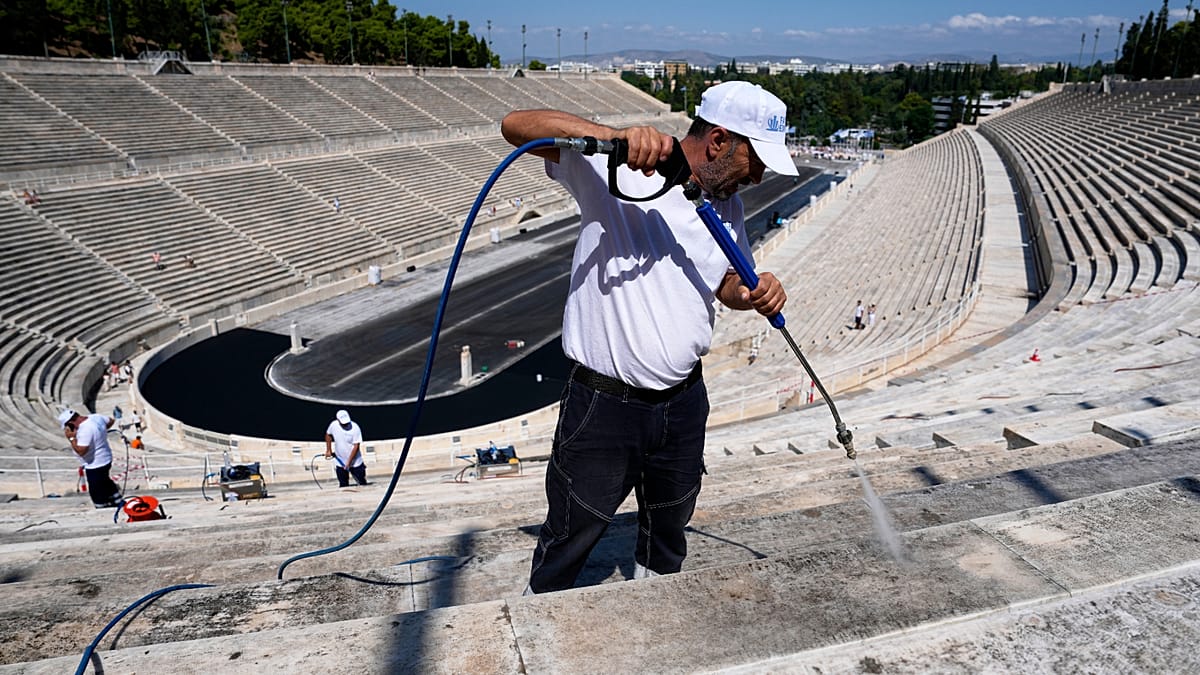
The cleaning process is far from routine. Because the marble is identical to that of the Acropolis, conservators are taking extraordinary precautions. Crews are working along the stadium’s 47 tiers of seating, using spray equipment that delivers clean water at controlled, low pressure. Specialized machines simultaneously vacuum up the water, ensuring the stone is not stressed by excess moisture.
“The aim of the cleaning is not to make everything dazzling white,” said antiquities conservator Dimitris Selemis. “The goal is to remove pollutants and the first layers of organic matter that build up on the surface. Weeds and vegetation in general are a serious problem for monuments, as they grow and spread. In some cases, they even leave residues that stain the marble surface.”
Beyond water and steam, the team is also tackling stubborn stains. Chewing gum, which has turned black over time, is being removed with steam jets. According to stadium officials, chewing gum, high heels, and soft drink spills are among the main culprits of soiling and damage.
The work is revealing the stadium’s original sheen, tier by tier. The project is expected to be completed in time for the Olympic flame handover ceremony, which will take place in Athens before the torch begins its journey to Los Angeles.
The restoration comes as Greece grapples with broader challenges, including the aftermath of devastating wildfires that have hit the country in recent years. The Athens wildfire that threatened the capital in 2024 highlighted the fragility of the region’s natural and cultural heritage. The stadium’s cleaning is a reminder of the enduring importance of preserving Greece’s ancient monuments for future generations.
For many Athenians, the sight of the gleaming marble is a source of pride. “It’s like seeing an old friend after a long time,” said Maria Papadopoulou, a local resident who watched the crews at work. “The stadium is part of our history, and it’s wonderful to see it being cared for.”
The project is being carried out under the supervision of the Hellenic Ministry of Culture and the Hellenic Olympic Committee, with funding from private sponsors. It is part of a broader effort to maintain the stadium as a living monument, still used for concerts, events, and the ceremonial start of the Olympic torch relay.
As the cleaning progresses, the stadium’s white marble is slowly regaining its luminosity, a fitting tribute to the athletes who competed there more than a century ago and to the Olympic ideals that continue to inspire the world.