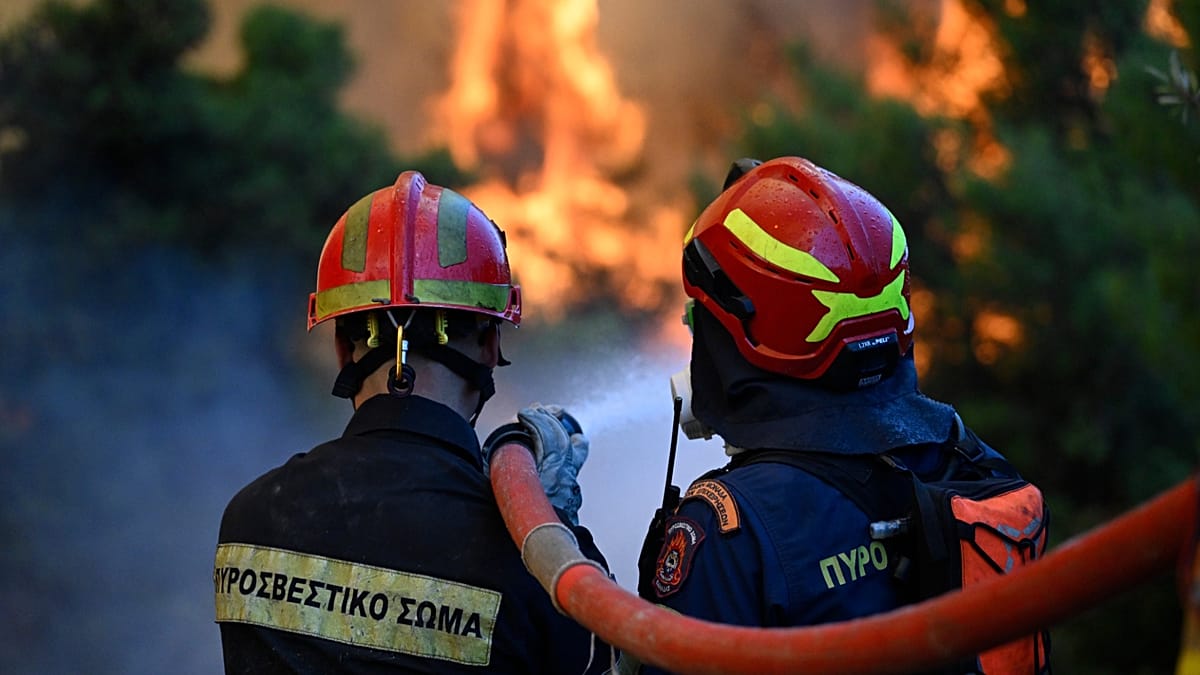
Firefighting crews in Greece are cautiously optimistic about containing a large wildfire on the outskirts of Athens as calmer winds on Tuesday allowed waterbombing aircraft to rejoin the effort. The blaze, which has been burning for five days, has already claimed the lives of five firefighters and scorched thousands of hectares of land.
Yiannis Artopios, deputy spokesperson for the fire department, told state broadcaster ERT that more than 30 aircraft would be deployed in the area on Tuesday, enabling crews to reach difficult mountain terrain that has been inaccessible from the ground. Over 500 firefighters are stationed in villages around Mount Kithairon, roughly 60 kilometres northwest of the Greek capital.
“We want to keep the fire in a controlled situation,” Artopios said, while cautioning that large areas still contain active or smouldering hotspots that require constant monitoring. “It's a huge area and there could be a flareup again at any moment,” he added, noting that even a strong gust of wind could trigger fresh outbreaks.
Deadly toll and ongoing risk
The civil protection ministry has placed the greater Athens area and the neighbouring island of Evia under near maximum fire risk for Tuesday. The human cost of this fire season has been severe: on Sunday, two Bell helicopters collided while operating on the western outskirts of Athens, killing a Danish pilot and his Greek co-pilot. Three other firefighters died in Crete and the Peloponnese last week.
Elsewhere in Greece, fires on the Ionian island of Cephalonia and other regions have largely been contained, according to the fire service. The situation remains fluid, however, and authorities are bracing for more challenges as high temperatures and dry conditions persist.
Theodore Giannaros, a senior wildfire meteorologist at the National Observatory, described the current crisis as “definitely one of the worst fire crises I've seen in the past, maybe eight to 10 years.” The observatory noted that winds at the end of July were the strongest in 15 years, and that more than 13,000 hectares of forest and agricultural land have been affected by the fire near Athens, which broke out on Friday.
Prime Minister Kyriakos Mitsotakis has warned that Greece faces “extremely difficult” days ahead as the combination of heat and dryness continues to fuel fires. Like much of the Mediterranean, Greece has experienced increasingly frequent and intense wildfires, a trend scientists link to climate change.
The broader European context is worrying: wildfires are raging across southern Europe, with France also battling blazes in the Var region. The ongoing heatwave has forced toxic alerts in Spain and reactor shutdowns in France, underscoring the continent-wide impact of extreme weather.
As Greek crews continue their painstaking work, the focus remains on preventing new flare-ups and protecting communities. The use of aircraft has been crucial in reaching rugged terrain, but officials stress that vigilance is essential. “We want to keep the fire in a controlled situation,” Artopios reiterated, a sentiment echoed by firefighters on the front lines.