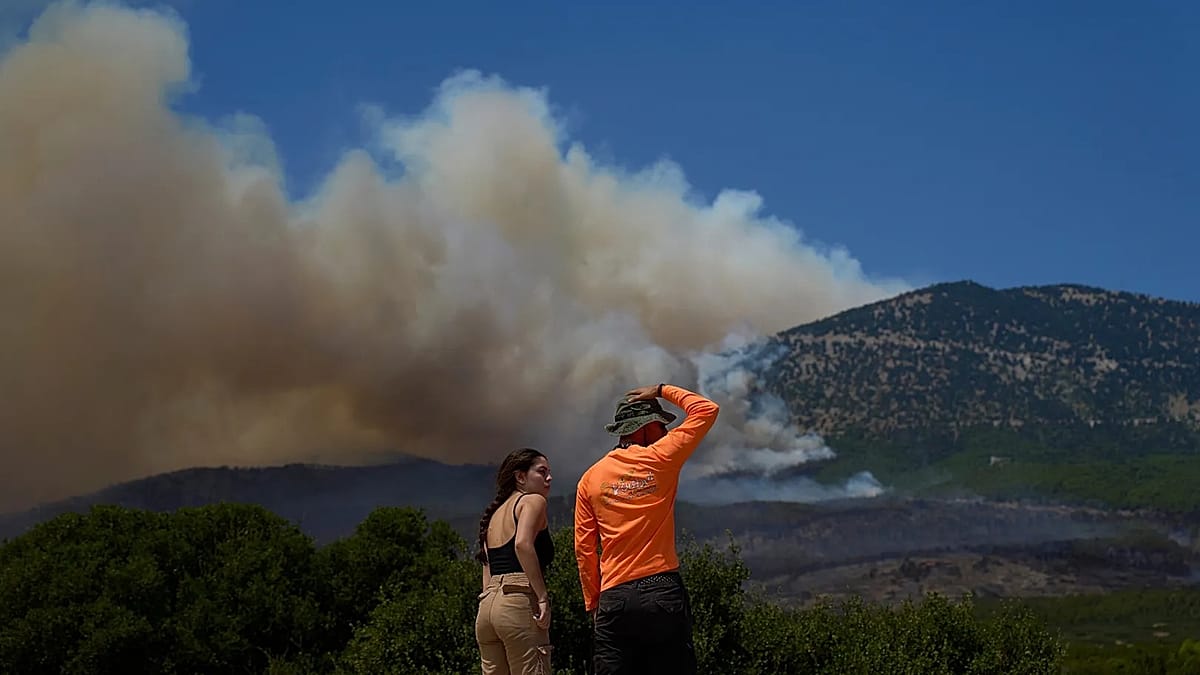
Southern Europe is in the grip of a severe heatwave that is straining emergency services and infrastructure across the region. In Spain, an industrial fire prompted toxic alerts; in France, nuclear reactors were taken offline to safeguard river ecosystems; and in Greece, wildfires have claimed five lives in what experts describe as one of the worst fire crises in a decade.
Spanish industrial fire triggers toxic alert
In the province of Zamora, a blaze broke out at the Zaresa waste treatment plant in Roales del Pan, sending a thick column of toxic smoke into the air. Emergency dispatchers received nearly 40 calls from concerned residents, and authorities issued an ES-Alert notification advising people in the vicinity to stay indoors. Police closed a lane on the A-11 motorway as a precaution, according to the Civil Guard in Zamora.
The fire, which started in a warehouse used for waste treatment, caused no injuries. The cause is still under investigation, but the incident highlights the additional risks that extreme heat poses to industrial facilities and public safety.
France shuts nuclear reactors to protect rivers
In France, the heatwave has forced energy giant EDF to shut down three nuclear reactors at the Chooz and Cattenom plants. The measure is intended to maintain sufficient water flow in the rivers used for cooling, in line with environmental regulations. EDF said the decision was taken "to ensure a sufficient water flow for the various users of the river, in France as well as in Belgium."
The Ardennes and Moselle departments have been placed on yellow heatwave alert. France's nuclear fleet, which provides nearly 70% of the country's electricity, relies heavily on river and coastal water for cooling. This is not the first time that extreme heat has forced such shutdowns, but it underscores the vulnerability of the country's energy infrastructure to climate change.
For more on how France is adapting its industrial policies, see our piece on foreign investment screening.
Greece faces 'one of the worst' fire crises
Further south, Greece is battling a series of massive wildfires that have already claimed five lives over the past two weeks. Senior wildfire meteorologist Theodore Giannaros described the situation as "definitely one of the worst fire crises I've seen in the past, maybe eight to 10 years." He cautioned that a direct comparison in terms of burnt area or number of ignitions would only be possible after the fire season ends.
According to the European Union's Copernicus Earth observation programme, more than 12,000 hectares of forest and agricultural land have burned in the past week alone. The fires have forced evacuations and destroyed property, adding to the strain on local communities.
Giannaros pointed to a combination of factors driving the fires. "Climate change is indeed creating conditions that are highly conducive to these kinds of fires, allowing them to spread very easily and become uncontrollable," he said. But he also stressed that land management failures across Greece and Europe are part of the broader problem.
The heatwave is part of a wider pattern affecting the Mediterranean region. In Spain, the state weather agency Aemet has issued red alerts for Gran Canaria as temperatures soar. The situation has also raised concerns about the impact on tourism and agriculture, two key sectors for the region's economy.
As Europe faces more frequent and intense heatwaves, the need for coordinated adaptation strategies becomes ever more urgent. From energy policy to forest management, the challenges are cross-border and require a collective response.