Wildfires continued to wreak havoc across southern Europe on Saturday, with France and Greece facing the most acute challenges. In Provence, a blaze that reignited in the Gros Bessillon area has consumed an additional 1,250 hectares since Friday, bringing the total scorched area to roughly 4,500 hectares. Despite overnight efforts that kept the flames away from the towns of Correns and Montfort-sur-Argens, the fire remains active and unpredictable.
Around 1,300 firefighters have been deployed to the region, according to local authorities. The fire has forced the evacuation of thousands of residents, and about 2,500 people are still unable to return to their homes. The situation is particularly tense in the Var department, where the mistral wind has been fanning the flames. This is not the first time the area has been hit this season; earlier blazes in the Var had already tested local firefighting capabilities.
Gironde fire contained but not extinguished
Meanwhile, in southwestern France, authorities reported that the largest wildfire in the country in 70 years has been brought under control near Bordeaux. The fire in the Gironde department has burned 420 square kilometres of pine forest west of the city—an area roughly four times the size of Paris. Firefighters said the blaze remained within its existing perimeter on Saturday, but it has not been declared fully extinguished. Active sectors and buried hot spots persist, and crews are working to prevent any flare-ups.
The containment is a relief for the region, which has been on high alert for weeks. However, the broader picture remains worrying. Twenty French departments were under an orange heat warning on Saturday, mostly in the east and southeast, with temperatures forecast to reach 35 to 39 degrees Celsius around the Mediterranean. Eight departments face a high risk of forest fires, and the hot, dry conditions are expected to persist.
Greece battles wind-driven fires near Athens
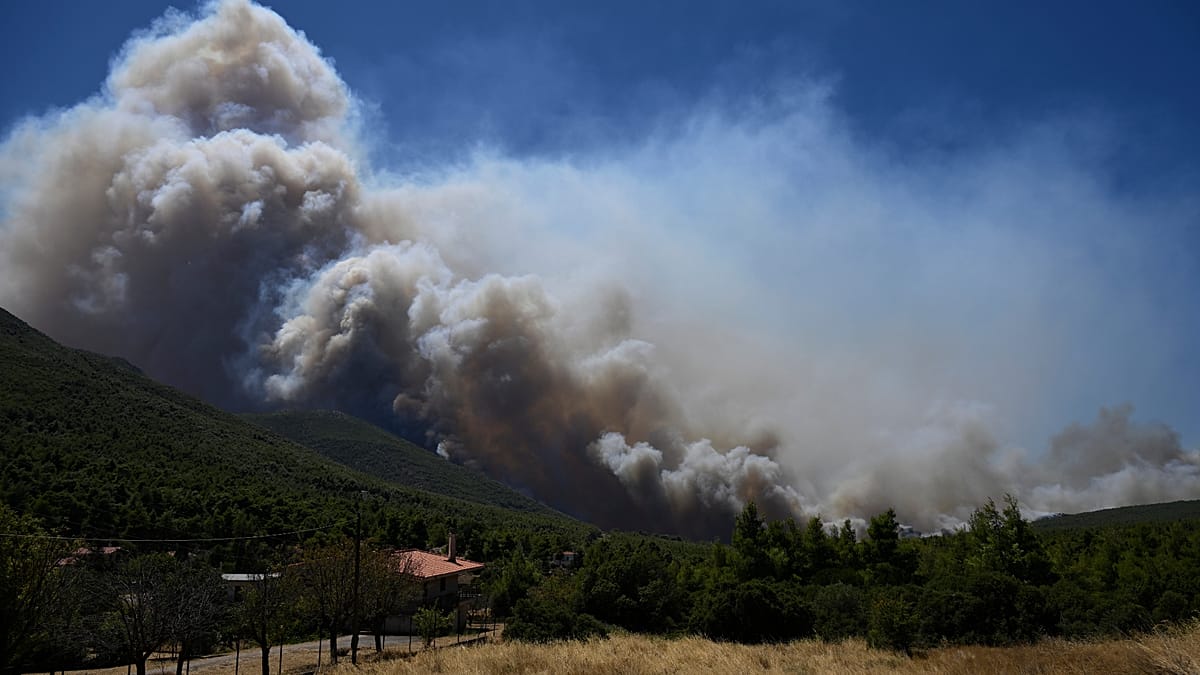
In Greece, hundreds of firefighters were battling to protect the coastal resort of Porto Germeno, northwest of Athens, as violent winds hampered their efforts. More than 400 firefighters, supported by dozens of aircraft, were deployed to the area, according to the country's fire department. Winds reaching up to 130 kilometres per hour were recorded on Saturday, complicating containment strategies.
The fire broke out on Friday near the village of Agios Vasileios. Many residents initially ignored evacuation orders, and around 300 people had to be rescued by sea as the flames advanced. The Greek authorities have issued repeated warnings about the dangers of wildfires, especially in areas with dense vegetation and strong winds. This incident follows other evacuation alerts near Athens in recent weeks.
Wildfires have flared across several parts of Greece this week, including on the island of Crete. Tragically, three firefighters have lost their lives in the line of duty. The Greek government has faced criticism over its preparedness and response, but officials insist that the extreme weather conditions are making firefighting exceptionally difficult.
Southern Europe on edge
The current crisis is part of a broader pattern affecting southern Europe. Rising wildfire risk has become a recurring theme across the Mediterranean, driven by climate change and prolonged droughts. In Turkey, five active wildfires are still burning, and in Spain, authorities are dealing with the aftermath of a severe fire season. The European Union has mobilised resources to assist affected member states, but the scale of the challenge is immense.
Experts point to the need for long-term strategies, including better forest management, investment in firefighting infrastructure, and more robust climate adaptation measures. As the summer progresses, the pressure on emergency services across the continent is unlikely to ease.