The Var department in southeastern France is once again battling a major wildfire, as a new blaze erupted south of a fire that had been contained earlier in the week after burning 4,500 hectares. In just six hours, the flames consumed another 1,000 hectares, forcing the evacuation of 2,500 people near the Gros Bessillon massif.
The village of Correns, home to around a thousand residents, is now completely isolated. Access roads have been rendered impassable, and the population has been confined as a precaution. Firefighters had anticipated the risk of reignition, and their fears were realized as the mistral wind and temperatures approaching 40°C fanned the embers.
A summer of repeated fires
This is the fourth major wildfire to hit the center of the Var since July 19, underscoring the region's vulnerability to extreme weather conditions. Prefect Simon Barbe described the situation as “an appalling tragedy” for the department, which has seen its landscape scarred repeatedly this summer.
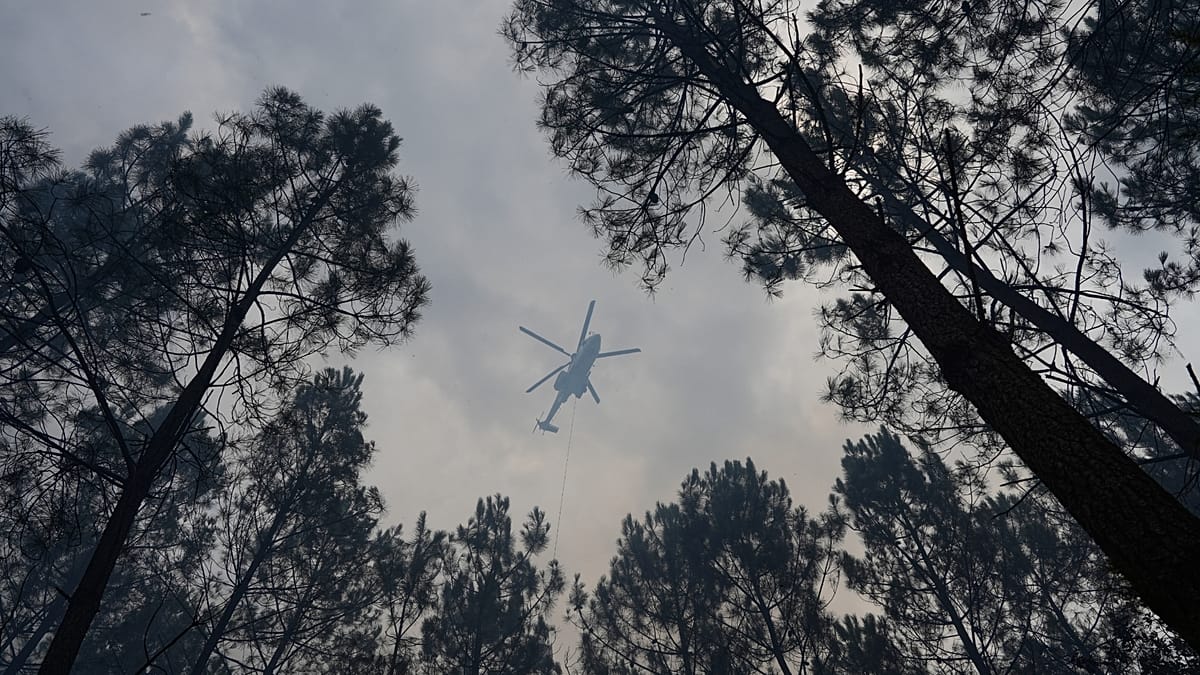
In response, 700 firefighters have been deployed, supported by six water-dropping helicopters, eight Canadair water bombers, and two Dash aircraft. The aerial fleet has been crucial in trying to slow the advance of the flames, but the combination of wind and heat has made containment difficult.
Météo-France has issued an orange heatwave alert for the Var until midday Saturday, and the day has been classified as high-risk due to the forecast wind and temperatures. The conditions are expected to persist, keeping the region on edge.
The fires in the Var are part of a broader pattern across southern Europe, where wildfire risk is rising despite fewer blazes. Climate change is intensifying heatwaves and drought, creating tinderbox conditions that turn small sparks into infernos.
Elsewhere, Greece has been battling a wildfire near Athens, and Turkey has faced multiple active fires along its coasts. The European Union has called these events a wake-up call, with crisis chief Janez Lenarčič warning that the bloc must bolster its firefighting capabilities.
For the residents of Correns and the surrounding areas, the immediate priority is safety. The village, known for its organic vineyards and medieval charm, now faces an uncertain future as the flames cut it off from the outside world. Evacuation centers have been set up in nearby towns, and authorities are urging people to follow instructions.
The Var's firefighters, many of whom have been working around the clock for weeks, are exhausted but determined. “We are dealing with a fire that is unpredictable,” one officer said. “The mistral can change direction in minutes, and we have to adapt constantly.”
As the climate continues to warm, such scenes are likely to become more frequent. The EU crisis chief has called wildfires a wake-up call, and experts argue that prevention and adaptation are as crucial as response. For now, the Var remains on high alert, with the hope that the winds will ease and allow firefighters to gain the upper hand.