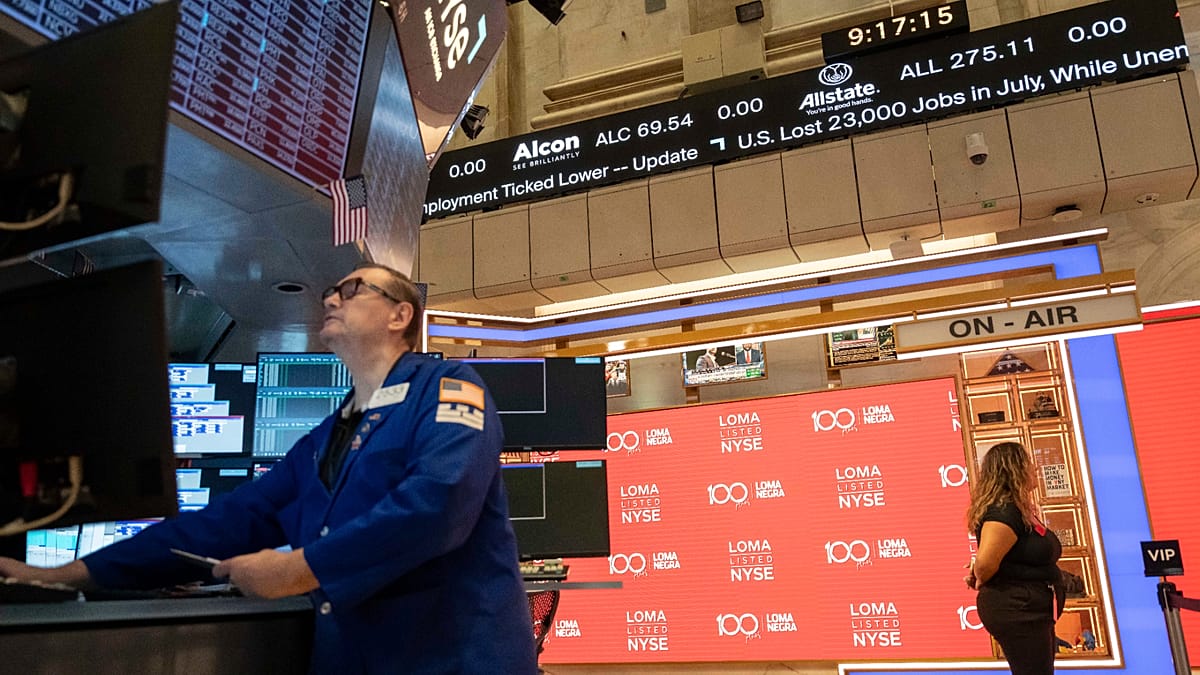
European equities have opened August 2026 in a manner that defies their seasonal reputation. The EURO STOXX 50 and Germany's DAX are trading near all-time highs, while France's CAC 40 sits close to its peak. Yet August has traditionally been one of the weakest months for European stocks, a paradox that invites a closer look at whether the calendar really holds sway over markets.
The conventional wisdom of "sell in May and go away" extends to August, but the data tells a more nuanced story. The month's poor performance is not a consistent pattern; rather, it is the result of a few extraordinary shocks that have dragged down the long-term average.
Historical averages vs. reality
For the EURO STOXX 50, August has averaged a loss of 1.42% since 1987. Germany's DAX, tracking the 40 largest companies on the Frankfurt exchange, shows an average August decline of 1.03% since 1970. France's CAC 40, with data back to 1988, averages a 1.22% drop in August. In all three cases, September is even worse, with average losses of 1.64% for the DAX and 1.38% for the CAC 40.
But averages can be misleading. A few extreme events—like a person earning €1 million in a room of five—can skew the picture. The median August return for the EURO STOXX 50 is just -0.19%, indicating that a typical August is nearly flat.
The five crashes that shaped the reputation
Most of the damage comes from five episodes. In August 1998, the index fell 14.44% after Russia defaulted on its domestic debt and devalued the rouble. August 1990 saw a 13.82% drop following Iraq's invasion of Kuwait. The eurozone debt crisis in August 2011 triggered a 13.79% decline, while the Asian financial crisis in August 1997 and China's yuan devaluation in August 2015 led to losses of 9.99% and 9.19%, respectively.
Remove those five years, and the average August return for the EURO STOXX 50 flips to +0.17%. Five years out of 39 turn a seemingly weak month into a slightly positive one.
Why August can amplify shocks
The month's vulnerability may stem more from market mechanics than from any inherent seasonal curse. In August, much of Europe goes on holiday, thinning trading desks and reducing the number of active price-setters. This does not cause a sell-off on its own, but it can make markets more sensitive once a decline begins.
There are also fewer scheduled monetary-policy decisions. The European Central Bank's last meeting was in July, with the next not until September. The US Federal Reserve follows a similar summer gap, leaving markets with fewer anchors for expectations precisely when liquidity is thinnest.
Then there is Jackson Hole. The Fed's annual conference in Wyoming, held later in August, can become a major market event, especially when investors are seeking clues on interest rates. This year's gathering carries extra weight: it is Kevin Warsh's first address as Fed chair.
August thus combines three potentially volatile ingredients: thinner liquidity, fewer scheduled policy events, and the possibility of a significant central bank signal arriving late in the month.
What's different in 2026?
European equities entered August at or near record highs, underpinned by strong earnings expectations. Analysts have raised forecasts for second-quarter earnings growth across the STOXX 600 to almost 21%, up from 12.5% in May, according to Reuters. That provides a fundamentally stronger backdrop than the historical average would suggest.
However, risks remain. The Middle East energy shock could push inflation back up while squeezing consumers and corporate margins. Eurozone inflation eased to 2.8% in June, down from 3.2% in May, but a fresh energy shock could complicate the path back to the ECB's 2% target.
So should investors fear August? The historical record does not mandate a decline. In fact, the EURO STOXX 50 and DAX have both finished August higher almost half the time. The month's reputation is largely a product of rare, severe crises that happened to occur in August. With markets at records and earnings strong, the seasonal pattern may not hold this year.