As the harvest winds down in southwestern France, cognac growers are bracing for another punishing year. The amber brandy, produced exclusively around the Charente River for over three centuries, has become an unlikely casualty of transatlantic and Sino-European trade friction. With 98% of production exported, the industry is uniquely exposed to geopolitical shocks beyond its control.
Sales have collapsed from 230 million bottles in 2023 to just 140 million today. The four major houses—Rémy Martin, Hennessy, Martell, and Courvoisier—have slashed orders from local winegrowers as clients cancel contracts. The downturn began with the EU's tariffs on Chinese electric vehicles, a move strongly backed by Paris. Beijing retaliated by targeting European brandy, imposing provisional duties of up to 34.8% in 2024, just days after Brussels levied tariffs of up to 35.3% on Chinese EVs.
“We have been collateral damage in the trade war which started in 2023 between Brussels and Beijing over Chinese electric vehicles,” said Raphaël Delpech, director of the National Interprofessional Cognac Bureau (BNIC). Although China later exempted major producers that agreed to sell above undisclosed minimum prices, the damage was done. “Once the Chinese government singled us out and associated us with an anti-Chinese European and French policy, consumers started to distance themselves,” Delpech added. Distributors stopped buying and removed bottles from shelves.
The second blow came from Washington. During Donald Trump's first term, tariffs on French cognac were imposed as part of the Boeing-Airbus dispute, then suspended under Joe Biden. In April 2025, Trump reintroduced sweeping tariffs, and the July Turnberry agreement set a 15% tariff on most European exports, including cognac. The European wine and spirits industry has lobbied hard for exemptions, but progress has been slow. The UK secured removal of tariffs on whisky in May, and Irish whiskey followed in September, yet French cognac remains subject to the levy.
“It created an extremely anxiety-inducing environment for all our importers in the US, who, just as in China, eventually came to the conclusion that it was better to bet on something safer than cognac,” Delpech said. The US accounts for roughly half of cognac exports, making recovery there essential. “For us, the recovery will only come through the US market. That’s obvious. China will come eventually, but it will be more complicated.”
A test case for EU trade defence
The crisis has prompted soul-searching in Brussels. French MEP Eric Sargiacomo (S&D), deputy chair of the European Parliament’s intergroup on wines and spirits, told Euronews that little is moving forward. “I get the impression that not much is moving forward. The only ones who have managed to make clear progress on this issue are the British.”
The sector has written to European Commission President Ursula von der Leyen and held talks with trade and agriculture officials. “Everybody knows us in Brussels,” Delpech said. French President Emmanuel Macron has visited the region and promised compensation, but none has arrived.
Delpech argues that cognac's plight raises a fundamental question about how the EU protects sectors that bear the brunt of retaliation against its trade measures. “The European policy cannot be strong if it does not protect the industries that bear the brunt of these trade-offs,” he said. The industry's historic ties to the EU project—Jean Monnet, a founding father, came from a cognac-producing family—make the neglect particularly poignant.
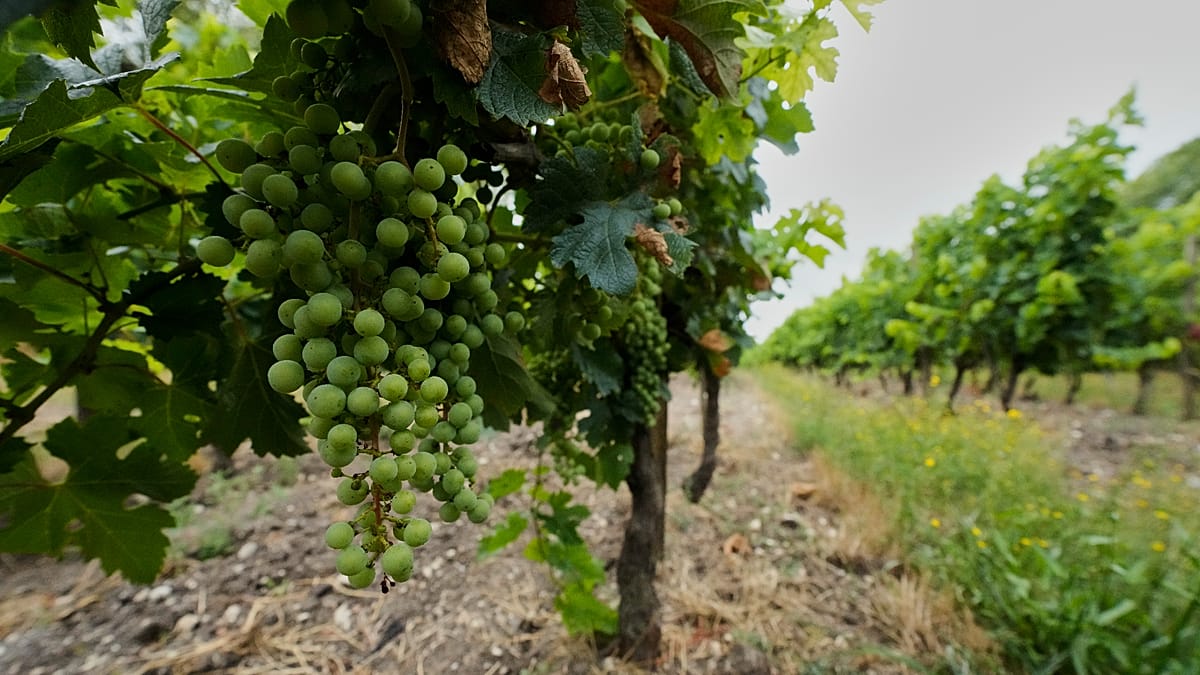
This year's drought has offered a grim silver lining: a smaller harvest has helped align supply with falling demand. “We thought the harvest was going to be promising, but in the end the drought took its toll,” said Matthieu Augier, a winegrower in Gondeville. “Compared with a typical year, we’re looking at a 30 to 40% reduction in the harvest in economic terms. You could say in a way that nature helps regulate our surpluses.”
As Washington hosts trade talks and the EU seeks to stabilise relations with both the US and China, cognac producers watch from the sidelines. Their fate may hinge on whether Brussels can secure carve-outs in the Turnberry framework—or whether the industry becomes a permanent casualty of Europe's trade wars.