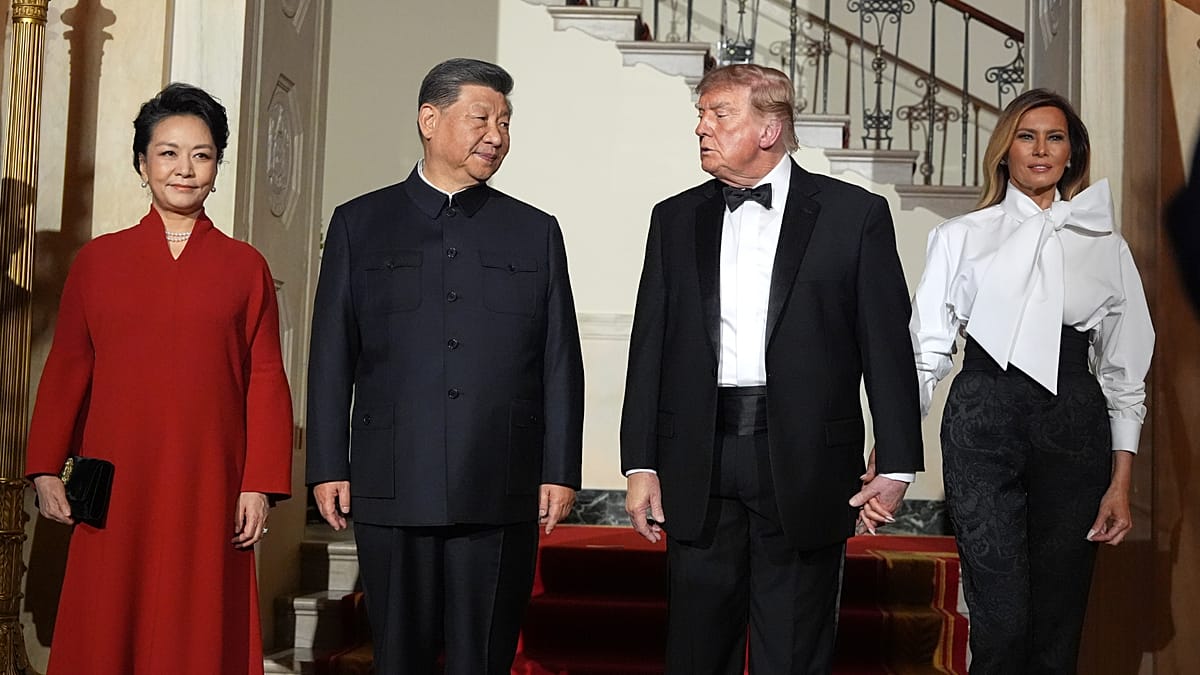
As President Xi Jinping concludes his first US visit in over a decade, European capitals are parsing the outcomes for their own economic and strategic interests. The three-day summit in Washington touched on artificial intelligence, the conflict in Iran, and trade—but yielded few concrete breakthroughs beyond a two-month extension of the fragile trade truce that was set to expire in November.
Ian Lesser, a distinguished fellow at the German Marshall Fund, told Euronews' Europe Today that the talks were more about "managing the rivalry" than forging a new friendship. "There was nothing deeply negative," he said, "but there wasn't a lot of progress on substantive issues like trade and tech."
For Europe, the stakes are high. Any deterioration in US-China relations could prompt Beijing to redirect more exports toward the EU, a mixed blessing given the bloc's own trade deficit with China. Brussels has set an early October deadline to address that gap, with Trade Commissioner Maroš Šefčovič warning of "harsher measures" if no progress is made.
Migration takes centre stage in Munich
On Saturday, more than a dozen EU ministers will gather in Munich to accelerate migration policy. The meeting, reported by Vincenzo Genovese, will include EU Migration Commissioner Magnus Brunner. On the sidelines, ministers from Greece, Germany, Austria, Denmark, and the Netherlands will continue their push for return hubs—third-country deportation centres. The five countries agreed on a common model in Copenhagen in early September, but a formal agreement with a non-EU government is not expected until around the New Year.
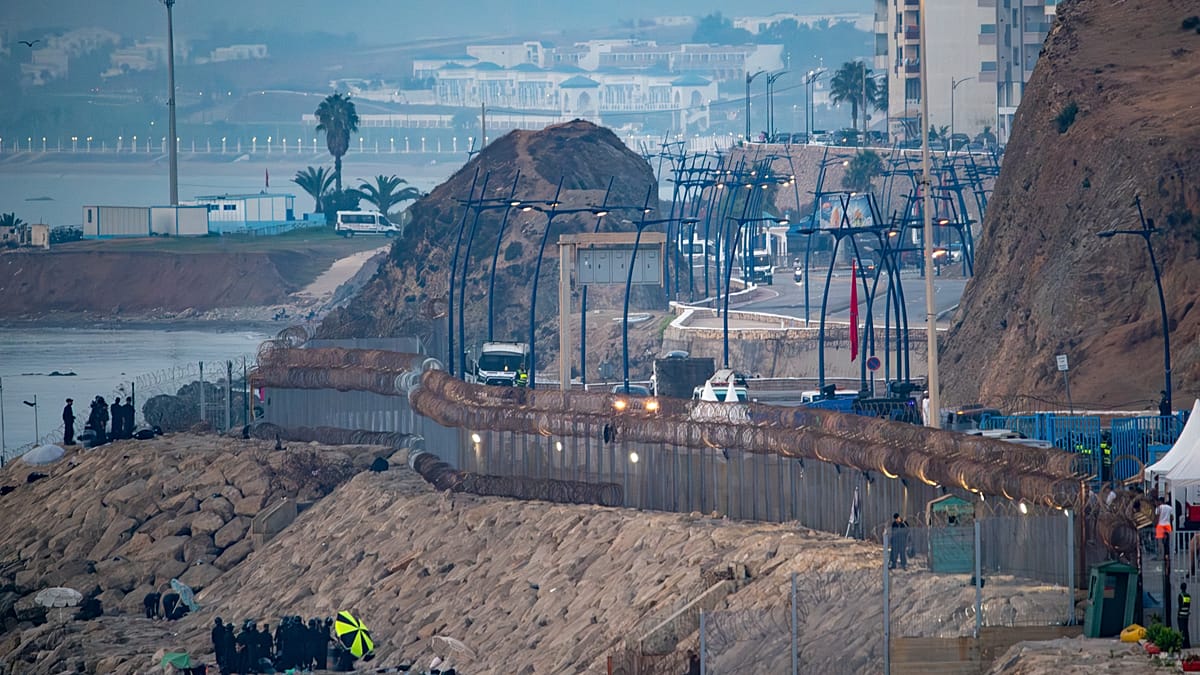
Marion Maréchal, a French MEP from the far-right European Conservatives and Reformists group, told Europe Today that such hubs would strengthen Europe's ability to intercept and return undocumented migrants. She spoke from Ceuta, the Spanish enclave that symbolises Europe's migration pressures, following July's mass crossing of over 80,000 people from Morocco.
That incident prompted Rome to reintroduce temporary border controls and criticise Madrid's handling of arrivals. Spanish Prime Minister Pedro Sánchez has found himself isolated among right-leaning EU governments on migration, but the issue is set to dominate the next European Council summit.
Danish minister on Greenland's rare earths
In Brussels, Danish Business Minister Martin Lidegaard discussed the recent Washington-Nuuk-Copenhagen agreement on Greenland's critical minerals. "There is a huge desire in Greenland to grow, to create new jobs, and also when it comes to mining, have a bigger sector than today," he told Euronews' Lauren Walker. He added that the US is "very happy" about its access to Greenlandic territory for military bases and minerals.
ECB board member resigns, signalling broader changes
Isabel Schnabel, a member of the European Central Bank's Executive Board, has announced her resignation effective January 2027 to take up a role at the International Monetary Fund in Washington. ECB President Christine Lagarde thanked Schnabel for her "invaluable" work in stabilising inflation at the bank's 2% target. Schnabel's departure is likely the first of several, with Lagarde herself expected to step down before her mandate ends, and Chief Economist Philip Lane's term concluding in May 2027.
The reshuffle comes as the eurozone faces uncertainty from volatile energy prices linked to conflicts in the Middle East and Ukraine. On 10 September, Lagarde announced an interest rate hike and conceded that the 2% inflation target would not be met by the end of next year.
Meanwhile, Brussels is pressing Kyiv to accelerate reforms needed to unlock €20 billion in financial assistance, as Ukraine's budget strains under the ongoing war. The EU's ability to respond to these challenges—from trade to migration to monetary policy—will be tested in the coming months.