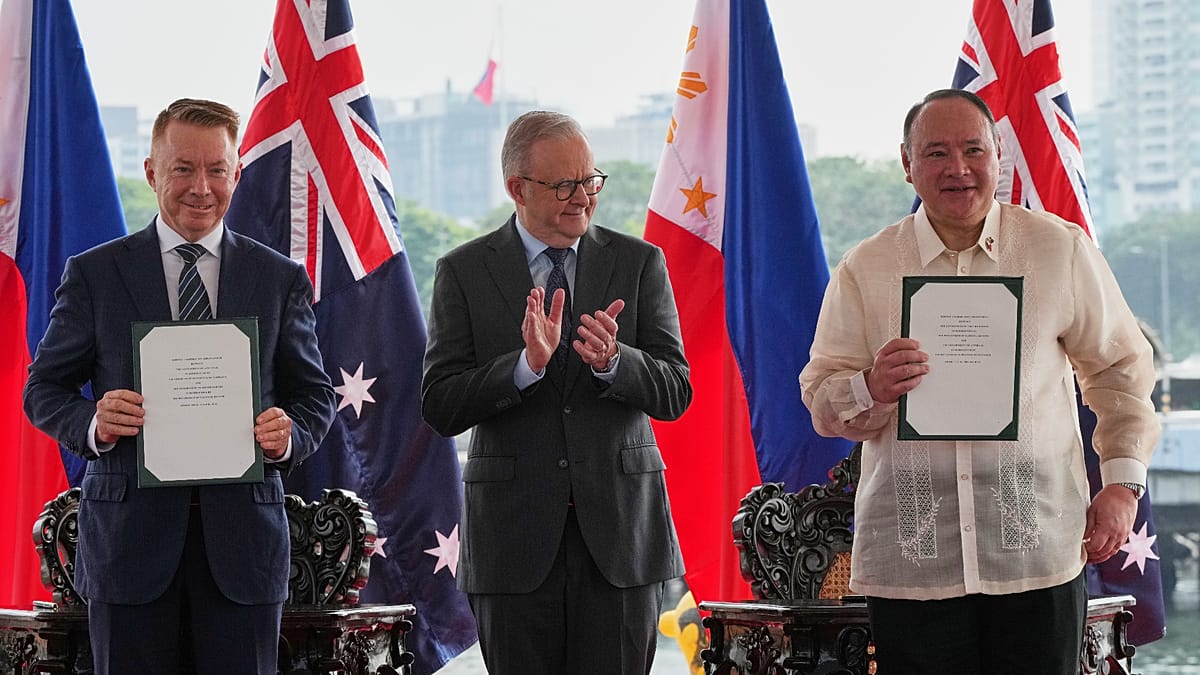
Australia and the Philippines have signed a new defence agreement aimed at simplifying joint military activities, from patrols and exercises to disaster relief operations. The pact was formalised in Manila on Sunday by Philippine Defence Secretary Gilberto Teodoro Jr and Australian Ambassador Marc Innes-Brown, with Australian Prime Minister Anthony Albanese present during his visit for regional summits.
The Defence Cooperation Arrangement updates a 1995 agreement and complements a separate visiting forces accord, in force since 2012, which already permits troops from each country to train on the other's territory. Teodoro said the new arrangement cuts through bureaucratic hurdles, telling reporters: “Rather than 100 steps to do a single thing, it will just now take 10.”
He added that closer coordination between naval, air, and ground forces would help the Philippines deter threats, including in the South China Sea. Australia's statement said the agreement covers information sharing, military planning, training, maritime surveillance, and the development of defence infrastructure.
Asked whether the pact was aimed at countering China, Albanese said: “This isn't aimed at any one country. This is about supporting sovereignty of every country.” He noted that most Australian trade passes through the South China Sea and stressed the importance of keeping shipping routes open.
Manila's expanding network
The agreement follows a series of recent steps by the Philippines to bolster its defence partnerships. On 9 November, Japan agreed to supply coastal radar and surveillance drones under a 4.3 billion yen (€24 million) grant, intended to help monitor ships in Philippine waters. A day later, Australia, Japan, the Philippines, and the United States committed to establishing a joint military coordination centre in the Philippines, pledging to align defence investments and expand joint exercises.
China's claims in the South China Sea overlap with those of the Philippines and several other Southeast Asian nations. Beijing has repeatedly criticised Manila's joint military activities with external partners, arguing they heighten regional tensions.
Australia also announced additional funding for its Southeast Asia Maritime Partnerships programme, which will provide regional partners with aerial and surface drones, secure communications equipment, and training to detect and respond to maritime threats and cyberattacks. No specific funding figure was disclosed.
The move reflects a broader trend of Indo-Pacific nations strengthening security ties, a development with implications for European interests in maritime trade and regional stability. As France opens an AI defence hub in Rennes and the EU debates defence funding, the dynamics in the South China Sea remain a key concern for European allies.