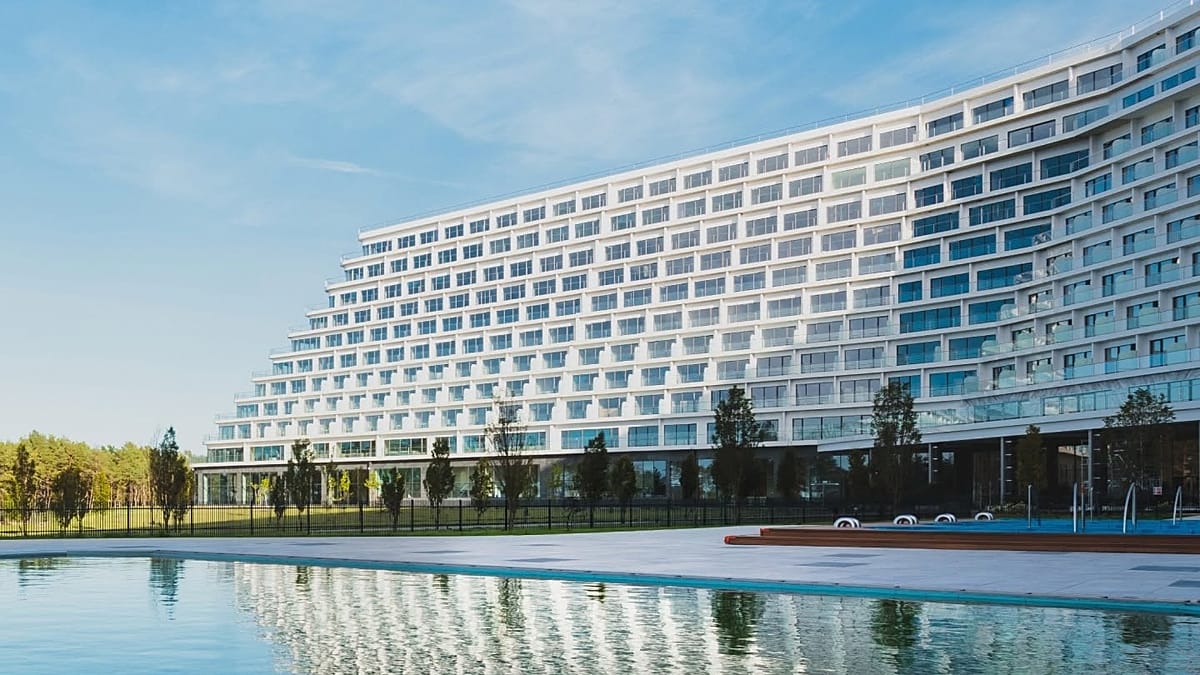
Next Wednesday, the largest hotel on the Baltic Sea will open its doors in the Polish resort town of Pobierowo, a village of roughly 1,000 inhabitants located half an hour from the holiday island of Usedom. The Gołębiewski chain's mega-hotel spans 180,000 square metres, rises 13 floors, and boasts 1,240 rooms — but there is a significant catch: only 500 of those rooms are actually finished.
The five-star property, already bookable from €350 per night for a standard room and up to €900 for a suite, has generated extraordinary demand. Marketing director Marta Maslowska confirmed that more than 2,000 reservations were placed within the first 24 hours of bookings opening. Each room measures 50 square metres, many with balconies, though not all offer sea views.
What's Ready and What's Not
Guests who secure a room will find themselves just 150 metres from the Baltic Sea beach. The hotel's centrepiece is a pool measuring 104 metres by 60 metres, complemented by a water park, indoor pools, whirlpools, a children's area, and a sauna. Water slides and a salt grotto are also planned, though it remains unclear whether all these attractions will be operational by opening day.
Beyond the wellness facilities, the hotel intends to offer climbing walls, a cinema, a bowling alley, a supermarket, volleyball courts, a nightclub, and children's entertainment. Live piano music is scheduled for the lobby. The incomplete state of the property — with 740 rooms still under construction — means that not everyone will be able to experience the full scale of the resort this summer.
The Gołębiewski chain's expansion comes as European tourism rebounds, with coastal destinations like Pobierowo seeing increased interest from German, Polish, and Scandinavian visitors. The Baltic coast has long been a popular summer escape, and this mega-hotel represents a significant bet on mass tourism in a region better known for quieter seaside towns.
For context, the development mirrors trends seen elsewhere in Europe, where large-scale hotel projects are reshaping coastal landscapes. In the Mediterranean, similar debates have emerged about the balance between tourism infrastructure and local character. The Polish Baltic coast, with its wide beaches and relatively low density, may now face similar pressures.
While the hotel's opening is a milestone for Polish tourism, it also raises questions about sustainability and infrastructure in small communities. Pobierowo's population of around 1,000 will see a temporary influx of thousands of guests, potentially straining local services. The hotel's own amenities — including a supermarket and entertainment venues — suggest an attempt to create a self-contained resort, which could limit economic spillover to the surrounding area.
For travellers interested in the Baltic region, the opening adds a new option alongside established resorts on Usedom and in the Baltic states, though the incomplete facilities may deter those seeking a fully polished experience. The hotel's marketing emphasises luxury and scale, but the reality for early guests will be a work in progress.
As the summer season approaches, the Gołębiewski hotel in Pobierowo will test whether demand for mega-resorts on the Baltic coast can match the ambition of its developers. For now, the message is clear: book early, but manage expectations.