Nearly a week after CIA Director John Ratcliffe's unannounced visit to Moscow stoked speculation that Russia might be preparing to test NATO's resolve, European officials are pushing back against the notion that a conventional attack is around the corner. From Helsinki to Bucharest, and across the Baltic capitals, the message is consistent: there is no intelligence suggesting Moscow is gearing up for a direct military confrontation with the alliance.
That does not mean the continent is letting its guard down. Governments are quietly reinforcing their eastern borders, increasing surveillance, and coordinating with allies—while insisting that preparation is not the same as prediction.
No evidence of imminent invasion
Finnish President Alexander Stubb dismissed forecasts that Russia could be ready to strike a NATO member within a few years. "If anyone has a crystal ball like that—that's great. I simply see neither evidence nor facts to support it," Stubb told Germany's Bild newspaper over the weekend, adding that the intelligence available to him backs his assessment. "It makes no sense for any power in the world to test the resolve of this alliance."
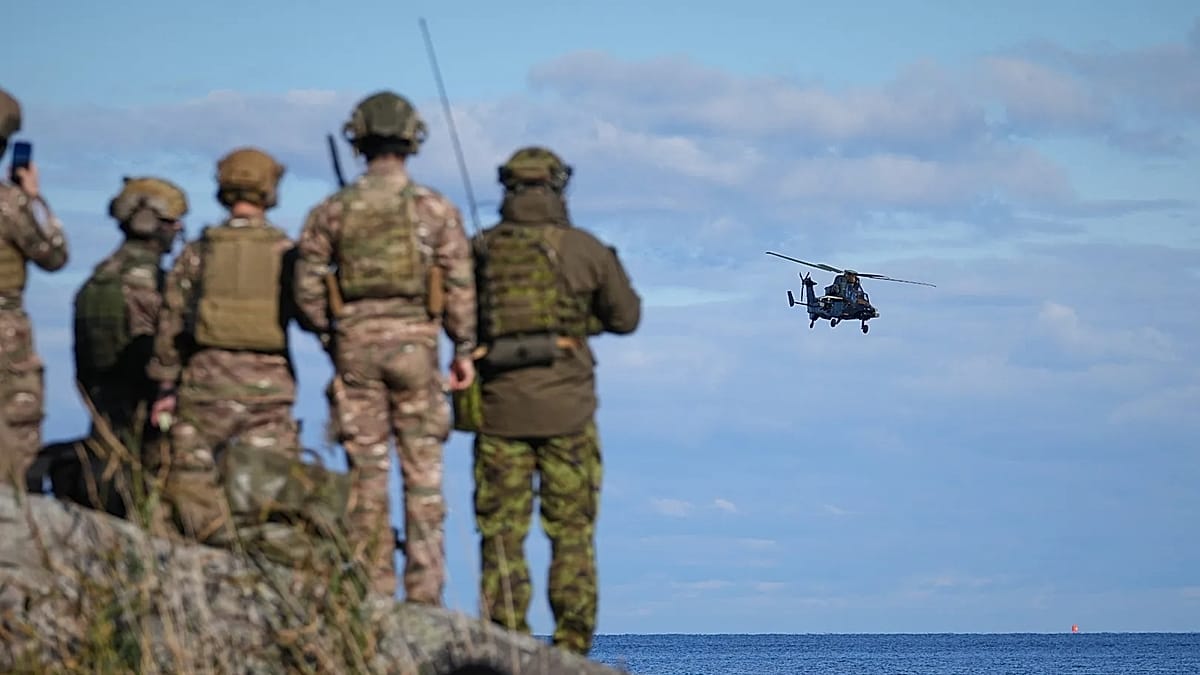
Finland, which shares a 1,340-kilometre border with Russia, is nonetheless bolstering its defences. Sweden has agreed to send Gripen fighter jets and a naval vessel to support Finnish territorial surveillance along the frontier. Finnish officials see no contradiction: heightened military readiness is meant to deter Russia and guard against drones, airspace violations, and other forms of escalation—not to brace for an impending invasion.
Romania offers a similar assessment. Defence Minister Radu Miruță told Romanian broadcaster Digi24 on Sunday that Bucharest and its allies constantly share intelligence, with "no indication" that Russia intends to attack a NATO member. "I don't think Russia has any intention to attack a NATO member country," Miruță said. Romania shares a 614-kilometre border with Ukraine and has repeatedly seen Russian drones cross into its territory.
Latvian Prime Minister Andris Kulbergs was more explicit, stating on X that the country's military threat level had not changed and the risk of a direct Russian invasion remained low. Latvia nevertheless remains on heightened alert for cyber attacks, sabotage, provocations, and drones, while strengthening its eastern border alongside NATO allies. "Readiness for a possible threat is not the same as an immediate threat," Kulbergs said. "These two things must not be confused."
Lithuania, Estonia, and Latvia are among NATO's biggest military spenders relative to the size of their economies—a commitment that underscores their long-term view of the Russian challenge.
When 'hybrid' warfare is already war
Poland has struck a more cautious tone. Prime Minister Donald Tusk said after a briefing from NATO Secretary-General Mark Rutte this weekend that "the escalation from Russia's side is progressing." "We cannot rule out provocations from Russia against one of NATO's members," Tusk said. "The next six months will be decisive, and we must be prepared as Poland and NATO for various scenarios."
His warning points to another dimension of Europe's threat assessment: while a conventional attack may not be imminent, Russian aggression is already taking other forms. European governments have accused Moscow of cyber attacks, sabotage, and other hostile operations across the continent, while Russian aircraft and drones have repeatedly violated NATO airspace. Recent incidents, such as the EU naval force boarding a suspected Russian shadow fleet tanker in the Mediterranean, highlight the breadth of these activities.
Estonian Foreign Minister Margus Tsahkna argued on X that calling these activities "hybrid warfare" understates the threat. Responding to comments by Estonia's foreign intelligence chief Kaupo Rosin, Tsahkna wrote: "Enough with the euphemisms. Putin's campaign of sabotage and subversion across Europe is not 'hybrid warfare'. It is state-sponsored terrorism. Call it what it is."
John Hardie, deputy director of the Russia Program at the US-based Foundation for Defence of Democracies, told Euronews that such actions are already occurring. "As for aggressive acts below the threshold of open war, such as arson against European defence plants, those are already occurring and have been for years now, but to limited strategic effect," he said.
Hardie also noted that Ratcliffe's trip may have been about delivering multiple messages. "My own view is that a conventional Russian military attack against a NATO member remains highly unlikely, especially while the Ukraine war continues," he said. "However, even while that scenario remains unlikely overall, there are reasons to see the risk ticking up a bit." He pointed to reduced US readiness due to the Iran war and doubts sown by the Trump administration about Washington's willingness to defend Europe. "In recent months, we've seen intrusions into NATO airspace that could have been intended to probe our response," he added.
Hardie also suggested US officials may be worried about what Putin could do if he feels "frustrated or cornered" in Ukraine, though he saw a second round of Russian mobilisation as a more likely response than an attack on NATO.
For now, the Baltic states and their allies are walking a careful line: they refuse to cry wolf, but they are also preparing for a wolf that may never come. As the drone strikes on Ukrainian warehouses and other attacks continue, the distinction between preparation and expectation remains crucial—and increasingly blurred.