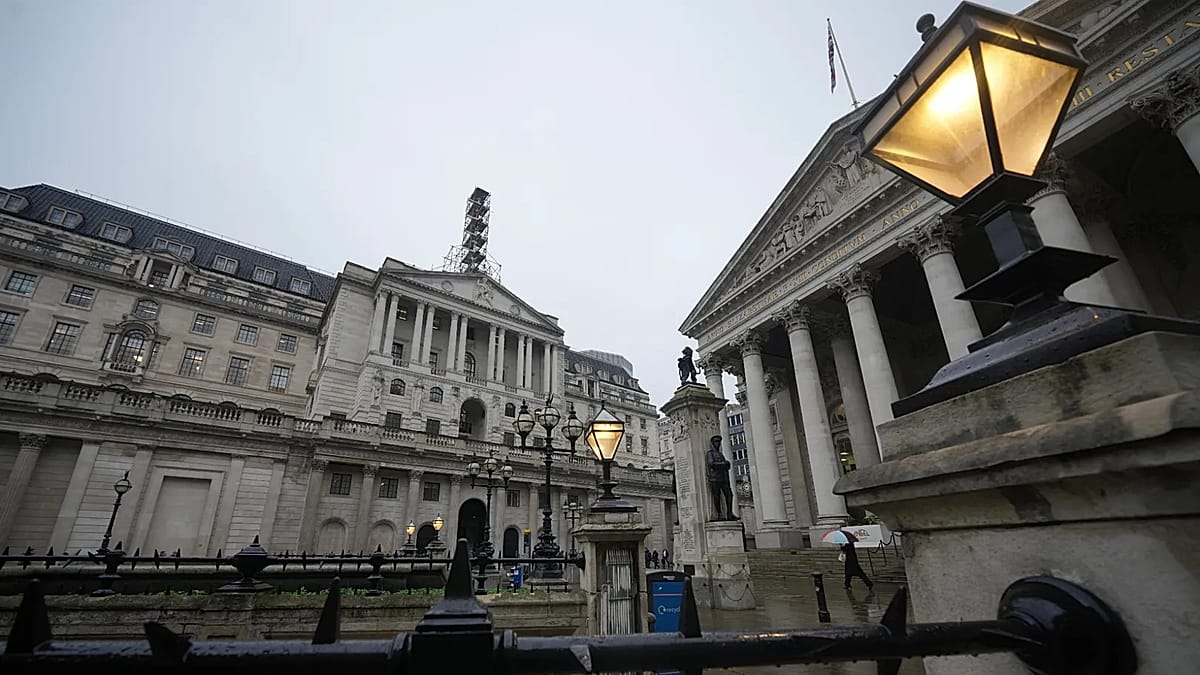
The Bank of England has kept its benchmark interest rate at 3.75%, joining the US Federal Reserve and the Bank of Japan in a wait-and-see stance as the war in Iran and the effective closure of the Strait of Hormuz push oil prices to their highest level in four years. The decision, announced on Thursday, was widely anticipated after the Fed held rates steady for the third consecutive meeting on Wednesday and the Bank of Japan followed suit on Tuesday.
Brent crude, the international benchmark, briefly surged above $126 (€108) per barrel during Thursday's trading session — a level not seen since the aftermath of Russia's full-scale invasion of Ukraine in 2022. Traders are betting that the Strait of Hormuz, through which roughly one-fifth of the world's crude passes in peacetime, will remain closed for the long term. The conflict, which began on 28 February, has upended earlier financial market expectations that the Bank of England would cut rates this spring as inflation appeared to be easing toward its 2% target.
Inflation and Energy Costs Rise
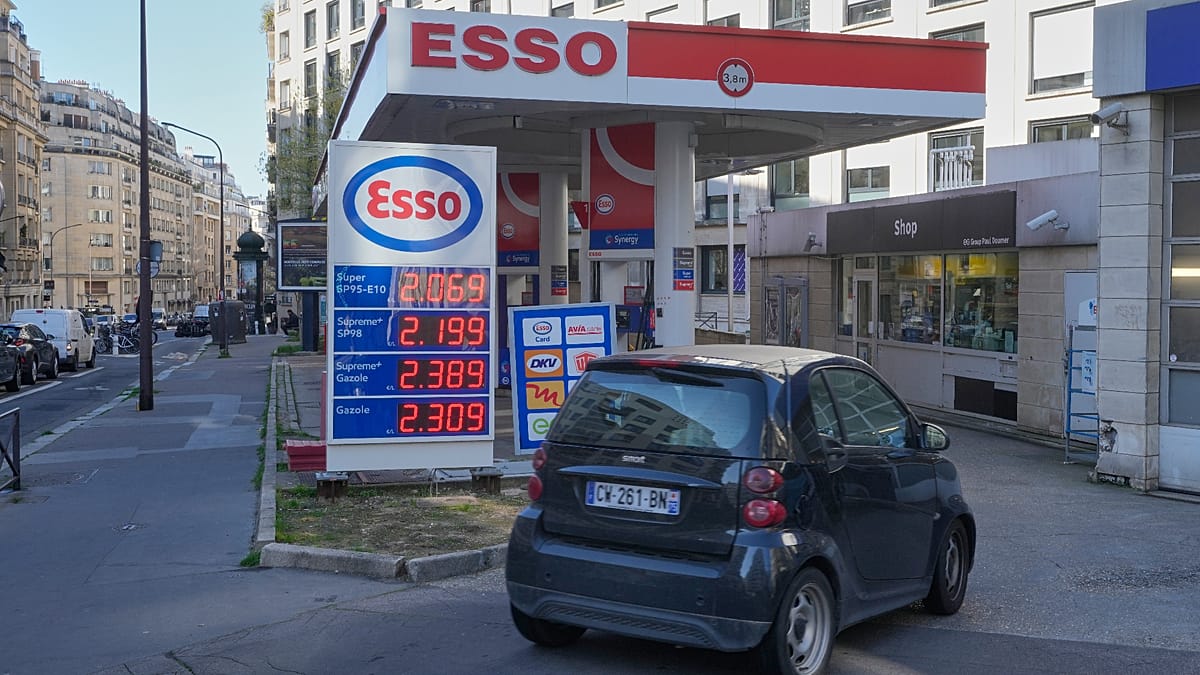
Energy costs have surged again in recent days as uncertainty over the strait deepens. UK inflation climbed to 3.3% in March — a three-month high — driven by a sharp jump in pump prices since the war began. The Monetary Policy Committee's nine members are expected to have voted largely to hold, though one or two may have backed a quarter-point rise as a preemptive move against further inflation. Economists suggest the committee could hint at future increases if the Middle East conflict, where a fragile ceasefire is currently holding, continues to push prices higher.
Sandra Horsfield, an economist at Investec, noted that the "repercussions of the conflict are still keenly felt and uncertainty about how the situation could evolve also remains high." The Bank's quarterly economic projections, published alongside the rate decision, and the press conference led by Governor Andrew Bailey may prove more consequential than the rate hold itself. These forecasts, the first since the US and Israel launched strikes on Iran, are likely to raise inflation projections and lower growth estimates.
The broader European context is equally challenging. The European Central Bank recently held rates at 2% as stagflation fears mount across the eurozone, with energy costs straining economies from Berlin to Madrid. Meanwhile, the EU is accelerating its push for renewables and nuclear energy after the Strait of Hormuz closure exposed the bloc's vulnerability to oil supply disruptions. Fuel prices have surged over 20% in Latvia and Sweden, and remain 12% above pre-strike levels across the continent despite the fragile ceasefire.
For the UK, the rate hold reflects a delicate balancing act: curbing inflation without stifling an economy already facing headwinds from higher energy costs and global uncertainty. The Bank's next moves will depend heavily on how the conflict evolves and whether oil prices stabilize or climb further. As Horsfield put it, the situation remains highly uncertain, and the repercussions are still keenly felt across Europe.