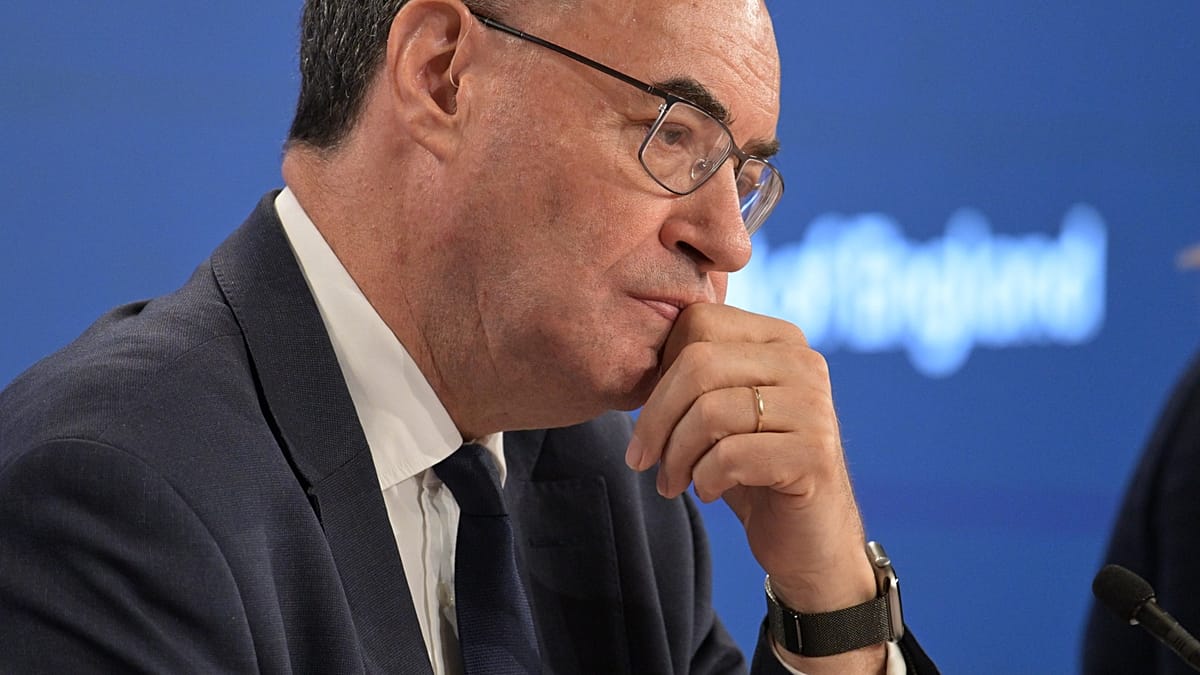
The Bank of England kept its benchmark interest rate unchanged at 3.75% on Thursday, marking the fifth consecutive hold since December, as policymakers weighed a larger-than-expected drop in inflation against renewed geopolitical risks in the Middle East.
Consumer price inflation in the United Kingdom slowed to 2.6% in the 12 months to June, down from 2.8% the previous month, according to the Office for National Statistics. While the decline exceeded economists' forecasts, inflation has now remained above the BoE's 2% target for 21 straight months.
MPC split signals growing unease
The Monetary Policy Committee voted 6-3 to maintain the rate, with the dissenting members favouring an increase. This internal division mirrors tensions seen at other major central banks, including the US Federal Reserve, which held its own rate steady on Wednesday within a range of 3.5% to 3.75%. Fed Chair Kevin Warsh warned that the central bank “will not hesitate to act” to contain price pressures.
“The market is pricing in at least one interest rate rise in the UK this year, and with three members voting for an increase today and events in the Middle East showing no sign of easing the pressure, this won’t change,” said Richard Carter, head of fixed interest research at Quilter Cheviot, in a note to clients.
Carter added that while the new UK government has made the cost of living its top priority, “initial announcements will help lower inflation marginally, but not by enough to really make a difference to interest rates.”
Geopolitical jitters fuel energy price surge
The decision comes as renewed hostilities between the United States and Iran sent oil prices soaring. Brent crude, the global benchmark, rose above $100 (€87.2) a barrel on 23 July, up from less than $71 (€61.9) three weeks earlier, after a ceasefire between the two countries collapsed. On Thursday, Brent traded at around $91 (€79.3) a barrel.
The conflict threatens shipping through the Strait of Hormuz, a chokepoint through which roughly one-fifth of global oil consumption and liquefied natural gas trade passed before the war. Analysts warn that any sustained disruption could reignite inflationary pressures across Europe, where energy costs remain a key driver of household budgets.
For the eurozone, the situation adds another layer of uncertainty. Spain's inflation climbed to 3.5% in July, driven by surging fuel and electricity costs, highlighting how energy shocks ripple unevenly across the continent. The European Central Bank, which has already raised rates to 4.25%, faces similar dilemmas as it tries to balance price stability with slowing growth.
The BoE's hold also comes amid broader global monetary policy divergence. While the Fed and the Bank of England have paused, other central banks, including the Swiss National Bank and the Bank of Canada, have begun cutting rates. This patchwork of approaches reflects differing assessments of how persistent inflation will prove and how much weight to give geopolitical risks.
In the UK, the new Labour government under Prime Minister Keir Starmer has pledged to tackle the cost-of-living crisis, but its room for manoeuvre is limited. Fiscal stimulus could add to demand-side pressures, complicating the BoE's task. Meanwhile, the drought declared across half of England after record heat and low rainfall may further strain food prices, adding to inflationary headwinds.
The BoE's next meeting in September will be closely watched for any shift in tone. With three MPC members already pushing for a hike and energy markets on edge, the path of UK interest rates remains uncertain. For now, the central bank is betting that patience will pay off — but the Middle East conflict could test that resolve.