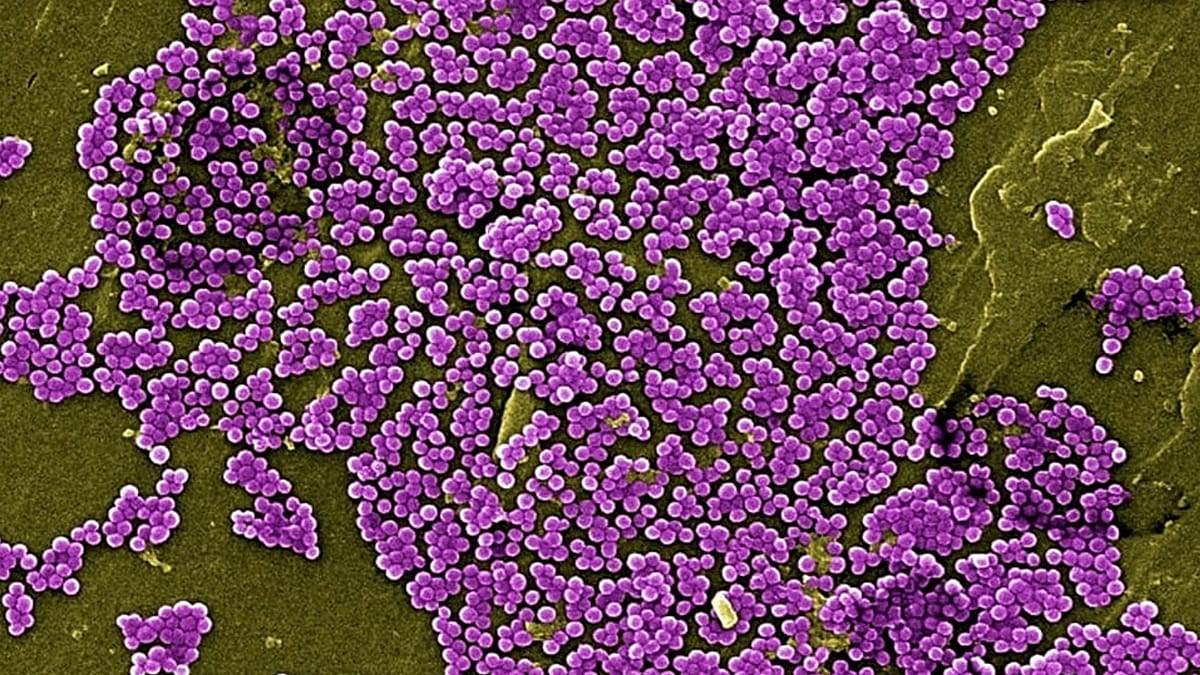
An international research team, with key contributions from Pompeu Fabra University (UPF) in Barcelona, has uncovered a previously unknown mechanism that bacteria use to break free from biofilms—the protective communities that shield them from antibiotics and the immune system. The discovery, published in Nature Microbiology, could inspire future treatments for chronic infections that resist conventional drugs.
How Biofilms Protect Bacteria
Biofilms are dense clusters of bacteria encased in a sticky, self-produced matrix. This barrier makes it difficult for antibiotics to penetrate and for immune cells to attack, contributing to persistent infections linked to medical implants, catheters, and non-healing wounds. The new study, led by scientists at the University of California San Diego and involving UPF researchers, describes how certain bacteria produce a hydrogel that, as it absorbs water, builds up enough internal pressure to expel cells from the biofilm.
“We found that when bacteria are ready to disperse, they generate a gel-like substance that swells with water, creating force that pushes some cells out,” explained a co-author from UPF. This natural dispersal mechanism allows bacteria to colonize new sites, but the team also learned to manipulate it.
Triggering Disintegration Without Drugs
By artificially boosting the hydrogel production, the researchers caused biofilms to break apart in the laboratory without any antibiotic intervention. While the work is still at an early stage—conducted only in lab conditions and far from clinical application—it points to a novel approach for combating antibiotic-resistant infections.
The findings come as Europe grapples with rising antimicrobial resistance, a threat the European Commission has called a “silent pandemic.” The study’s European angle is significant: UPF’s involvement underscores the continent’s role in cutting-edge microbiology, and the potential for new therapies could reduce reliance on antibiotics, aligning with EU efforts to curb resistance.
“This is a proof of concept that we can disrupt biofilms using the bacteria’s own machinery,” said the lead researcher from UC San Diego. “The next steps will be to test this in animal models and eventually in humans, but we are still years away from a treatment.”
The research also highlights the importance of international collaboration. The team combined expertise from the United States and Spain, with UPF providing key insights into the molecular structure of the hydrogel. Similar partnerships are crucial for tackling global health challenges, as seen in other European-led initiatives such as the EU’s sanctions on Russian scientists over chemical weapons use, which underscore the intersection of science and security.
For now, the discovery offers a promising avenue for developing new antimicrobial strategies that do not rely on traditional drugs. As antibiotic resistance continues to rise—causing an estimated 35,000 deaths annually in the EU alone—innovations like this could eventually save lives. The team plans to explore whether the mechanism works in other bacterial species and to refine the method for potential therapeutic use.