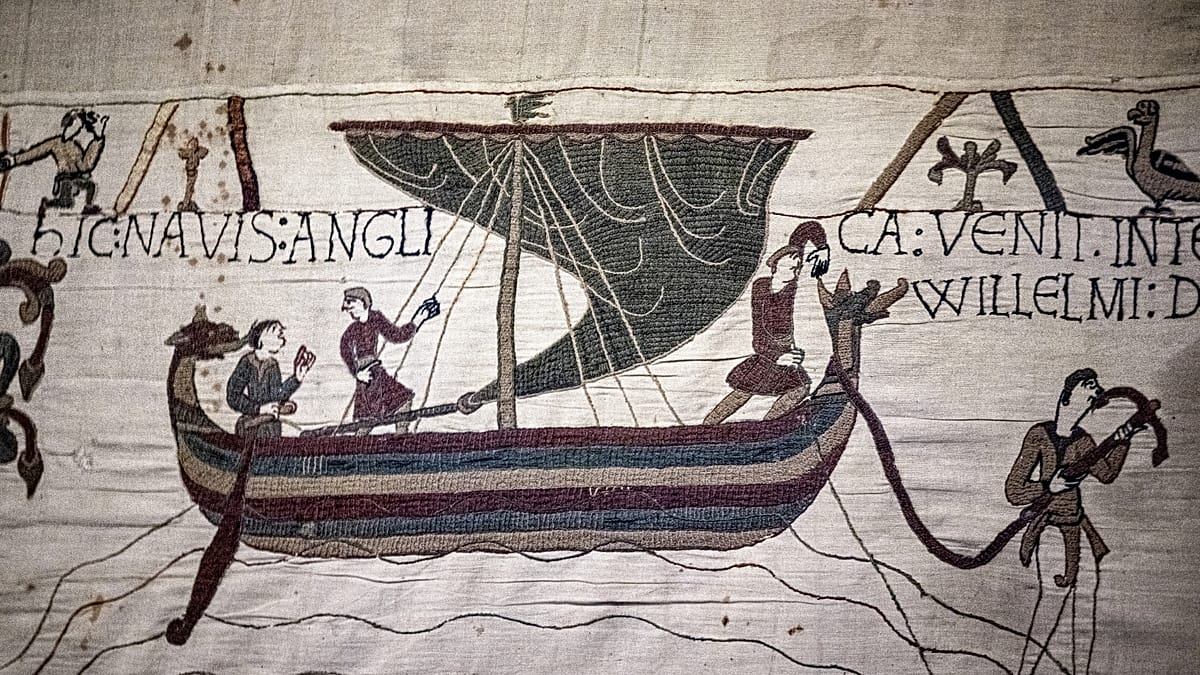
The Bayeux Tapestry, a 70-metre-long embroidery chronicling the Norman conquest of England, is set to leave France for the first time in its history. From September 2026 to July 2027, the medieval masterpiece will be displayed at the British Museum in London, marking the 1,000th anniversary of William the Conqueror's victory at the Battle of Hastings.
President Emmanuel Macron has personally authorised the loan, framing it as a gesture of cultural diplomacy between France and the United Kingdom. French Culture Minister Catherine Pégard described the move as 'a political, cultural and symbolic gesture'. Speaking at a press conference in Paris, she added: 'In a world that is fragmenting, that sometimes gives in to the temptation to turn inwards, France remains true to itself and opts for cultural outreach. We choose to affirm that the great democracies and ancient nations of Europe are meant to enrich one another.'
Logistical Challenges and Conservation Concerns
The tapestry, which normally resides in the town of Bayeux in Normandy, is exceptionally fragile. According to a recent study by the French Ministry of Culture, the embroidery already contains more than 24,000 stains, 9,000 holes and 30 tears. Its fibres are highly sensitive to fluctuations in temperature and humidity, and any vibration during transport could cause further damage.
To address these risks, a specially designed shock-proof container has been developed. The case, which underwent a second test in April, can absorb 96% of the force of a major impact over the entire journey. Pégard likened the container to 'a newborn's cradle', and insisted that 'absolutely nothing has been left to chance'. The exact date of the transfer will remain secret to minimise security risks.
Despite these precautions, some experts have voiced concerns about the potential harm to the thousand-year-old work. Pégard dismissed such criticism as 'particularly unfair the insinuations of incompetence that some have sought to spread'. She noted that 'never in the history of transporting works of art have so many tests, so many protocols and so many risk checks been carried out for a single move'.
Cultural Exchange and Restoration Plans
The loan is part of a broader cultural exchange between France and the United Kingdom. Other medieval artefacts, including a chess set and funerary treasures from Sutton Hoo, will be temporarily exchanged between the two countries. This reciprocal arrangement underscores the deepening cultural ties between Paris and London, even as political relations have occasionally been strained.
When the tapestry returns to France at the end of 2027, it will undergo a long-planned restoration that had been postponed. The work will be carried out at a dedicated conservation facility, with the aim of preserving the embroidery for future generations.
According to tradition, the tapestry was commissioned by Bishop Odo of Bayeux, William the Conqueror's half-brother, and was likely created by English embroiderers in the 1070s. It depicts the events leading up to the Norman conquest, including the Battle of Hastings, and is considered one of the most important surviving examples of Romanesque art.
The British Museum exhibition will offer visitors a rare opportunity to see the tapestry outside France. The museum has not yet announced ticket prices or specific display arrangements, but the event is expected to draw significant public interest. For those unable to travel to London, the museum plans to offer virtual tours and educational resources.
This cultural milestone comes at a time when European heritage institutions are increasingly collaborating across borders. The loan of the Bayeux Tapestry is a reminder that even the most fragile artefacts can serve as bridges between nations, fostering mutual understanding and appreciation.