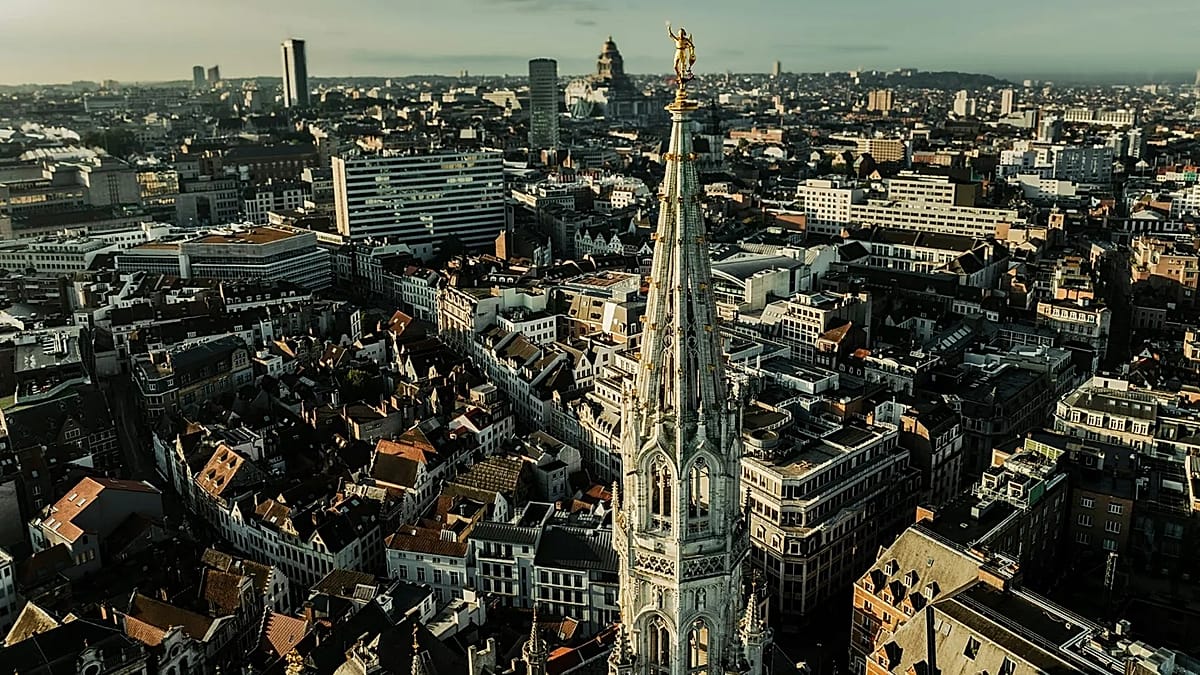
Brussels residents overwhelmingly believe their city is underrated. A survey of 1,000 people across 19 municipalities found that 74.6% consider the Belgian capital an overlooked destination, even as tourism numbers remain steady—3.7 million visitors in 2025, just a slight dip from the previous year. Nearly 79% of respondents said tourism is essential for local businesses and the wider economy.
Angela Dansby, author of Best of Belgium: The Complete Travel Guide Through Expat Eyes, agrees. “Not enough people know that Brussels, and Belgium as a whole, are great for tourism,” she told European Pulse. “My own visitors are always very pleasantly surprised by the city.”
Dansby, a lifestyle journalist who moved to Belgium from Chicago in 2015, walked hundreds of kilometres to photograph and write about 32 cities for her guide, published in April 2026. The 200-page book covers nearly 100 locations, each highlighting why the multilingual country deserves a spot on any European itinerary.
Castle Hunting and UNESCO Traditions
Belgium has the highest density of castles per square kilometre in the world—around 3,000 in total. Dansby recommends visiting Bouillon Castle in Wallonia, which draws 135,000 visitors annually and offers a 360-degree panoramic view of the medieval town. Other favourites include the castles of Beloeil and Vêves, both in the French-speaking southern region.
For a truly unique experience, head to Oostduinkerke on the North Sea coast. There, shrimp fishermen on horseback continue a 500-year-old tradition, recognised by UNESCO as Intangible Cultural Heritage. They ride into the sea about 40 times a year, dragging nets to catch brown shrimp.
Belgium’s Best Bites
Belgium boasts more than 100 Michelin-starred restaurants—the third highest density in the world. Dansby recommends dining in Brussels, Antwerp, Bruges, and Knokke-Heist for splurge-worthy meals. In Eupen, near the German border, try sauerbraten (a marinated pot roast) or Eupener Platz, a flat brioche filled with raisins and topped with pearl sugar.
Liège is the place for waffles, coffee, and meatballs, while Ghent excels at waterzooi, a creamy chicken and vegetable soup. Ostend is the go-to for seafood. Adventurous eaters should seek out Petit-Gris de Namur—snails from the Namur province in Wallonia, typically served with garlic butter and herbs.
For those interested in the broader European travel landscape, new night train routes across Europe are making it easier to reach Belgium and its neighbours.
Beyond Brussels
While Brussels is synonymous with gastronomy, Dansby says Hasselt in the Flemish region also has a vibrant food scene. Two of its top-rated restaurants on Tripadvisor are Michelin-listed: Ross, serving Belgian and Dutch cuisine, and La Fontell.
Belgium’s public transport network is efficient, and Dansby encourages visitors to explore by foot or train. “Meeting people from around the world, especially in Brussels, is my top tip,” she says. With 180 nationalities among its 11.9 million residents, the country offers a truly cosmopolitan experience.
For those planning a trip, it’s worth noting that Belgium’s energy imports have shifted in recent years, but the country remains a key hub for travel and business in Europe.