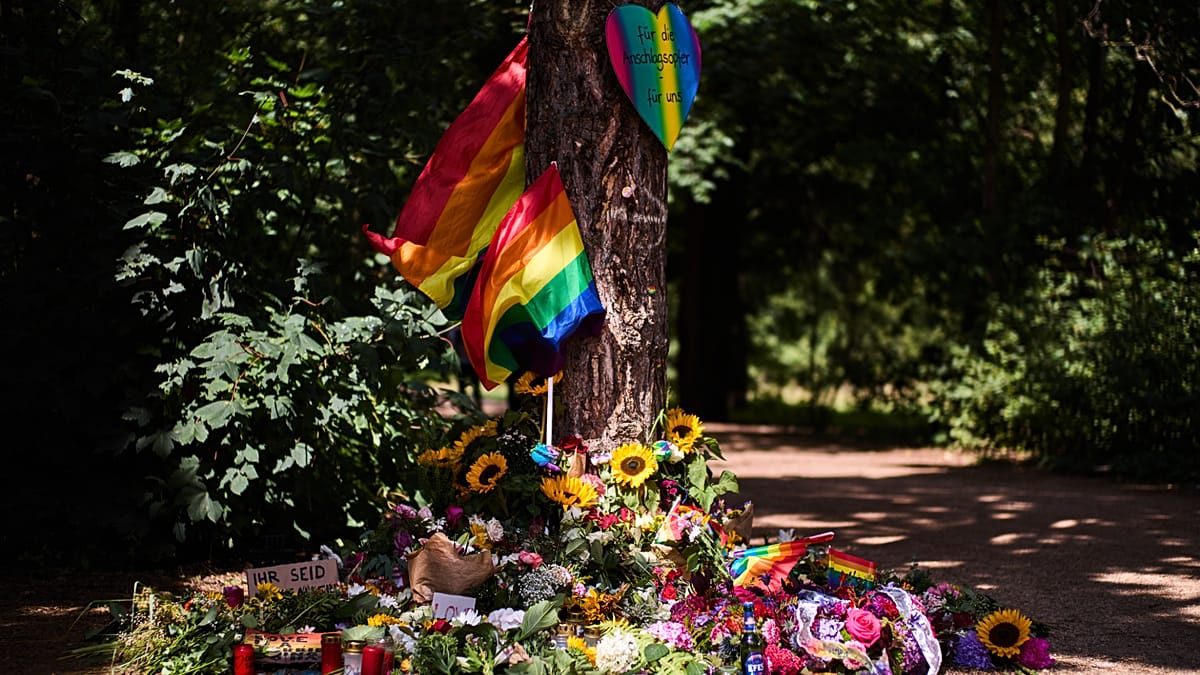
Berliners have turned the Tiergarten memorial into a place of quiet mourning, laying flowers, lighting candles, and writing personal messages for the victims of the attack that struck near the city's Pride parade. The assault, which involved a vehicle and a machete, left several people dead and many others injured, sending shockwaves through the capital and across the continent.
The memorial, located in the heart of the city, has become a focal point for a community in grief. Among the visitors were members of the LGBTQ+ community, local residents, and political figures, all united in their determination to honor those who lost their lives. Many left rainbow flags alongside the tributes, a symbol of both solidarity and defiance.
A city in shock, a community in solidarity
The attack occurred on the fringes of the Pride parade, an event that draws hundreds of thousands of participants each year. For many Berliners, the violence felt like an assault on the city's values of openness and tolerance. "We came here to show that hate will not win," said one mourner, who declined to give her name. "This is our city, and we will not be intimidated."
Local authorities have confirmed that the suspect, a man with a history of extremist ties, was arrested shortly after the attack. Investigators are now piecing together his movements and motives, while also examining whether he acted alone or as part of a broader network. The attack has reignited discussions about the effectiveness of European intelligence-sharing, a topic that has gained urgency in recent years.
The incident has also prompted a broader debate about security at public events across Europe. In Hamburg, where the Pride parade took place just days later, organizers implemented heightened security measures, reflecting a new reality for large gatherings. The Hamburg Pride drew 250,000 attendees, with police presence significantly increased and barriers installed along the route.
Questions over European intelligence cooperation
The Berlin attack has exposed gaps in the European Union's counter-terrorism framework. Despite years of calls for a unified terror watchlist, member states still rely on fragmented databases and bilateral agreements. Critics argue that this lack of coordination allowed the attacker to slip through the cracks, despite being known to authorities in at least one other country.
"This is a wake-up call," said a senior EU official, speaking on condition of anonymity. "We cannot afford to have 27 different security systems when the threat is borderless." The debate on EU intelligence gaps has now moved to the forefront of political discussions in Brussels, with some leaders calling for immediate reforms.
However, progress is likely to be slow, as member states are often reluctant to share sensitive intelligence. The attack has also highlighted the role of misinformation, with false claims spreading rapidly on social media during the manhunt. Misinformation during the manhunt complicated the work of law enforcement and fueled public anxiety, underscoring the need for better communication strategies.
A community's resilience
Despite the tragedy, Berlin's LGBTQ+ community has shown remarkable resilience. Vigils have been held across the city, and many have vowed to continue the fight for equality and visibility. "Pride is not just a party; it's a protest," said one organizer. "We will not let fear dictate our lives."
The attack has also drawn international attention, with leaders from across Europe expressing their condolences. In Paris, where a separate knife attack wounded three women, authorities have increased patrols around LGBTQ+ venues. The Paris knife attack has been linked to similar extremist motives, further highlighting the transnational nature of the threat.
As Berliners continue to mourn, the Tiergarten memorial stands as a testament to the city's spirit. The flowers and candles will eventually fade, but the memory of the victims and the resolve of the community will endure. For now, the message is clear: Berlin will not be broken.