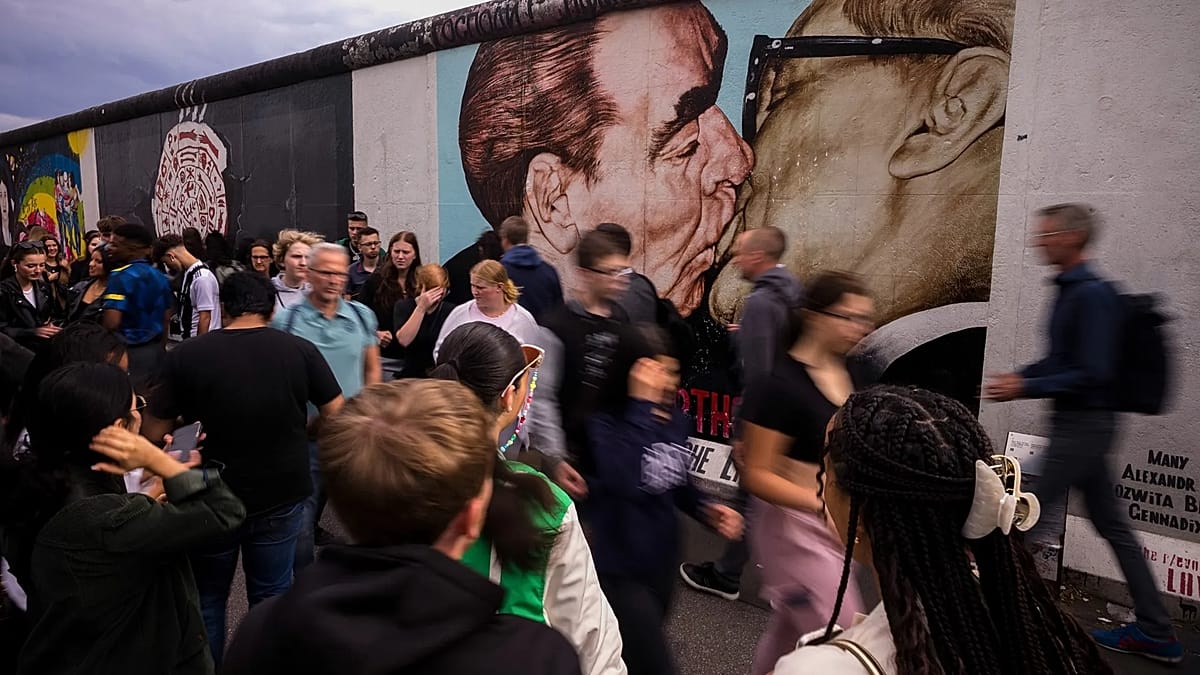
Berlin, once a magnet for global tourists, is seeing a marked decline in visitor numbers. Overnight stays in the German capital fell to 29.4 million in 2025, a drop of almost 15% from the record 34.1 million in 2019. The city's appeal, built on its edgy culture, nightlife, and affordability, appears to be fading.
Domestic tourists still make up the majority—7.9 million of the 12.4 million total visitors in 2025, or over 60%. But even they are voicing frustrations. Reinhold Steinle, a city guide who leads tours in the diverse Neukölln district, says many of his clients are shocked by the state of the streets. “On the one hand, a lot of people really complain about the cleanliness, they are shocked by the pollution,” he explains.
The numbers back him up. Berlin's city cleaning service, BSR, disposed of around 54,000 cubic metres of illegally dumped waste in 2024—the equivalent of 22 Olympic swimming pools. In some neighbourhoods, rubbish has become a permanent part of the cityscape.
Transport and Culture Under Strain
Beyond litter, visitors find getting around increasingly difficult. Steinle notes that “train cancellations, S-Bahn cancellations and overcrowded buses” cause significant frustration. The city's public transport network, once a point of pride, now struggles with reliability.
More troubling for Berlin's long-term allure is the erosion of its cultural scene. The city that defined techno and alternative nightlife is losing its edge. According to the Clubcommission association, roughly half of Berlin's clubs are threatened with closure. This is not just a blow to local nightlife—it directly impacts tourism. “Club culture is important for tourists and also for everyone who lives in Berlin,” says Ludwig Eben, operator of the Humboldthain Club. “The pandemic has shown how important meeting places are. Where else should people meet? At McDonalds?”
Eben's club faces a new threat: a hotel planned next door. If built, noise complaints from hotel guests could force the club to shut. He is fighting to ensure the hotel has no windows facing the club, but has yet to secure a written guarantee from the district council. “I can't extend the lease like this,” he says. “The city hasn't changed for the better because places like this have actually all been eradicated. There are only a few things left that have attracted tourists here for a long time.”
The decline in Berlin's appeal mirrors broader challenges facing Germany. The country is grappling with deindustrialisation and a sense that its post-war golden era has ended, as billionaire Reinhold Würth recently argued. Meanwhile, Berlin's struggles with infrastructure and urban management are part of a wider European pattern where once-thriving capitals must adapt to new pressures.
For now, the city's tourism sector is left hoping that efforts to clean up the streets, improve transport, and protect cultural spaces can reverse the trend. But with half the clubs at risk and complaints mounting, the road to recovery looks long.