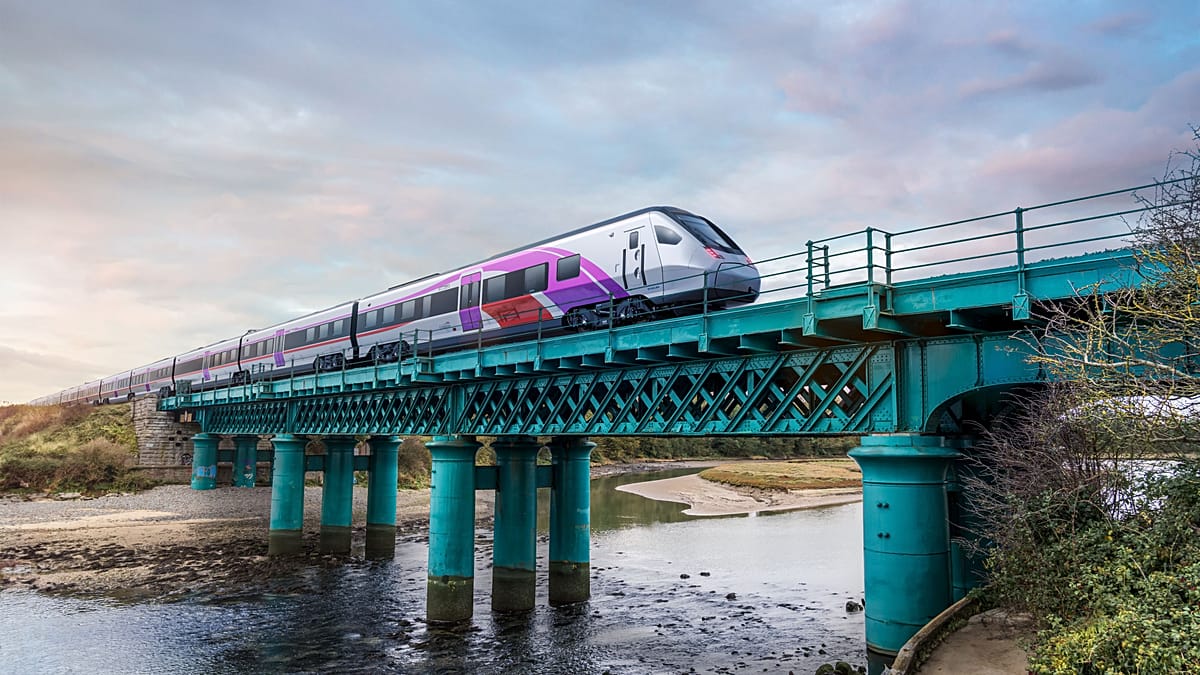
A major investment in cross-border rail infrastructure will reduce travel times between Dublin and Belfast to under two hours by the end of 2028. The €698 million overhaul of the Enterprise service, announced this week at Belfast Grand Central station, includes eight new Stadler trains, more frequent departures, and upgraded onboard amenities.
The current journey of 180 kilometres takes up to two hours and 15 minutes, with stops in Drogheda, Dundalk, Newry, and Portadown. The new trains, capable of operating on electric, diesel, and battery power, will offer improved acceleration and performance, shaving at least 15 minutes off the trip. The service, which first launched as a steam route in 1947, has seen passenger numbers rise by 40% since an hourly timetable was introduced at the end of 2024.
A Tri-Mode Fleet for a Greener Future
The new Stadler trains will feature around 400 seats, USB charging points, a dining and bar area, and step-free interiors to improve accessibility. Their tri-mode propulsion system is designed to reduce noise and emissions, supporting the line’s eventual transition to full electrification. The fleet will supplement existing rolling stock, enabling up to 16 daily services in each direction.
The investment is jointly funded by the Irish government and the Northern Ireland Executive, with €165 million coming from PeacePlus—a programme involving the UK government and the European Union. Speaking at the launch, Taoiseach Micheál Martin said the deal “heralds a significant new chapter for cross-border rail connectivity on the island of Ireland,” adding that it will create jobs and ease travel between the two cities.
Northern Ireland’s First Minister Michelle O’Neill also attended the ceremony, underscoring the political significance of the project. The Enterprise service is operated jointly by Translink and Iarnród Éireann, and the upgrade is seen as a boost to economic integration and tourism along the eastern corridor of the island.
For travellers, the faster journey times will make day trips between Dublin and Belfast more feasible, potentially shifting demand away from road and air travel. The improved service also complements other European rail developments, such as the return of the Prague–Copenhagen direct train after a decade-long hiatus, highlighting a broader continental push for sustainable cross-border connectivity.
The announcement comes amid growing attention to rail investment across Europe, where governments are seeking to reduce carbon emissions and improve regional links. While the Dublin–Belfast line is relatively short, its upgrade demonstrates how targeted funding can modernise legacy infrastructure. The new trains are expected to enter service gradually from 2028, with full deployment by the end of that year.
Beyond the immediate travel benefits, the project is a tangible outcome of cross-border cooperation in a region where political sensitivities often complicate infrastructure planning. The involvement of the EU through PeacePlus underscores the bloc’s role in supporting peace and reconciliation on the island of Ireland, even after Brexit.