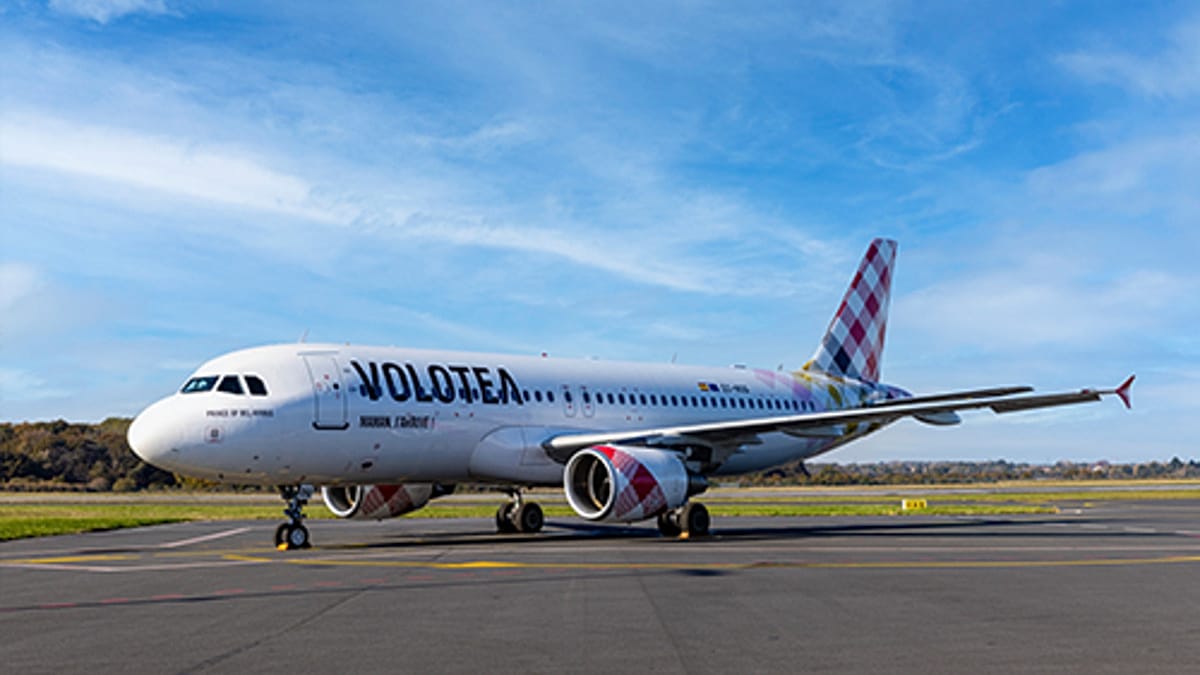
The European Commission issued a formal guidance note on Friday stating that airlines operating within the European Union cannot add fuel surcharges to tickets after the point of sale, even when kerosene prices spike due to geopolitical turmoil. The announcement directly addresses a practice recently adopted by the Spanish low-cost carrier Volotea, which has been levying additional fees of up to €14 per ticket in response to rising fuel costs.
A Commission spokesperson emphasized that EU rules require airlines to display the final price at the time of purchase, including all unavoidable and foreseeable taxes, fees, and charges. “Adding a fuel surcharge to a ticket after it has been bought cannot be justified,” the spokesperson said. The guidance effectively closes the door on any retroactive price adjustments, regardless of market volatility.
Volotea, based in Barcelona, has branded its surcharge policy as a “Fair Travel Promise,” embedding it in its latest terms and conditions. The company reviews fuel prices seven days before each flight and applies a surcharge if prices have risen, or refunds the difference if they have dropped. The fee is mandatory for seat confirmation. The Spanish consumer protection group Facua has called for an investigation, arguing the practice is unlawful and warning that other airlines might follow suit.
Passenger Rights Remain Intact
The Commission also reaffirmed that passengers affected by cancellations retain full rights under EU air passenger law, including reimbursement, re-routing, or return, as well as airport assistance. Several major European airlines—including Lufthansa, British Airways, and KLM—have recently canceled flights, citing economic unfeasibility due to fuel price surges. However, the Commission stressed that carriers are only exempt from paying financial compensation if they can prove the cancellation was caused by extraordinary circumstances, such as a local fuel shortage.
High fuel prices resulting from the ongoing crisis in the Middle East do not qualify as extraordinary circumstances. “There is a difference between high jet fuel prices and a shortage of fuel,” the spokesperson explained. “It is for the airlines to manage price volatility.” The Commission acknowledged that fuel costs represent a significant portion of airline expenses but noted that such volatility is “entirely foreseeable at the moment.”
The conflict in the Middle East, which began in February, has more than doubled jet fuel costs, largely due to the closure of the Strait of Hormuz—a chokepoint that handles roughly a fifth of the world's oil supply. This has forced airlines to cut thousands of flights across Europe, with May alone seeing 13,000 cancellations. The broader economic impact is also being felt, as the IMF warns that a prolonged conflict could push Europe into recession.
Volotea has been contacted for comment but has not yet responded. The Commission’s guidance is binding on all EU member states, and national enforcement bodies are expected to monitor compliance. The ruling sets a clear precedent: airlines must absorb fuel price risks as part of their business model, rather than passing them on to passengers after the sale.