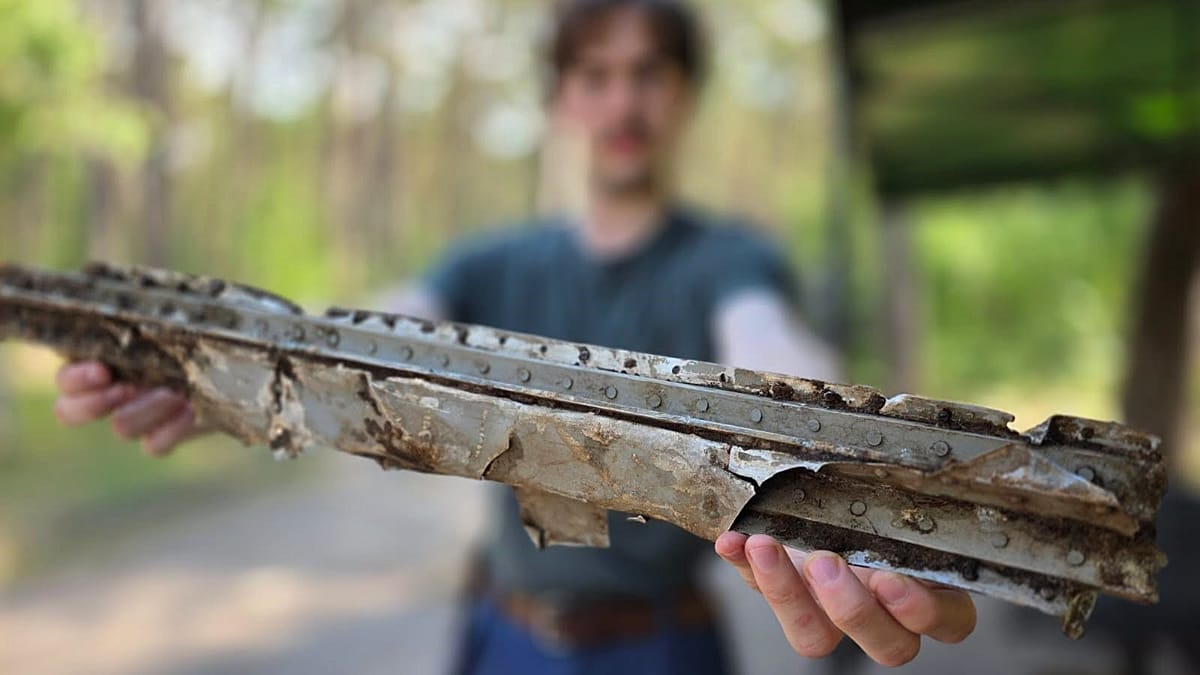
A routine walk in the woods near Świnoujście, a port city on Poland's Baltic coast, took an unexpected turn when a local resident, instead of filling a basket with berries, stumbled upon a depression in the ground littered with metal fragments. The pieces—aluminium sheets, structural components, and burnt ammunition—did not look like ordinary scrap. The man alerted the Museum of Coastal Defence – Fort Gerhard, setting off a chain of investigation that may solve a decades-old wartime mystery.
Clues from the Forest Floor
Wiktor Czeszewski, a museum staff member, said a first glance suggested the debris was not random. “The nature of the sheet metal, the way it was riveted, traces of aircraft structures and burnt ammunition all suggested we might be dealing with the remains of an aircraft,” he explained. The ammunition, identified as .303 British calibre—used in Browning machine guns on British aircraft—pointed to an Allied plane.
The real breakthrough came after cleaning a small copper tube found among the wreckage. It bore the marking T7, which, according to RAF technical documentation, identifies seamless copper tubing used in oil, fuel, and gas systems. The end fitting was an Avimo-type high-pressure coupling, a component common in British aircraft, including those powered by the legendary Rolls-Royce Merlin engines. These engines were fitted on iconic RAF bombers like the Lancaster.
A Link to the Sea
The museum already holds a five-metre section of a Lancaster wing, recovered from the Baltic Sea by fishermen in 2009. That wing was traced to a bomber that crashed in the final phase of the war, with researchers identifying three crew members. The new discovery site lies only about a kilometre from where the wing was found. “It could be the same aircraft,” said museum director Piotr Piwowarczyk.
The wing's analysis linked it to missions over the Szczecin and Police area, home to key German industrial plants and port infrastructure. Whether the forest debris belongs to that same Lancaster remains unconfirmed, but the proximity is striking.
Secrets Still Buried
The site has been secured, with notifications sent to the Voivodeship Monument Conservator, the Międzyzdroje Forest District, and war graves authorities. It has not been marked to deter souvenir hunters. The ground shows unnatural shaping, and a larger embedded structure is visible. “We expect that the main part of the aircraft came down there,” Piwowarczyk said, adding that further parts may lie several metres below the surface. Museum representatives stressed that “the site has to be examined professionally. We cannot rule out that crew remains are buried underground.”
The discovery echoes other recent finds across Europe, such as the medieval shipwreck in Lake Constance, showing how the continent's landscapes still hold wartime and historical secrets. For now, the forest near Świnoujście guards its story, awaiting archaeological work and expert assessments to determine whether this small copper tube will open a window onto the fate of an Allied crew lost more than eighty years ago.