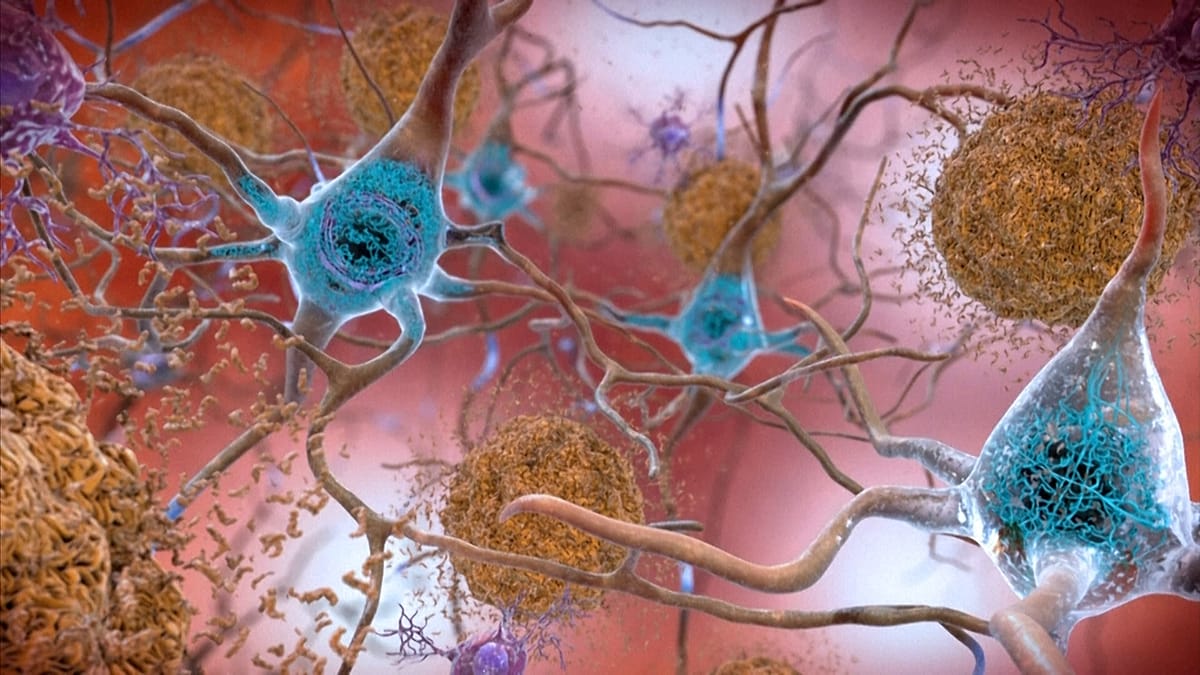
A blood test that detects proteins linked to Alzheimer's disease could one day help identify people at higher risk years before symptoms appear, according to a study led by researchers at the University of California, San Francisco (UCSF). The findings, published in a peer-reviewed journal, show that elevated levels of amyloid and tau—two proteins long associated with Alzheimer's—correlate with subtle differences in thinking and memory among middle-aged adults who do not have dementia.
Alzheimer's disease is the most common form of dementia, a condition that affects millions across Europe and worldwide. While medications can alleviate some symptoms, there is currently no cure. The European Union has prioritised dementia research through its Horizon Europe programme, and the European Medicines Agency has approved several drugs for symptom management, but early detection remains a challenge.
What the Study Found
The UCSF team analysed blood samples from 1,350 adults aged 53 to 69. Six percent of participants had high levels of both amyloid and tau. Although none had dementia, these individuals were slower at adapting to changing information—such as traffic signals or conversations—and struggled more with planning, organising, and managing finances. When retested five years later, those with high protein levels showed a faster decline in verbal memory and processing speed.
“For some people who discover they have the biomarkers, testing could open a window to embark on interventions that may postpone Alzheimer’s onset,” said Kristine Yaffe, the study’s senior author and vice chair in the Department of Psychiatry and Behavioural Sciences at UCSF.
Currently, diagnosing dementia often relies on expensive MRI scans, which are not always widely available—especially in parts of southern and eastern Europe. Patient advocacy groups across the continent have long complained that diagnoses come too late, after significant brain damage has already occurred. A simple blood test could be faster and cheaper, potentially making screening more accessible in countries like Poland, Romania, or Greece, where healthcare budgets are stretched.
Caution from European Experts
Despite the promise, European neuroscientists urge restraint. Tara Spires-Jones, professor of neurodegeneration at the University of Edinburgh and division lead at the UK Dementia Research Institute, warned that the test could be misinterpreted. “The drawbacks of this kind of test is that it may be misunderstood as a ‘I have these proteins in my brain. Therefore I have Alzheimer's disease’, which is not what we're saying here at all,” she said. “So this gives us a signal of what's happening, but it's just a small part of the overall picture. This isn't a diagnosis in and of itself.”
Blood tests for Alzheimer's are already approved in the United States for people who have symptoms, but they are designed only to detect Alzheimer's, not other forms of dementia. In Europe, similar tests are under review by national regulators, but no widespread screening programme exists. The European Commission’s Joint Research Centre has noted that early detection could help target interventions, but only if tests are reliable and properly communicated to patients.
Modifiable Risk Factors Offer Hope
Yaffe emphasised that early detection could be valuable because many risk factors for dementia are changeable. Physical inactivity, smoking, depression, poor heart health, and low levels of cognitive activity all contribute to the condition. According to her research, up to 40% of dementia cases could be delayed or prevented by addressing these factors. This aligns with findings from the Lancet Commission on dementia prevention, which has influenced public health strategies in countries like Finland and the Netherlands.
In 2021, the World Health Organization estimated that 57 million people worldwide had dementia, with nearly 10 million new cases each year. In Europe, the number is expected to rise as populations age, putting pressure on healthcare systems from Berlin to Barcelona. The EU's recent focus on brain health as part of its Health Union agenda underscores the urgency.
What This Means for Europe
While the UCSF study is a step forward, it is not yet ready for clinical use in Europe. Researchers say larger, more diverse trials are needed—especially ones that include European populations, where genetic and lifestyle factors may differ from those in the US. The European Brain Council has called for more investment in biomarker research, noting that early detection could reduce the economic burden of dementia, which costs the EU an estimated €250 billion annually.
For now, the blood test remains a research tool. But as Spires-Jones noted, it offers a valuable signal—one that, combined with other assessments, could eventually help doctors and patients across Europe take action sooner.