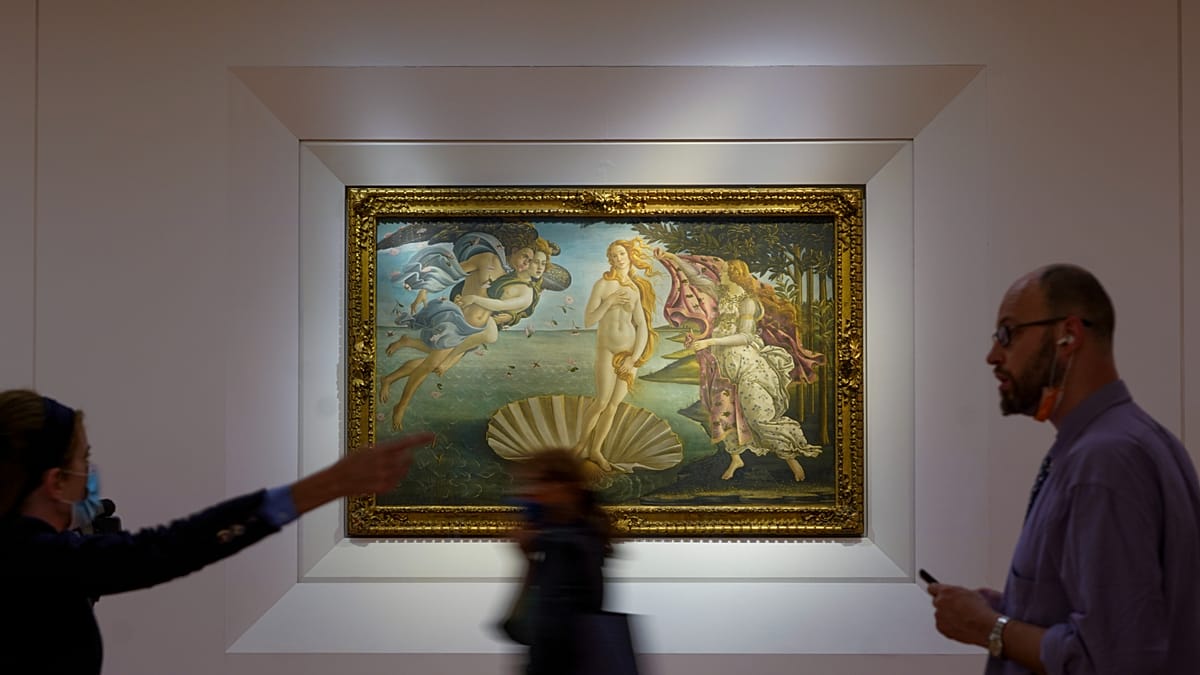
A fresh medical analysis of Sandro Botticelli's iconic paintings suggests that his muse, Simonetta Vespucci, likely died from complications of a pituitary tumor rather than tuberculosis, as long believed. The study, published in Endocrinology, Diabetes & Metabolism, applies modern facial recognition technology to Renaissance portraits, offering a new perspective on a death that has intrigued historians for centuries.
Revisiting a Renaissance Death
Simonetta Vespucci, a young noblewoman from Genoa, was immortalized by Botticelli in works such as The Birth of Venus and Primavera. She died suddenly in 1476 at the age of 23, and the prevailing theory has been that tuberculosis—a common killer in the era—was the cause. However, an international team from Queen Mary University of London, the Campus Bio-Medico University of Rome, and the University of California now argues that her symptoms and physical changes point to a different culprit.
Using a facial-recognition algorithm applied to Botticelli's paintings, the researchers tracked subtle alterations in Vespucci's features over time. They observed a gradual enlargement of the jaw, forehead, and facial tissues—changes consistent with acromegaly, a condition caused by a pituitary adenoma. This tumor, located at the base of the brain, secretes excess growth hormone and prolactin, which can also induce unexpected lactation, a detail depicted in some of Botticelli's works.
“We suspected the presence of a tumor secreting both growth hormone and prolactin,” said endocrinologist Paolo Pozzilli, a co-author of the study. “An excess of these hormones can gradually alter the contours of the face and, in some cases, cause unexpected lactation.”
Three Strands of Evidence
The study builds on earlier research from 2019 and presents three lines of evidence supporting the new diagnosis. First, the physical changes visible in Botticelli's paintings from the 1470s through the posthumous Birth of Venus suggest the tumor's growth over time. Second, contemporary accounts of Vespucci's final illness describe headaches, hallucinations, vomiting, and fever—symptoms that align more closely with pituitary tumor apoplexy than with tuberculosis, which typically causes a slower decline. Third, two documented events in the months before her death could have triggered a hemorrhage or sudden expansion of the tumor: a collapse during a lively dance, mentioned in letters between Piero Vespucci and Lorenzo de' Medici, and an alleged assault by Alfonso II of Aragon, Duke of Calabria.
Pituitary tumor apoplexy occurs when a tumor bleeds or swells abruptly, causing severe headache, vision loss, confusion, and rapid hormonal collapse. Pozzilli emphasized that this condition “could explain her sudden death in a previously healthy young woman.”
While absolute certainty remains elusive, the study reshapes a long-standing historical narrative. It also opens the door to reinterpreting other historical events through modern medical knowledge, a field known as paleopathology. For instance, similar techniques have been used to analyze the health of figures like retired footballers or to detect conditions like endometriosis with high accuracy.
The findings underscore how art and science can intersect to illuminate the past. As Pozzilli noted, “This unprecedented diagnostic hypothesis, made at a distance of 550 years, is backed by three strands of evidence.” The study not only offers a new explanation for Vespucci's death but also highlights the potential of facial recognition technology in historical research.