Artificial intelligence is rapidly transforming healthcare across Europe, from diagnostic imaging to patient chatbots, offering relief to overburdened medical staff. Yet a stark governance gap is emerging: while tools proliferate in hospitals from Lisbon to Warsaw, most countries lack the regulatory frameworks to ensure they are safe and equitable.
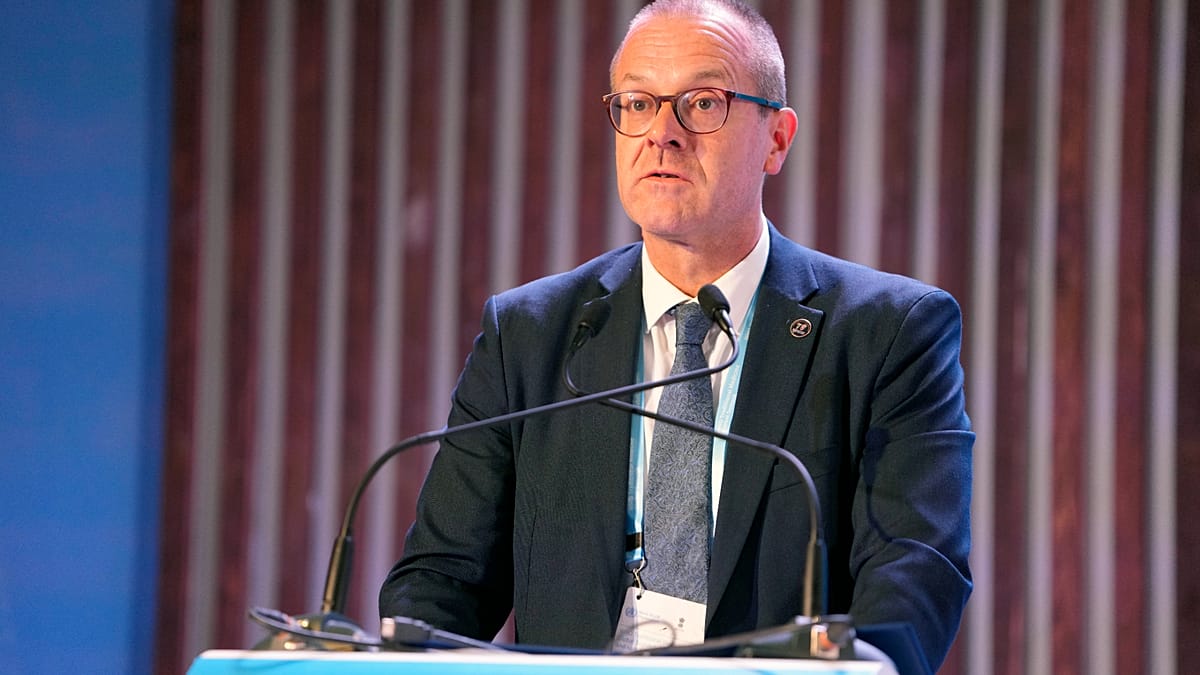
Hans Henri P. Kluge, the World Health Organization’s regional director for Europe, sounded the alarm during a press conference in Lisbon on 15 July. “That gap — between deployment and governance — is the defining challenge of AI in health right now,” he said. “A biased algorithm can produce a wrong diagnosis, for a real patient, with real consequences.”
Widespread Use, Sparse Oversight
According to a new WHO Europe analysis covering 53 countries — including EU member states, the United Kingdom, Switzerland, Norway, and Balkan nations — two-thirds are already deploying AI-powered diagnostic tools, and half use AI chatbots for patient interaction. Yet only one in twelve countries has a strategy to govern these technologies. Just 8% of nations have a health-specific AI strategy, and nearly 40% lack any ethical guidance on AI use in clinical settings.
The educational picture is equally concerning. Only one in five countries provides AI training for healthcare students, and just one in four offers continuing education for practicing professionals. Kluge described the situation as “concerning,” warning that unregulated AI could erode public trust in health systems more broadly.
The risks are not hypothetical. In Germany, for example, hospitals in Berlin and Munich are piloting AI for radiology and pathology, but without binding rules on data privacy or algorithmic bias. In France, the Assistance Publique–Hôpitaux de Paris has deployed AI for triage, yet ethical oversight remains fragmented. Southern European countries like Greece and Italy are also adopting AI tools, often without clear accountability mechanisms.
The WHO Europe chief stressed that the longer the governance gap persists, the higher the human cost. “All of this erodes public trust in health systems more broadly,” he said, noting that patients may become skeptical of AI-driven recommendations if they lack transparency.
To address the challenge, the WHO plans to launch a Roadmap on AI and Health in 2028, aiming to provide a framework for safe, ethical, and effective AI integration across the region. Meanwhile, the European Union is advancing its AI Act, which classifies medical AI as high-risk and imposes strict requirements, but implementation varies widely among member states.
The stakes are high. As AI chip demand surges — ASML recently raised its sales forecast on the back of AI-driven semiconductor orders — the technology’s footprint in healthcare will only expand. Without coordinated governance, Europe risks repeating the mistakes of other sectors where innovation outpaced regulation.
Kluge’s warning comes amid broader concerns about AI’s societal impact. The transformation of humanitarian aid by AI offers a parallel: while tools can optimize resource allocation, they also raise questions about bias and accountability. In healthcare, the margin for error is far narrower.
For now, the onus is on national governments and the EU to close the governance gap. As Kluge put it, “We cannot afford to let innovation run ahead of patient safety.” The clock is ticking.