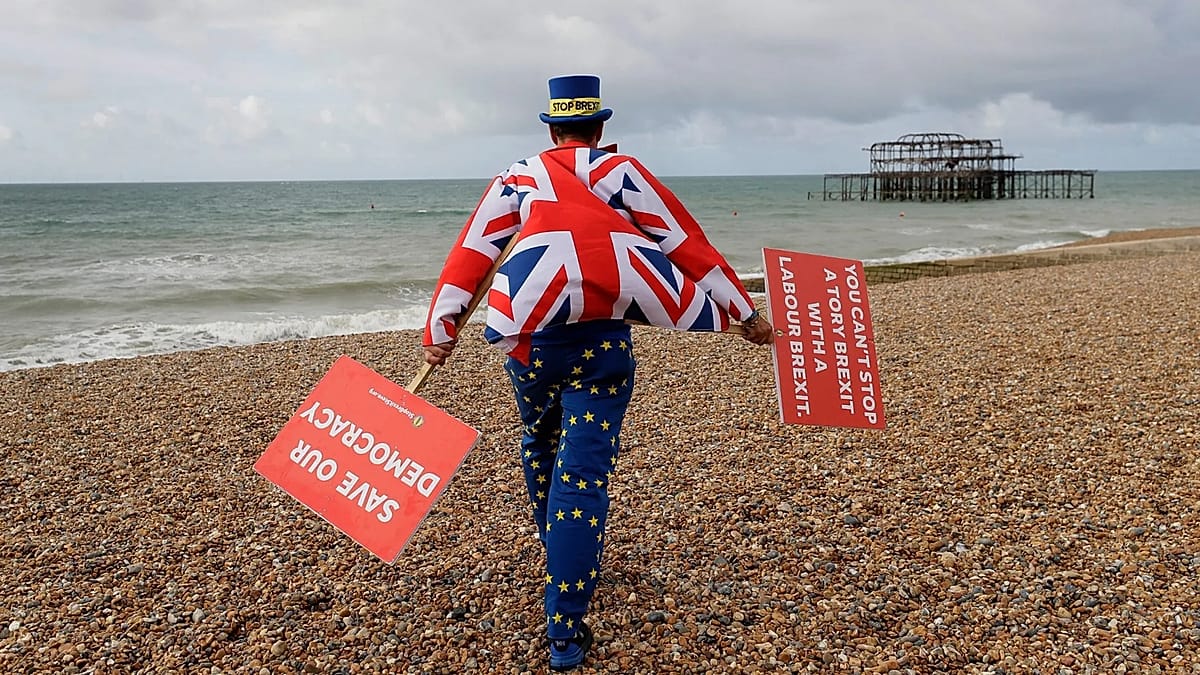
Ten years ago this week, the United Kingdom voted by 52% to 48% to leave the European Union, triggering a political and economic rupture that continues to define the country's trajectory. The anniversary arrives as Britain faces yet another change of leadership — its seventh prime minister since the 2016 vote — and as the promised reset with Brussels hangs in the balance.
On 23 June 2016, then-Prime Minister David Cameron, who had called the referendum but campaigned to remain, resigned the next day. The decision set off years of tortuous negotiations, a series of leadership contests, and a slow-motion reckoning with the consequences of leaving the bloc after more than four decades of membership.
Economic Toll and Political Fallout
The economic damage is now well-documented. According to a Bank of England report, the British economy is 6% smaller than it would have been had the UK stayed in the EU. Investment has fallen, unemployment has risen, and trade friction with the continent has added costs for businesses. As my Irish colleague Shona Murray notes from Dublin, there is no way to tackle the immense economic pressure facing the UK without confronting the consequences of Brexit.
Politically, the landscape has shifted dramatically. Keir Starmer, who led the Labour Party to a general election victory in 2024 on a platform of resetting relations with Brussels, announced his resignation on Monday. His departure follows a bruising local election in May, where Labour lost 1,400 council seats in England and key positions in the Welsh and Scottish parliaments. Many analysts saw this as a death knell for his leadership.
Meanwhile, Reform UK — the party of arch-Brexiteer Nigel Farage — now tops national polls at around 27% of voting intention. Farage has long campaigned on strict immigration controls and EU-scepticism, raising questions about the future of the already fragile relationship between the Berlaymont and Westminster.
EU-UK Summit in Doubt
The planned EU-UK Summit, originally scheduled for 22 July, is now uncertain. As my colleague Mared Gwyn reports, the EU is reassessing whether to hold the summit given that Starmer's successor will take office in just three and a half weeks. The former leader had been closing in on a series of deals to bolster trade ties, integrate electricity markets, and boost youth mobility — all now on the backburner.
MEP Sandro Gozi of Renew Europe, who sits on the parliamentary delegation for EU-UK relations, insisted the summit must go ahead with a long-term vision. “Whoever forms the next UK Government should have the courage to set out a clear strategy for Britain's place in Europe, worthy of Britain's young people who see themselves as Europeans,” he said.
Irish MEP Ciarán Cuffe, co-chair of the European Green Party, struck a more optimistic note, arguing that the resignation is an opportunity for Labour to demonstrate its European credentials under a new leader and pivot back to the EU. For more on the summit's fate, see our story: EU-UK Summit in Doubt as Starmer Sets Departure Timetable.
Return Hubs and Commissioner's Travel
On migration, the European Commission has left the door open to financing so-called return hubs for migrants using the EU budget. This follows a push by 19 countries, led by Denmark and Italy, for outsourcing asylum processing. A Commission spokesperson said they would assess any mature proposal. The stance is likely to anger Paris: President Emmanuel Macron has categorically opposed using EU funds for such hubs.
In other news, European Commissioner for the Mediterranean Dubravka Šuica met Israel's Foreign Minister Gideon Sa'ar in Jerusalem on Monday. The trip, which the Commission described as long-planned, drew criticism from European diplomats after Šuica stood alongside an official who has boycotted the EU's top diplomat, Kaja Kallas.
Ukraine Intensifies Campaign in Crimea
Ukraine has stepped up its drone and missile campaign targeting Russian-occupied Crimea, aiming to turn the peninsula into an island. Russian occupation authorities have shut down all children's summer camps, rationed petrol sales to administration officials only, and cancelled all public events. Rolling electricity cuts were introduced after damage to power grid facilities. The measures are described as necessary for public safety by Moscow-installed officials.