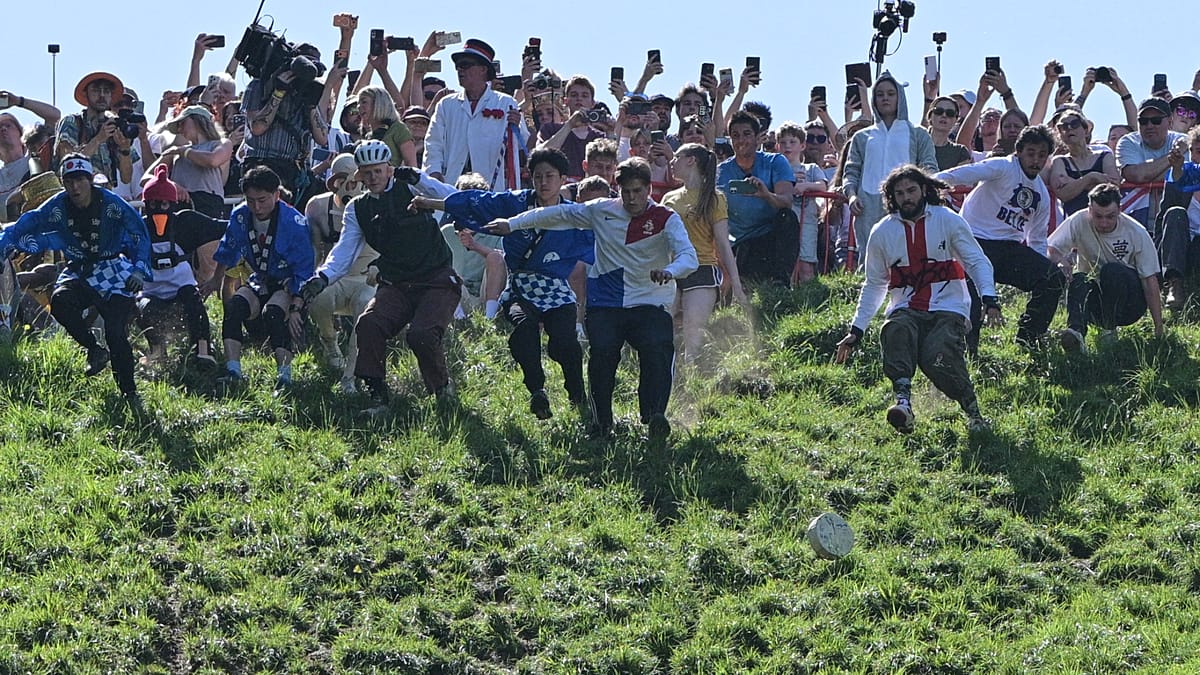
On 25 May, the small village of Brockworth in Gloucestershire, England, became the focal point of a peculiar yet beloved British tradition: the annual cheese rolling contest. Participants from across Europe gathered to watch and take part in the chaotic chase of a Double Gloucester wheel down a near-vertical hill, an event that has been held for centuries.
A Tradition Rooted in Local History
The origins of the cheese rolling are murky, but the event is believed to date back to the 15th century. Locals maintain that it was originally a pagan ritual to celebrate the start of summer, though others suggest it was a way to claim common land. Whatever its beginnings, the contest has become a fixture in the British calendar, drawing attention far beyond the Cotswolds.
This year's edition saw a mix of seasoned veterans and first-time competitors, many of whom traveled from continental Europe. The event's growing international appeal reflects a broader trend of cultural tourism across the continent, where visitors seek out unique local festivals. For instance, similar enthusiasm can be seen at events like the Sofia International Cat Show, which also attracts a pan-European audience.
The Race Itself
The contest involves rolling a 3.6-kilogram wheel of Double Gloucester cheese down Cooper's Hill, a slope with a gradient of about 1:1. Runners then launch themselves after it, often tumbling and sliding in a chaotic scramble to be the first to cross the finish line. The first person to reach the bottom wins the cheese. Despite the risk of injury—broken bones and sprains are common—the event draws dozens of daredevils each year.
Spectators lined the hill, cheering on the participants. Many came from countries such as Germany, France, and the Netherlands, adding to the event's international flavor. The atmosphere was festive, with local vendors selling food and drink, and families enjoying the spectacle.
Cultural Significance and Modern Appeal
Cheese rolling is more than just a quirky race; it is a symbol of British eccentricity and community spirit. In an era of increasing homogenization, such traditions offer a tangible link to the past. They also serve as a draw for tourists seeking authentic experiences, a trend that benefits rural economies across Europe. Similar initiatives, like the new app mapping river beaches in Portugal's interior, highlight how local attractions can boost tourism in less-visited areas.
The event also underscores the enduring appeal of physical challenges in an age of digital entertainment. Participants train for months, and the race itself is a test of agility and nerve. For many, the reward is not just the cheese but the bragging rights and the camaraderie.
Safety and Organization
Organizers have faced increasing pressure to improve safety measures. In recent years, medical teams have been on standby, and the event is now insured. Despite these precautions, the inherent danger remains part of its allure. Local authorities have debated whether to ban the event, but public support has kept it alive.
This year, no serious injuries were reported, though several participants required minor treatment. The event's success has prompted discussions about expanding it to include more international participants, potentially turning it into a larger festival. Such developments could mirror the growth of other European events, like the surge in short-haul summer travel, which reflects changing travel patterns across the continent.
Looking Ahead
As the cheese rolling continues to attract global attention, it remains a testament to the resilience of local customs. For the residents of Brockworth, it is a day of pride and excitement. For visitors from across Europe, it offers a glimpse into a tradition that is both absurd and exhilarating.
The event's future seems secure, with plans already underway for next year's edition. Whether you are a participant or a spectator, the cheese rolling is a reminder that some traditions are worth preserving—even if they involve chasing a wheel of cheese down a hill.