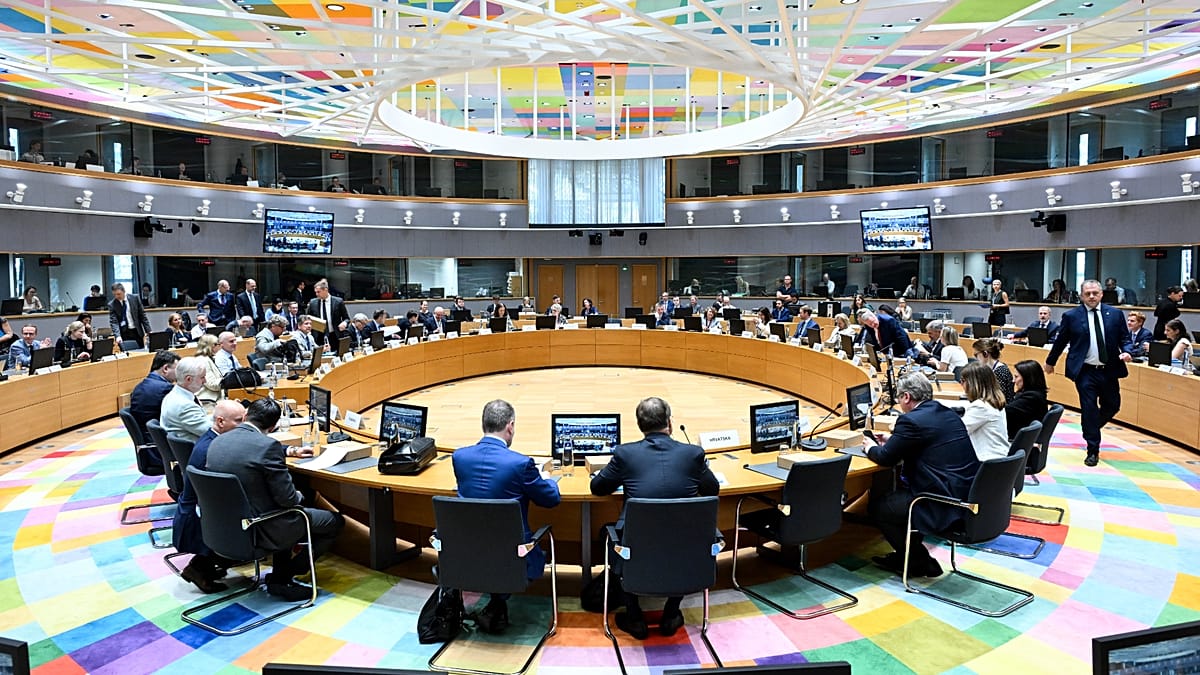
Brussels is grappling with a double deadlock this week as EU ambassadors convene to address two politically charged files: the 21st sanctions package against Russia and the potential suspension of trade with illegal Israeli settlements. With the summer holiday break approaching, the pressure is on to find consensus before Friday.
Greek Veto Threatens Russia Sanctions Package
The most immediate obstacle is Greece's opposition to the latest round of sanctions targeting Moscow. Athens is demanding revisions to a ban on liquefied natural gas (LNG) imports from Russia, scheduled to take full effect in 2027. Greece, home to the world's largest merchant fleet, argues that the current text would unfairly penalise its shipping industry, particularly Dynagas, a company owned by Greek billionaire George Prokopiou that operates Arctic-resistant icebreakers chartered to Russia's Yamal LNG facility.
EU diplomats have been exploring three possible workarounds, as detailed in our analysis here. However, time is short: the oil price cap mechanism, a key component of the package, has been delayed until Thursday after weeks of deadlock. The broader package, which aims to deprive the Kremlin of wartime revenues, risks being stalled indefinitely if no agreement is reached before the holiday recess.
Trade Ban on Israeli Settlements Divides Member States
Alongside the Russia file, EU ambassadors will revisit the question of trade with illegal Israeli settlements in occupied Palestinian territories. The European Commission recently presented three options for cracking down on this trade, with a full ban receiving the most support at last week's Foreign Affairs Council, according to EU foreign policy chief Kaja Kallas. However, Germany and the Czech Republic remain opposed, with Berlin advocating a more cautious approach given its close ties with Israel.
Kallas acknowledged the division, stating, “In Europe we need to have a unified position and so far we have not been able to have that unified position.” European Commission President Ursula von der Leyen, a German national, has emphasised that the decision rests with member states, not the Commission. The outcome of today's meeting remains uncertain.
Kallas Heads to ASEAN, No Meeting with Lavrov
Kallas will not attend the ambassadorial meeting, instead travelling to Manila for the ASEAN foreign ministers' gathering. Russian Foreign Minister Sergey Lavrov will also be present, but no bilateral meeting is scheduled between the EU and Russia, nor between Lavrov and US Secretary of State Marco Rubio. Kallas is expected to hold talks with counterparts from Thailand, Pakistan, and New Zealand, and will co-host the Kyiv–Manila Dialogue with Ukrainian Foreign Minister Andrii Sybiha.
Ukraine Shakes Up Military Leadership
In a related development, Ukrainian President Volodymyr Zelenskyy dismissed his top general, Oleksandr Syrskyi, replacing him with Mykhailo Drapatyi, a younger commander popular among frontline troops and civil society. The reshuffle comes amid mounting protests and demands for the reinstatement of defence minister Mykhailo Fedorov, whose fate is expected to be decided on Wednesday. The changes signal Kyiv's urgency to adapt its military strategy as EU support for Ukraine hangs in the balance.
With the clock ticking on both sanctions and trade files, the next 24 hours will be critical for Brussels to demonstrate its ability to act decisively on two fronts simultaneously.