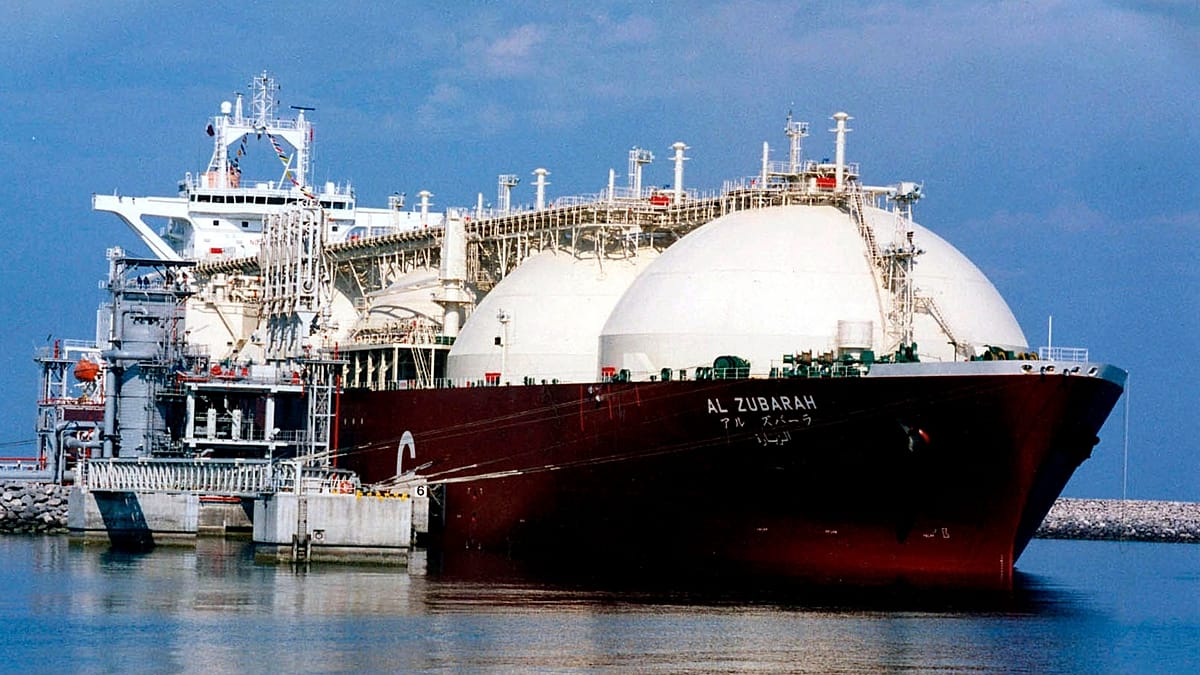
The European Commission has recommended waiving penalties linked to the EU's methane rules for three years, a significant concession to industry and major liquefied natural gas (LNG) exporters who argued the requirements threatened energy security.
Under the bloc's first methane regulation, adopted by member states in May 2024, energy companies must measure, report, and verify emissions of the potent greenhouse gas. Failure to comply was set to incur penalties starting in 2027. But on Monday, the Commission proposed exempting business operators from full compliance until 2030, offering optional model contract clauses instead of new legal obligations.
Lobbying from major exporters
The recommendations come after months of pressure from the United States, Qatar, Algeria, and Nigeria, who warned that the rules could disrupt exports to the EU at a time when the bloc is trying to offset supply losses from the Middle East. Environmental groups have contested these claims, arguing they are exaggerated.
"A three-year sanction holiday, triggered by exaggerated and unsubstantiated security of supply concerns raised by industry, risks giving a free pass to methane-intensive gas imports – notably from the US," said Esther Bollendorff, fossil free program manager at Climate Action Network Europe. She urged member states to maintain robust penalty systems, calling them "essential to ensuring that companies pay the price for their pollution."
The Commission's four-page recommendation does not create new legal requirements but provides optional model contract clauses that importers can use to comply with the methane rules. This is a response to calls from business operators for regulatory certainty, particularly as key provisions are set to take effect within six months.
Industry reaction
Industry groups acknowledged the Commission's recognition of flaws in the methane rules but argued the non-binding guidance falls short. A spokesperson from the International Association of Oil and Gas Producers told Euronews: "The Commission persists in wanting to fix them through non-binding guidance, which cannot deliver the uniform legal certainty Europe needs. Only targeted amendments, as called for by Member States and industry, can."
Businesses warn that delays are already affecting commercial decisions and supply contracts. They urge the EU to fast-track amendments that maintain methane reduction goals while safeguarding security of supply, competitiveness, and consumer costs.
Maas Goote, an international lawyer and former EU lead negotiator at UN climate talks, welcomed the Commission's "wise approach" of offering pragmatic solutions. However, he stressed that "the integrity of the Regulation remains intact" and noted that "the upward trend of methane emissions worldwide shows that voluntary approaches are not delivering results. We need strong regulatory frameworks to drive down methane emissions, with the EU methane regulation as a strong and critical piece."
The EU's methane regulation is part of broader efforts to curb emissions of a gas that is far more potent in the short term than carbon dioxide. The Commission's proposal now awaits member state feedback, with environmentalists calling for a review well before the suggested 2028 timeline.