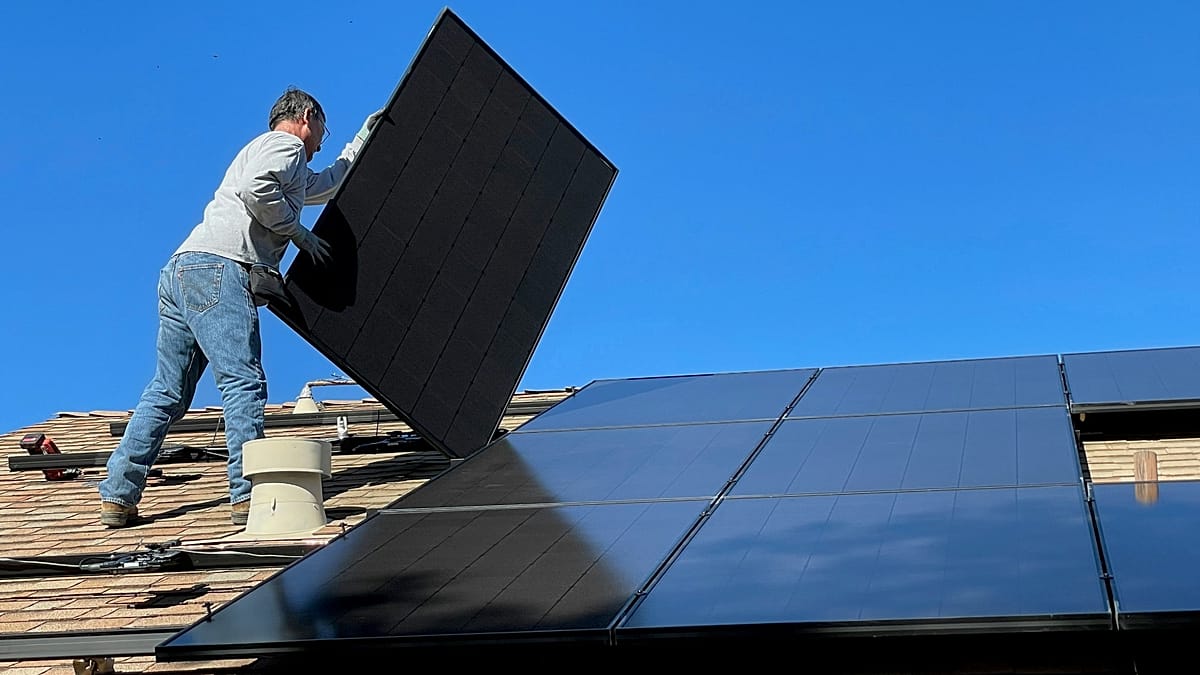
As energy prices remain volatile across Europe, interest in rooftop solar has grown sharply. A study published in Nature Energy suggests that rooftop photovoltaics (PV) could supply around 40% of the continent's electricity by 2050. Yet today, only about 10% of Europe's suitable rooftops are fitted with panels.
Governments have tried to accelerate uptake with subsidies and tax breaks. In Ireland, homeowners can claim grants up to €1,800 under the national sustainable energy scheme. Hungary offers public grants covering up to two-thirds of installation costs for qualifying households. Germany and the Netherlands have introduced 0% VAT on solar panels and installation. Despite these incentives, the initial outlay remains a major obstacle, especially for lower-income families.
Installation costs vary widely. A typical single-family home in Europe needs between 6 and 15 kWp of capacity, depending on household size, heat pump use, and electric vehicle charging, according to solar firm LOGI. That can set you back anywhere from €7,000 to €30,000. In the UK, a standard 4.5 kWp system costs around £7,600 (€8,831).
While panels can shave hundreds of euros off annual energy bills, the payback period is long. The UK's Energy Savings Trust estimates it takes at least ten years for a typical home to recoup the investment. For many, that means taking out a loan with interest, which further delays the financial benefit.
A new financing model: solar bonds
Dr Donal Brown, a senior researcher in energy policy at the Environmental Change Institute (ECI), argues that government-backed finance could remove the upfront barrier. A report published by the Common Wealth thinktank, titled A Right to the Sun, proposes a universal Solar Bond scheme. Under this model, any household with a suitable roof could access solar panels without credit checks or the eligibility requirements typical of conventional loans.
The cost would be repaid over 25 years through household energy bills, with the finance attached to the property rather than the individual. If you move, the loan and the panels stay with the house, passing the remaining repayments to the next occupant. This structure could make solar accessible to renters and those who cannot afford large upfront payments.
The report estimates that such a scheme could save households at least £83 (€96) a year, or nearly double if paired with a battery, even after accounting for finance repayments. It also highlights job creation potential: the Solar Trade Association projects that an expanded rollout could create more than 42,000 new jobs in the UK by 2030.
Similar models are already being tested elsewhere. In the United States, some municipalities have used property-assessed clean energy (PACE) financing, where repayments are made via property tax bills. Europe could adapt this concept to its own housing markets, though implementation would need to navigate differing national regulations and tax systems.
The idea comes at a time when energy costs are again pushing up inflation in the eurozone, making household savings from solar more attractive. It also aligns with broader EU goals to accelerate the clean energy transition, as highlighted by China's recent milestone of solar capacity overtaking coal, which underscores the global race to expand renewables.
For European policymakers, solar bonds offer a way to combine climate action with social equity. By shifting the financial burden from individuals to a long-term, property-linked mechanism, they could unlock rooftop solar for millions of households that currently cannot afford it. The challenge will be designing schemes that are simple, transparent, and attractive to both homeowners and investors.
As the report concludes, delivering such a programme would not only cut emissions but also improve livelihoods across communities. With the right political will, solar bonds could become a cornerstone of Europe's energy strategy, turning rooftops into engines of both savings and sustainability.