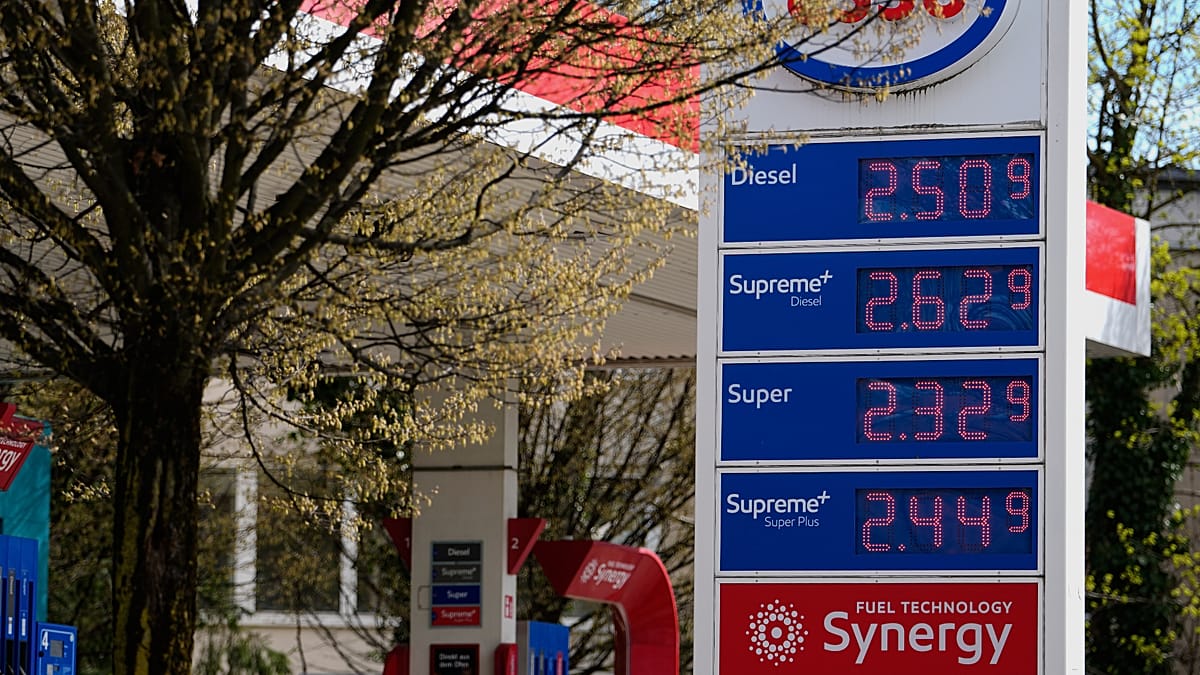
Inflation across the eurozone accelerated to 3.3% in August, according to a flash estimate from Eurostat, up from 2.9% in July. The sharp increase was driven almost entirely by energy costs, which jumped 14.3% compared with the same month last year, accelerating from 10.3% in July.
The renewed surge in oil and gas prices reflects heightened tensions in the Gulf region, particularly the closure of the Strait of Hormuz, a critical chokepoint for global energy shipments. The disruption has pushed European gas prices to their highest levels in months, raising concerns about winter supplies and adding pressure on households and businesses across the continent.
Underlying pressures remain contained
Despite the headline jump, underlying price pressures showed signs of easing. Core inflation, which strips out energy, food, alcohol and tobacco, edged down from 2.5% to 2.4%. Services inflation, a key metric for the European Central Bank, also cooled from 3.3% to 3.0%, suggesting that the energy shock has not yet spread broadly into other sectors.
Food, alcohol and tobacco prices rose by 1.2% year-on-year, unchanged from July. On a monthly basis, overall prices in the eurozone increased by 0.4% in August, with energy prices alone climbing 2.9%.
Leo Barincou, senior economist at Oxford Economics, said: "This was driven by a rebound in fuel prices following the renewed closure of the Strait of Hormuz, while underlying price pressures remained contained as services inflation came down. Inflation should remain well above target into next year, as higher gas and food prices put additional upward pressure on the index."
Divergence across member states
The inflation picture varies significantly across the eurozone. Among the countries included in the flash estimate, Lithuania recorded the highest rate at 5.8%, while Estonia saw the lowest at 1.3%. In the largest economies, Germany's inflation stood at 2.9%, slightly above France's 2.7%, though both remained below the eurozone average. France saw a notable acceleration from 2.4% in July.
Spain stood out with inflation of 4.5%, well above the bloc's average, while Italy's rate reached 3.2%. The divergence reflects differences in energy dependence, fiscal measures, and the pace of economic recovery.
The ECB's target of 2% remains distant, and markets are pricing in a 0.25 percentage point rate hike at the central bank's meeting on 10 September. Barincou added: "With inflation still accelerating, the ECB is all but certain to hike at next week’s meeting, in line with our expectations."
The energy crisis is also having knock-on effects beyond inflation. European gas prices have hit €70 per megawatt-hour, and QatarEnergy has extended its LNG force majeure into November, prolonging supply disruptions. These developments are likely to keep energy prices elevated in the coming months, complicating the ECB's task of bringing inflation back to target without stifling growth.
For now, the eurozone economy faces a delicate balancing act. While the labor market remains resilient and consumer spending has held up, the combination of high energy costs and tightening monetary policy could weigh on activity in the second half of the year. The ECB will be watching closely to see whether the current spike in inflation proves temporary or becomes entrenched.