For much of the war, Russian drone and missile attacks on Kyiv followed a predictable rhythm: they came at night. Late-evening alerts on Telegram channels would announce incoming drones, missile launches, and the work of air defenses. Civilians weighed the severity of the threat to decide whether to stay indoors or descend into the metro.
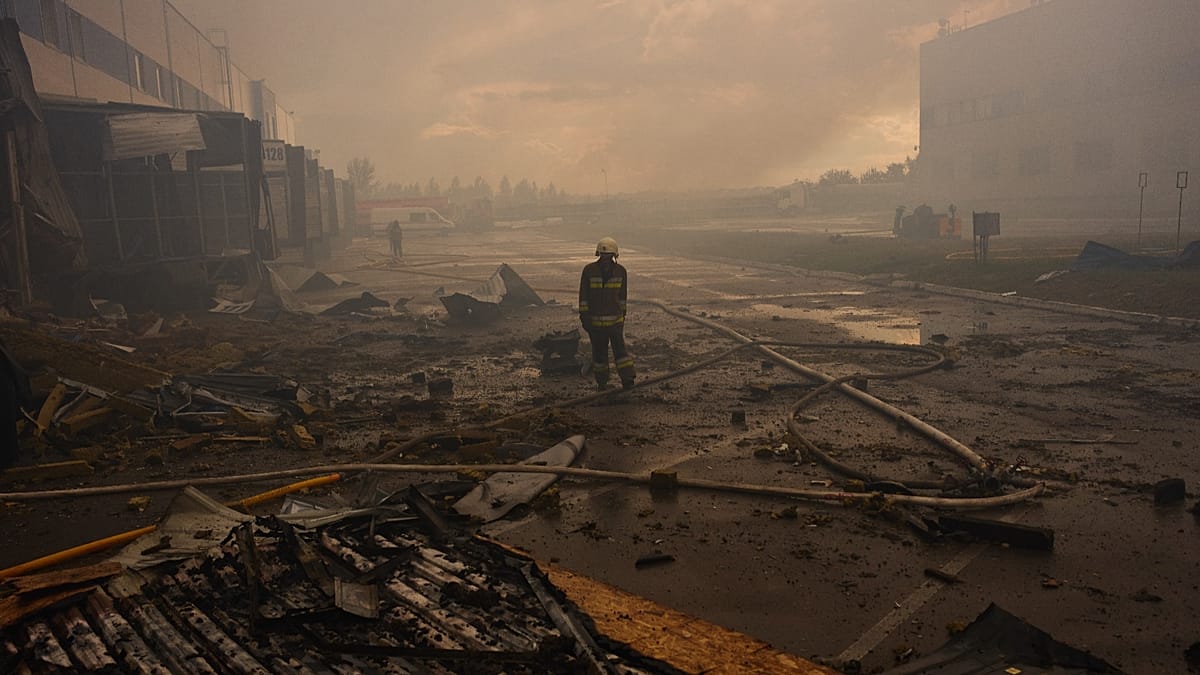
That pattern has shattered. Since last week, Russia has shifted to round-the-clock strikes, using fast, jet-powered drones that make daylight as perilous as darkness. The constant wail of air-raid sirens has become part of everyday life in the Ukrainian capital, interrupting commutes, shopping trips, and school days, and intruding on life's most significant moments—from weddings to funerals. The attacks have also claimed lives.
Daily life under siege
When an alert sounds, residents glance at their phones or scan the sky. Moments later, the familiar thud of intercepting air defenses echoes in the distance. Plumes of smoke rise, and Telegram channels quickly fill with photos of the latest destruction. An hour or two later, another siren begins.
In malls, banks, and businesses, air-raid protocols force customers and staff to evacuate. A bank transaction can be cut off mid-conversation; a shopping trip becomes a cycle of entering, evacuating, returning, and evacuating again. Volodymyr Bovsunovskyi, a Kyiv resident, described a recent family outing to buy clothes for his nearly four-year-old daughter. They had been inside for about twenty minutes when the alert sounded. They rushed out, saw smoke rising nearby, and never made the purchase.
“A lot has changed in the last seven days,” he said, echoing the sentiment of many who hope the attacks will relent but see no end in sight.
Transport has also been severely disrupted. Train journeys that once took a few hours now stretch much longer, with passengers sometimes walking for hours through fields after trains halt on the tracks, carrying their belongings as alerts follow one another. Even getting around the city by taxi has become unreliable, as GPS jamming to confuse drones also confuses ride-hailing apps, making nearby cars appear on the other side of the world.
Exhaustion and thoughts of leaving
Ivan Datsiv, an IT worker, was in his apartment in Kyiv's Podil district when a Russian drone tore through the floor on Tuesday, charring ceilings and walls and destroying the flat next door. He tries to joke about it, saying he had been meaning to repaint the walls anyway. But the frequency of alerts has worn him down.
“The alarms sound constantly,” he said. “You don't even have time to go down and come back up. It's just a waste of time running back and forth.” He is now considering leaving Kyiv for a quieter, safer city.
From the blown-out apartment next door, the view looks down onto a playground and basketball court where children still play. Then a siren sounds again, and minutes later, the white zigzagging trail of an intercepted drone streaks across the sky.
Bovsunovskyi is also weighing a temporary departure, hoping to give his family—including his pregnant wife—a chance to rest. His daughter's kindergarten now moves children to a shelter whenever an alert sounds, so he picks her up halfway through the day. “There is no stability,” he said.
Diplomatic efforts stall
Meanwhile, Ukrainian President Volodymyr Zelenskyy said on Thursday night that he hopes to host US President Donald Trump's envoys in Kyiv in the coming days to resume efforts to end the war. Diplomatic efforts to end Russia's four-and-a-half-year invasion have stalled in recent months as Washington shifts its focus toward the conflict with Iran.
“We expect to see the envoys of the President of America here in Kyiv. We have confirmation from them,” Zelensky said in his nightly address. “They will have meetings in Moscow and in Kyiv. We are counting on a meeting in the coming days.”
Trump's special envoys, Steve Witkoff and Jared Kushner, have been involved in shuttle diplomacy between Russia and Ukraine, traveling to Moscow multiple times. The lack of progress has raised concerns across Europe, with Lithuania warning that Russia is likely to escalate attacks on the EU and Denmark warning of Russian sabotage against its defense industry. As the war grinds on, the human cost in Kyiv grows, and the city's resilience is being tested like never before.