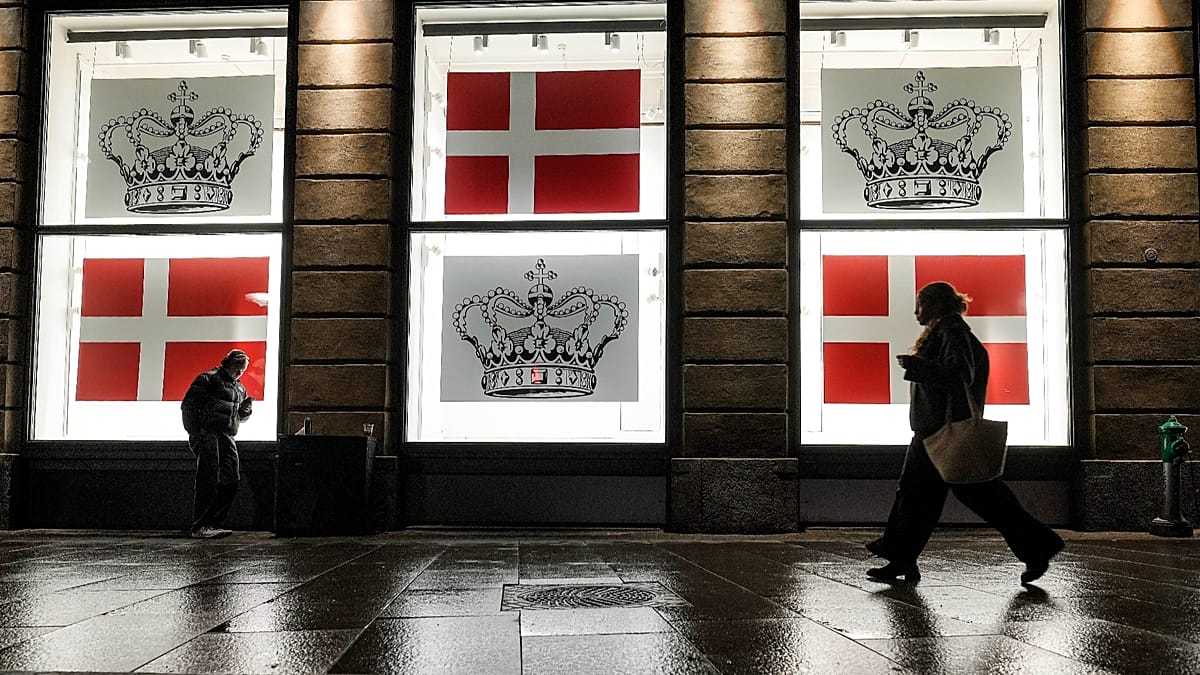
Denmark's domestic intelligence service, PET, has issued a stark warning that Russian intelligence services are actively preparing sabotage operations against the country, with a particular focus on its defense industry. In a statement to AFP on Thursday, PET said Moscow is recruiting ordinary Danes through social media to take photographs that could be used in planning such attacks.
Emil Graesholm, PET's head of counterintelligence, told the Danish newspaper Berlingske that the agency decided to go public with these methods because, as he put it, "they don't need to look like a spy movie." The disclosure is part of a broader effort to alert the public to the real, everyday nature of the threat.
EU response to hybrid attacks
The warning comes at a moment of heightened tension across Europe. EU foreign ministers met in Ireland to discuss a response to an attempted drone attack on a German airport, which the bloc's foreign policy chief, Kaja Kallas, described as bearing "all the hallmarks of state-sponsored terrorism." The incident has prompted EU countries to summon Russian envoys and consider fresh sanctions, though ministers acknowledged the difficulty of finding new measures that do not involve military action.
Kallas told reporters before the meeting: "It is clear that it has all the hallmarks of state-sponsored terrorism. The question is: what do we do about this." The EU has already imposed nearly two dozen sanction packages on Russia since the full-scale invasion of Ukraine in 2022, targeting more than 3,000 officials, oligarchs, and entities, including banks, energy companies, and drone manufacturers.
Russia has been widely accused by Western officials of running a campaign of sabotage and disruption aimed at undermining support for Ukraine and destabilizing European nations. This pattern has intensified as Moscow's forces have stalled on the front lines. Recent incidents include the seizure of a Russian ship near Svalbard, as well as Finland's largest civil defence drill since World War II, both underscoring the growing concern among Nordic and Baltic states.
Denmark, a staunch supporter of Ukraine, has been a particular target. As early as 2024, PET warned that the Russian threat against the country had grown stronger. In June, Copenhagen announced its 30th military aid package for Kyiv, worth around 4.4 billion kroner (€577 million), including ammunition, arms, equipment, and training for Ukrainian soldiers. This level of commitment makes Denmark a high-value target for Russian intelligence.
The PET warning also highlights the use of social media as a recruitment tool. Graesholm explained that Russian operatives are not necessarily looking for professional spies but for ordinary citizens willing to perform seemingly innocuous tasks, such as taking photos of industrial sites or infrastructure. This low-key approach makes detection more difficult and lowers the barrier for involvement.
European leaders have been grappling with how to counter these hybrid threats without escalating into open conflict. The EU's foreign policy chief has called for a unified response, but member states remain divided on issues such as seizing frozen Russian assets, with Belgium resisting EU pressure to use them for Ukraine's reconstruction. Meanwhile, European Commission President Ursula von der Leyen has warned that Russian drone sabotage is becoming the new normal, requiring a long-term strategic approach.
For Denmark, the immediate concern is protecting its defense industry, which plays a crucial role in supplying Ukraine and modernizing NATO capabilities. PET's public warning is a clear signal that the threat is not abstract but concrete and imminent. The agency urges companies and individuals to report suspicious approaches and to be vigilant about what they share online.
As the war in Ukraine enters its third year, the battlefront has expanded beyond the trenches. Sabotage, cyberattacks, and disinformation are now tools of choice for Moscow, and European nations are racing to adapt. Denmark's warning is a reminder that no country is immune, and that the cost of inaction could be severe.