The European Commission has been quietly monitoring unidentified aerial phenomena (UAP) since at least 2023, according to a document from its defence department seen by European Pulse. The document, which concerns sky and space observations in Malaysia, reveals that the EU executive is more engaged with the topic than it has publicly admitted.
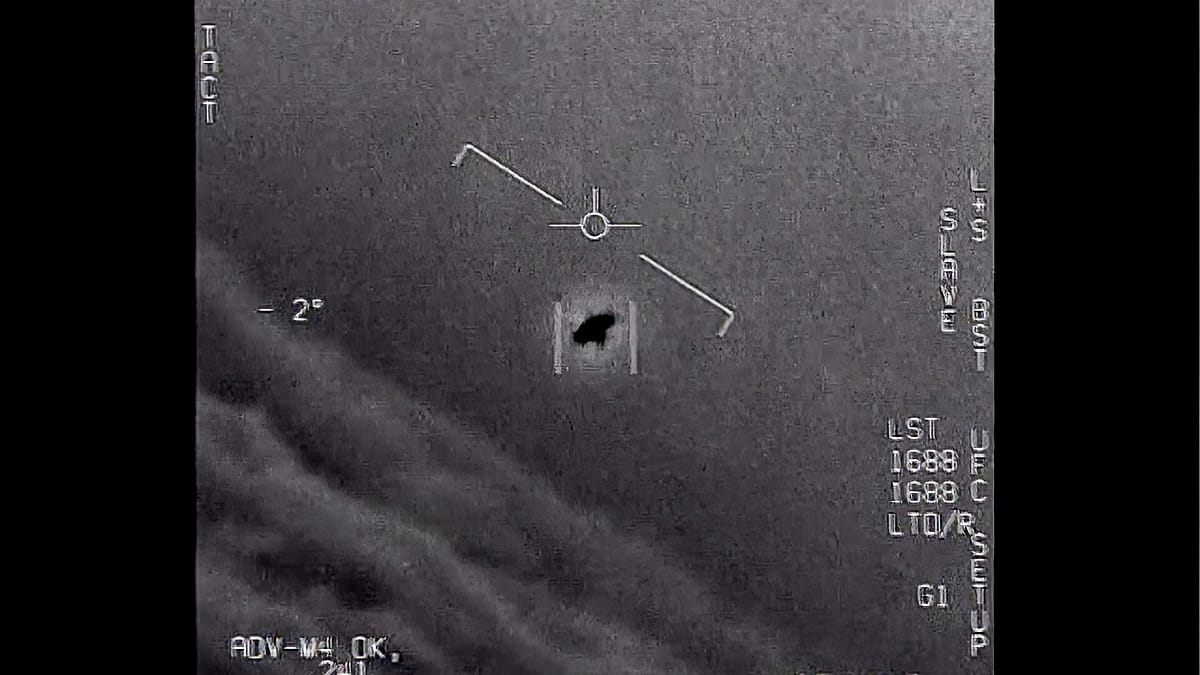
“We are getting better at seeing it and better identifying it as our technological capacities improve, but we need to get even better,” the letter reads, signalling a willingness to deepen the bloc’s investigative capabilities. The term UAP, which replaced the more familiar UFO, was coined by the US Pentagon in August 2020 when it established a task force to examine unexplained incidents in restricted airspace. The subject gained wider credibility after a 2017 New York Times report disclosed that the US Navy had released footage of such phenomena from military flights.
Amateur astronomers reach out to Brussels
European Pulse has also identified a Malaysian father-and-son team of amateur astronomers, internationally recognised for their lunar observations, who contacted the Commission in October 2022 with a letter titled “UAP captures in the airspace and deep space using our UV infrared telescope”. They sent 37 images of alleged UAPs and asked Commission President Ursula von der Leyen about their origins.
In their letter, the pair noted that “all governments simply have no opinions” about these objects, which they said appeared to fly “very near to aircraft and important targets, such as military and nuclear facilities”. They also claimed to have detected “various signals from up above through the local networks Wi-Fi frequency”.
The Commission replied that since the sightings occurred over Malaysia, it had no authority to investigate. However, it said it would propose to the 27 member states to “increase its ability to detect objects in the space environment around the Earth”. The response added: “This is partly to help us better identify the UAPs that you have seen and the many pieces of space debris that endanger the many uses of space. We do not claim that in the future this will solve all cases like those you have reported, but maybe some of them.”
The Malaysian astronomers also approached NASA, the Malaysian Nuclear Agency, the Malaysian Ministry of Science, Technology & Innovation, and the Canadian Defense Ministry — all of which declined to engage. Former Canadian MP Larry Maguire, however, encouraged them. “I suspect that more and more people around the world will be turning their attention to the skies and will be collecting even more data and recordings in the coming year,” he wrote in a June 2022 email. “At the end of the day, the skies aren’t classified, and as more information is collected, it will lead to more public awareness of the issue.”
US hearings raise the stakes
The issue gained fresh urgency after a landmark US Congress hearing on 26 July 2023, where the House Oversight Committee’s National Security Subcommittee heard explosive allegations of classified programmes to retrieve and reverse-engineer UAPs. The shift from UFO to UAP was intended to strip away the stigma that has long surrounded the topic.
In Europe, however, discussion remains limited and often stigmatised. This contrasts sharply with the United States, which has released several confidential files and recently established a UAP Science Council chaired by Avi Loeb, a Harvard theoretical physicist. France stands out as the only EU country with a dedicated, state-funded monitoring centre: the Study Group and Information on Non-Identified Aerospace Phenomena, known as GEIPAN. Since 1977, GEIPAN has analysed over 3,300 cases, of which 106 remain unexplained after thorough investigation and 1,014 are unresolved due to insufficient data.
On 29 June, the French Parliament held a major debate on UAPs, focusing on research, GEIPAN’s work, and potential cooperation with the US. “We want to move beyond sensationalism and fantasies and instead address, in a serious and rational way, an issue that is generating significant interest,” said MP Arnaud Saint-Martin, who has a background in aerospace.
Flight safety concerns grow
Over the past decades, several EU lawmakers have questioned the Commission about UAPs, with recent concerns centring on flight safety as pilot sightings increase. These worries were amplified by US congressional testimonies from military pilots describing “unexplainable” flying behaviour that defied the laws of physics. In 2025 and 2026, German MEP Fabio De Masi repeatedly asked the Commission to review and update EU aviation reporting systems to introduce a dedicated UAP reporting mechanism.
The Commission’s quiet engagement with the issue, while not officially acknowledged, suggests that Brussels is taking the phenomenon more seriously than its public stance implies. As technology improves, the EU may be better positioned to identify what lies beyond our current understanding — and to ensure that European skies remain safe for all who fly through them.