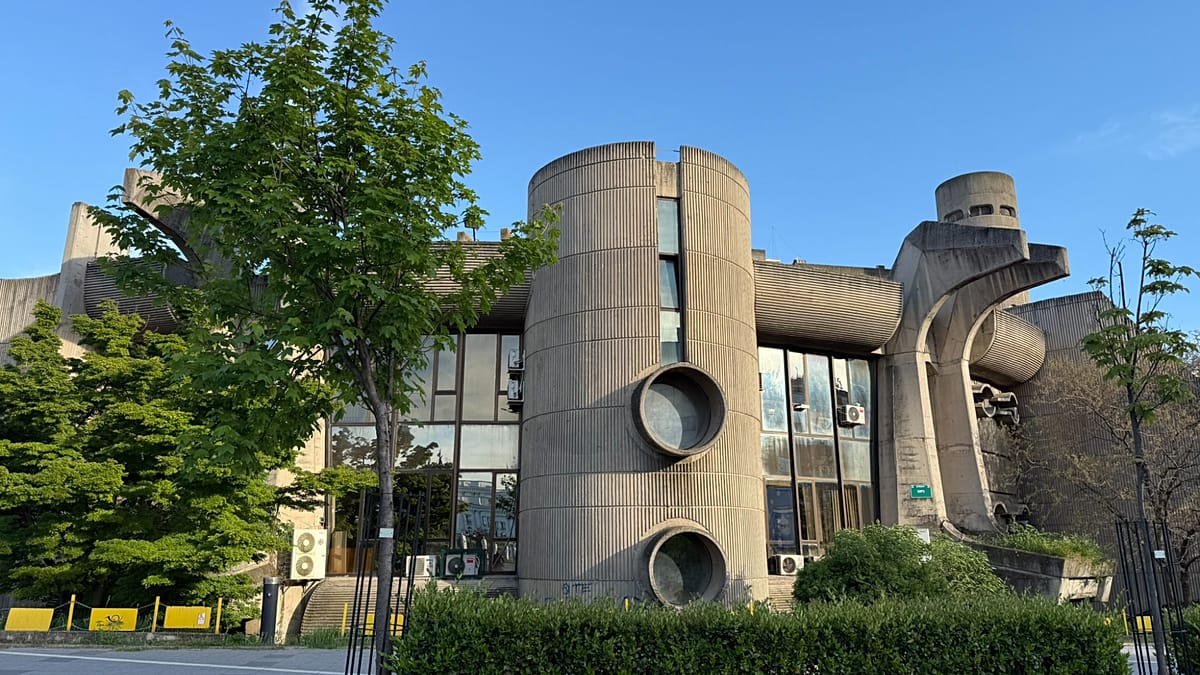
Social media feeds have long been dominated by sun-drenched beaches and iconic landmarks, but a new aesthetic is quietly taking over: brutalist architecture. The raw, concrete-heavy style, often associated with post-war reconstruction, is drawing travelers to cities across Europe, particularly in former socialist countries. This shift reflects a broader appetite for authenticity and architectural history over picture-perfect clichés.
Skopje: A Brutalist Revival After Disaster
Skopje, the capital of North Macedonia, has become a focal point for this trend. After a devastating earthquake in 1963 destroyed 80% of the city, architects from around the world contributed to its rebuilding, resulting in a unique concentration of brutalist structures. Local guide Aleksandra Georgieva launched a tip-what-you-can walking tour two months ago to share her passion for the style. “In that period, Macedonian architects made a huge contribution to the city,” she told European Pulse during a recent tour. “It’s a debatable style, but whether you like it or not, the city was completely reborn after the earthquake.”
Georgieva’s tour highlights buildings like the Macedonian Academy of Sciences and Arts, which blends brutalist forms with Japanese temple influences, and the City Trade Centre, still a vital part of the city’s fabric. The Post Office headquarters, a striking example of the style, is a must-see for enthusiasts. However, not everyone embraces brutalism. The Skopje 2014 project, halted in 2018, sought to give many buildings neoclassical facades, sparking debate about preserving the city’s post-earthquake identity. “We missed the chance to renovate in neoclassical style immediately after the earthquake,” Georgieva added. “Brutalism became one of the most important styles here. It might not be the favorite, but it’s authentic and sets Skopje apart.”
Beyond Skopje: Other European Brutalist Hotspots
London’s Barbican Centre remains one of the most famous brutalist complexes globally, offering 90-minute tours through its performing arts center. In Yerevan, Armenia, the Cascade Complex is a highlight, while a two-hour drive leads to the iconic Orgov Radio-Optical Telescope. These sites reflect how brutalism, once dismissed as ugly, is now celebrated as a distinctive architectural heritage across Europe.
This trend also intersects with broader European discussions about cultural preservation and tourism. As social media drives travelers to seek unique experiences, cities like Skopje are leveraging their brutalist past to attract visitors. The style’s raw honesty resonates with a generation tired of curated perfection, offering a tangible connection to Europe’s post-war rebuilding and socialist history. For those interested in how architecture shapes travel, this movement is a compelling case study.
For more on how European cities are rethinking tourism, read about the EU’s proposed single-ticket system for cross-border rail travel, which could make such architectural tours more accessible. Meanwhile, debates over social media’s influence on travel echo discussions about regulating addictive design in Europe. As brutalism gains traction, it challenges travelers to see beauty in the unconventional—a trend that shows no signs of fading.