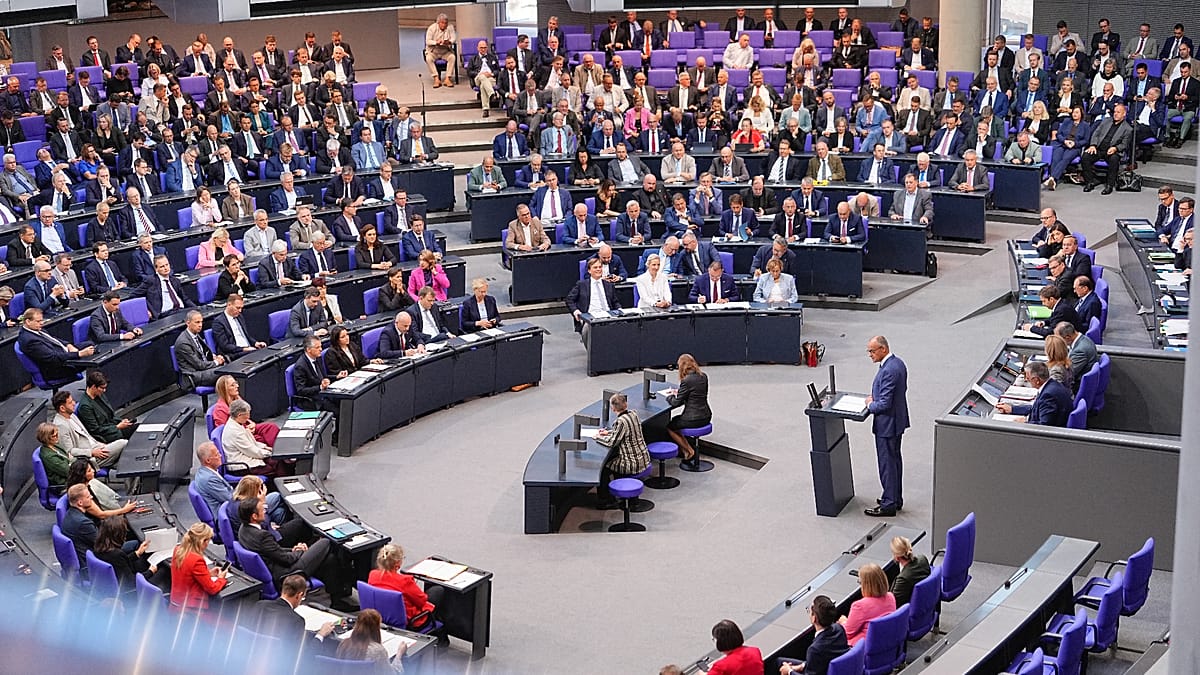
Berlin — The German Bundestag on Friday gave its approval to the 2027 federal budget, a record-breaking spending package that relies on historic levels of new borrowing. The governing coalition of the Christian Democratic Union (CDU), its Bavarian sister party the Christian Social Union (CSU), and the Social Democratic Party (SPD) secured 317 votes in favour, against 260 opposed.
The core federal budget will see expenditure of around €556 billion, an increase of €31.4 billion — roughly six per cent — over the previous year. However, projected tax revenues of €391.3 billion fall short of the government's earlier forecasts, widening the gap that must be covered by debt.
Borrowing reaches pandemic-era levels
New borrowing for 2027 is set to reach €210.4 billion, the second-highest figure in the history of the Federal Republic, surpassed only by the €215.4 billion borrowed in 2021 at the height of the COVID-19 pandemic. The borrowing is split across three channels: €123 billion in the core budget, €57.8 billion from the special fund for infrastructure and climate neutrality, and €29.6 billion from the special fund for the Bundeswehr. These special funds are not reserves but financing mechanisms that allow debt-financed spending outside the core budget.
Defence spending accounts for a substantial share of the increase. The regular defence budget will rise from €82.7 billion in 2026 to €109.7 billion in 2027, supplemented by €29.6 billion drawn from the €100 billion Bundeswehr special fund established in 2022 under Chancellor Olaf Scholz. That fund is expected to be exhausted by the end of 2027. An additional €11.6 billion is earmarked for support to Ukraine. According to the Federal Ministry of Finance's financial plans, the regular defence budget alone could reach €183.7 billion by 2030.
Despite the defence surge, social spending remains the largest item in the federal budget. The Ministry of Labour and Social Affairs receives €203.3 billion, about 36.6 per cent of the core budget. A significant portion goes to the statutory pension insurance scheme, but the federal subsidy is being cut by €3 billion, adding pressure on the system and raising the prospect of higher contributions from employees and employers. The Federal Employment Agency also requires a federal loan of €8.2 billion.
Debt servicing costs are becoming an increasingly heavy burden. The government has earmarked €41.9 billion for interest payments in 2027, up €11.6 billion from 2026, diverting funds from education, infrastructure, and social programmes. Investment in the core budget is set to rise to €61.8 billion, supplemented by debt-financed investment through the infrastructure and climate fund.
Germany's debt-to-GDP ratio is projected to exceed 72 per cent by 2028, according to the Finance Ministry's October projections. The general government deficit is expected to reach 5.25 per cent of GDP in 2027, and even after accounting for the EU's exemption for defence spending, the deficit would remain above the EU's three per cent reference threshold. This could trigger an excessive deficit procedure against Germany.
Finance Minister Lars Klingbeil (SPD) warned during the final debate that sacrifices lie ahead. "We will not be able to avoid asking people to make sacrifices," he said, stressing that the resulting burdens must be shared fairly. The specifics remain unclear.
Looking ahead, a funding shortfall of around €25 billion is already projected for 2028, a figure that assumes the postponement until 2033 of repayments on pandemic emergency loans and Bundeswehr special fund debt. If the electricity tax reduction is extended beyond 2027, the gap could widen to €30 billion.
Alongside the budget, the government is finalising a comprehensive pension reform. Labour Minister Alexander Schweitzer (SPD) has presented a 287-page draft bill that proposes longer working lives, higher contributions, and steeper penalties for early retirement. The reforms aim to stabilise the statutory pension system amid an ageing population and rising social expenditure.
The budget's approval comes as EU budget talks remain deadlocked, with leaders clashing over strategic priorities. Germany's fiscal trajectory will be closely watched in Brussels, as the EU's own budget negotiations face similar pressures.



